
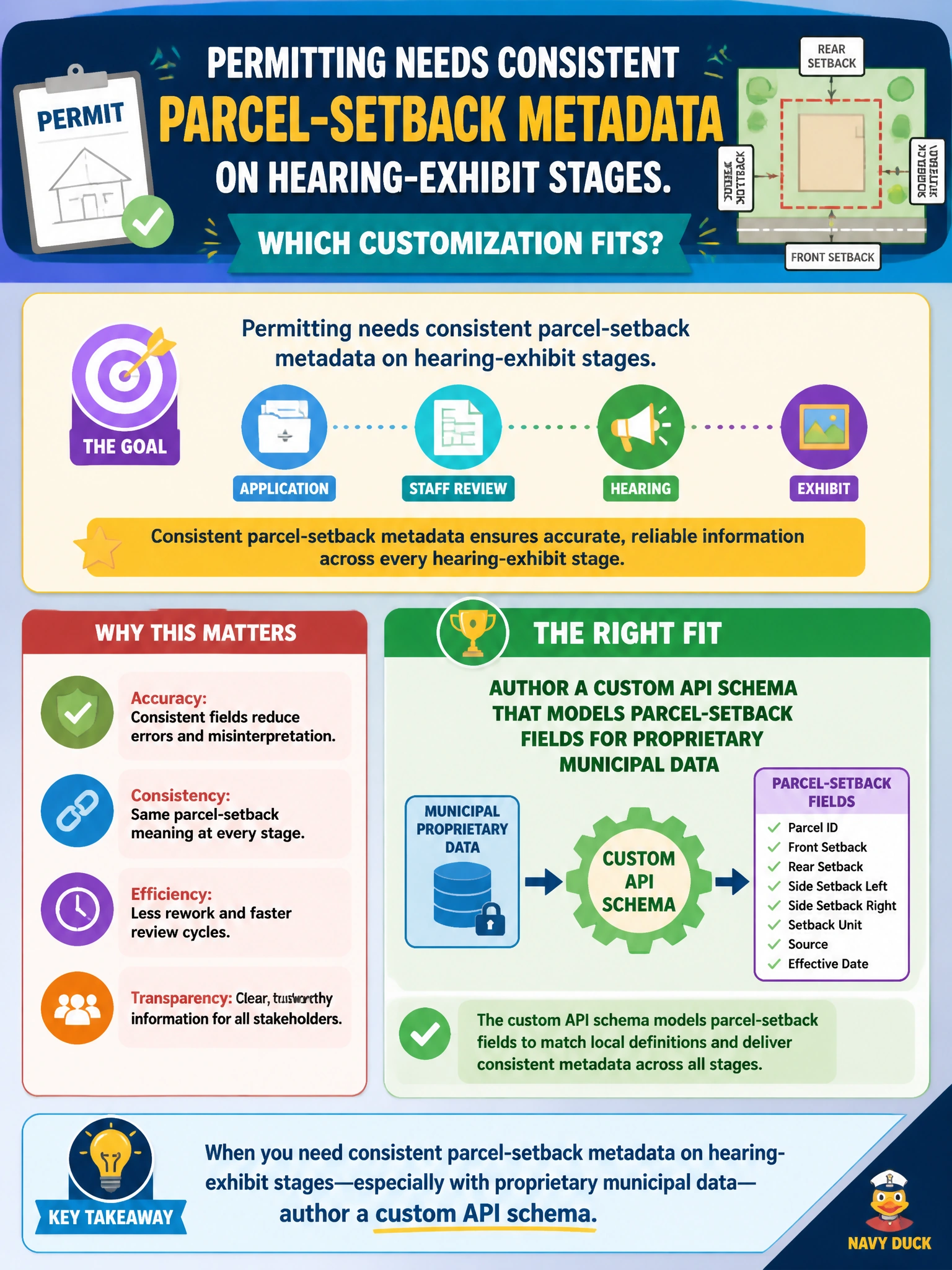
Permitting needs consistent parcel-setback metadata on hearing-exhibit stages. Which customization fits?
Select an answer to reveal the explanation.
Short Explanation
Hearing exhibits need a shared vocabulary for setbacks, not sticky notes in different handwriting. A custom API schema keeps that municipal data typed and reusable.
Full Explanation
Permitting needs consistent parcel-setback metadata on hearing-exhibit stages, which fits authoring a custom API schema that models parcel-setback fields for proprietary municipal data. API schemas attach typed, documented attributes/relationships to prims without forcing a new concrete prim type for every use. Hearing exhibits, planners, and reviewers then share one vocabulary for setbacks inside USD rather than relying on ad hoc naming or external-only spreadsheets that drift from the exhibit stage.
Encoding setbacks only as random prim names with no typed attributes is unvalidated, unqueryable, and hostile to tooling. Storing setbacks exclusively in external spreadsheets never referenced by USD guarantees the hearing stage and the table diverge. Overriding KindRegistry to treat every Xform as a material confuses kinds with materials and destroys model/material semantics.
Exam caveat: proprietary municipal fields ⇒ custom API (or typed) schemas, not prim-name hacks or kind abuse. Schemas should be registered/plugin-discoverable in the authority runtime that opens hearing stages.
Operational check: apply the setback API schema to parcel prims, confirm attributes round-trip in USDA/USDC, open the exhibit in the permitting viewer with the schema plug-in present, and verify review tools can query setback fields consistently across cases.