
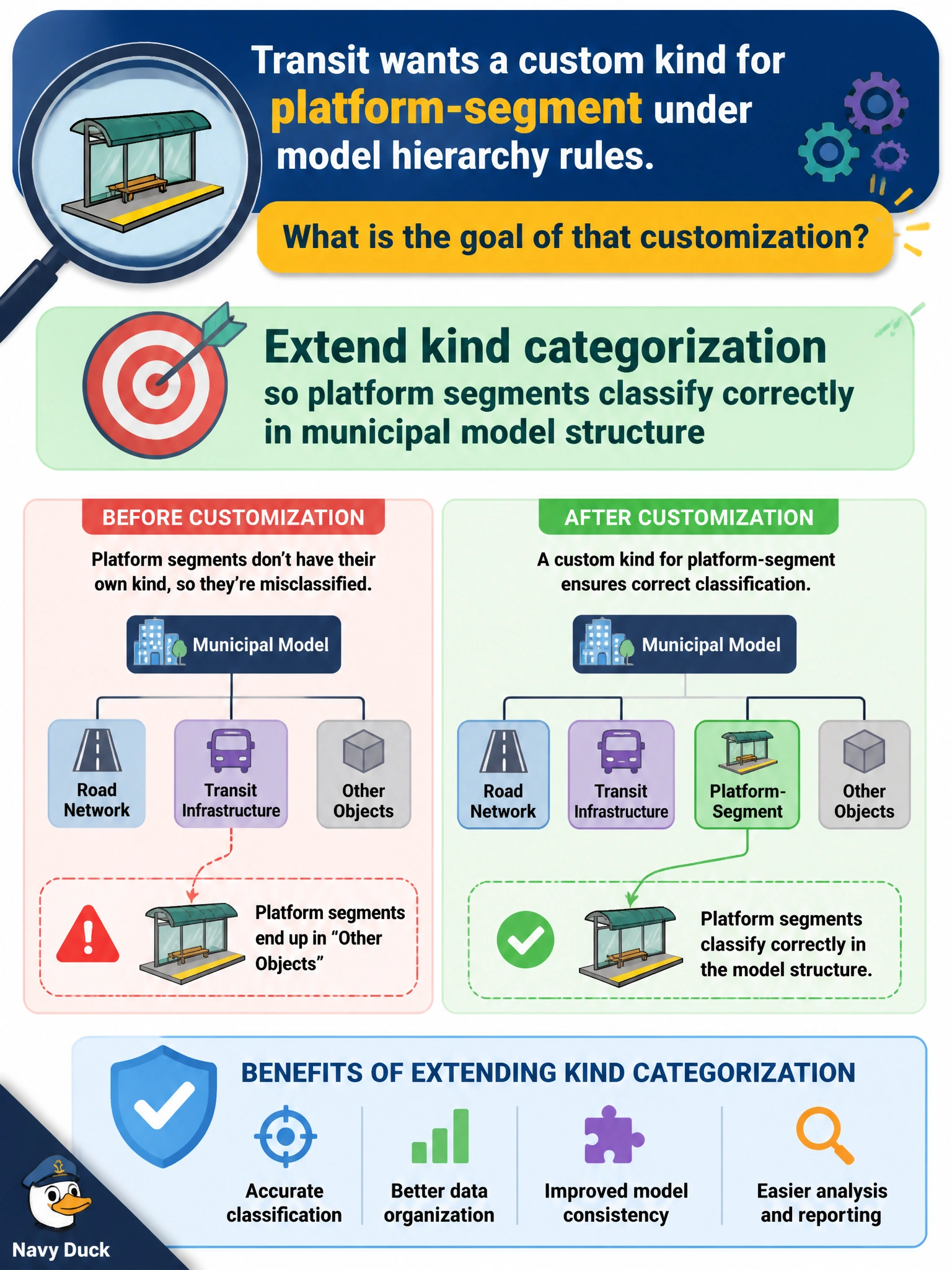
Transit wants a custom kind for platform-segment under model hierarchy rules. What is the goal of that customization?
Select an answer to reveal the explanation.
Short Explanation
Kinds are filing labels for big assemblies. A platform-segment kind helps transit tools sort the station the way the authority thinks about it.
Full Explanation
Transit's custom kind for platform-segment under model hierarchy rules exists to extend kind categorization so platform segments classify correctly in municipal model structure. Station packages often need finer structural labels than generic component/assembly kinds provide. A platform-segment kind lets authority tools, validators, and aggregation leads query and organize station structure the way transit engineering thinks about platforms—without abusing lights, references, or composition order.
Replacing LIVERPS with a transit-only composition order is unrelated to kind customization and would break USD composition interoperability. Forcing every platform mesh to become a UsdLux light confuses categorization with lighting schemas. Disabling referencing so platforms can only be sublayered removes a core aggregation tool and does not implement kind semantics.
Exam caveat: kinds classify model hierarchy; they do not replace composition arcs, schemas, or lighting. Custom kinds extend taxonomy—they should not be used as a hammer for unrelated pipeline problems.
Operational check: apply platform-segment kind to the appropriate prims, verify model hierarchy views group segments as intended, ensure referencing still works for station assembly, and confirm validators that key off kind include the new value in their allowlist.