
Airport airside expands temporary-markings pointInstancer content with a cone-with-light type. What must leads manage when growing the instance set?
Select an answer to reveal the explanation.
Short Explanation
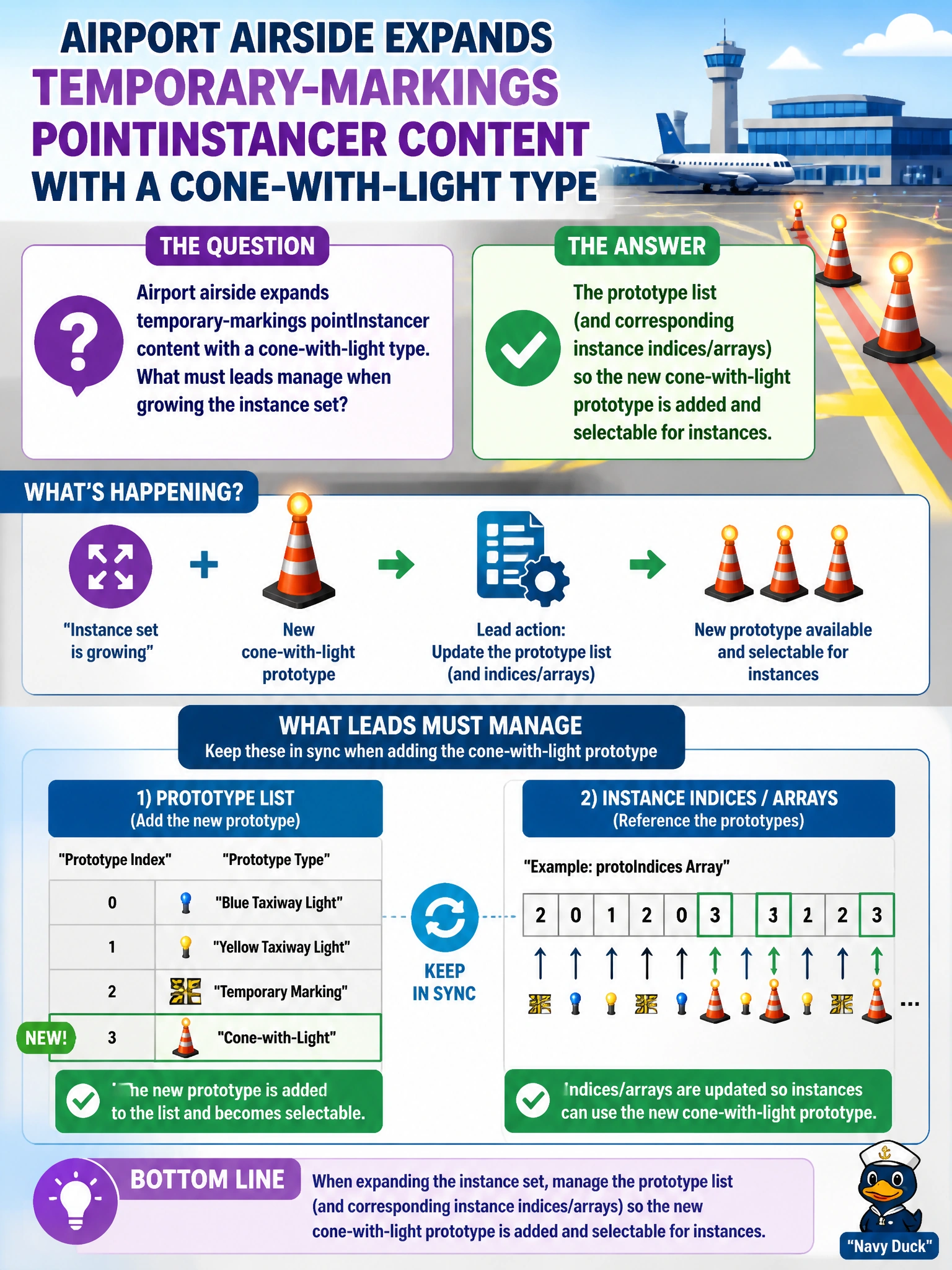
New cone-with-light markers need a seat in the prototype roster and some instance rows pointing at that seat. Growing the set is roster management, not hoping lights appear by magic. Keep the prototype list and instance indices in sync.
Full Explanation
When airport airside expands a temporary-markings pointInstancer with a cone-with-light type, leads must manage the prototype list and the corresponding instance indices/arrays so the new prototype is added and selectable for instances. Growing the instance vocabulary is roster management: prototypes define what can be stamped; indices choose which stamp each instance uses. Lights or markers will not appear by hoping UsdLux alone invents PointInstancer prototypes.
Managing only root layer mute flags fails because prototypes can and should be extended; mute does not create types. TfDebug symbols do not automatically invent prototypes. Changing only UsdLux without pointInstancer updates may add lights elsewhere but does not register a cone-with-light prototype for the markings instancer.
Exam caveat: if the cone-with-light includes lumens or light prims under the prototype root, ensure those travel with the prototype reference and that instance transforms place them correctly—still, the instancer arrays remain mandatory. Operational check: append the cone-with-light prototype, update protoIndices (and aligned arrays) for the new markings, open the airside stage, and verify cones appear only where indexed. Keep prototype list and instance arrays in sync whenever the temporary-markings set grows.