
A city twin team prepares an internal pavilion asset to send to an external vendor’s USD viewer. Which delivery step is most important among composition hygiene practices?
Select an answer to reveal the explanation.
Short Explanation
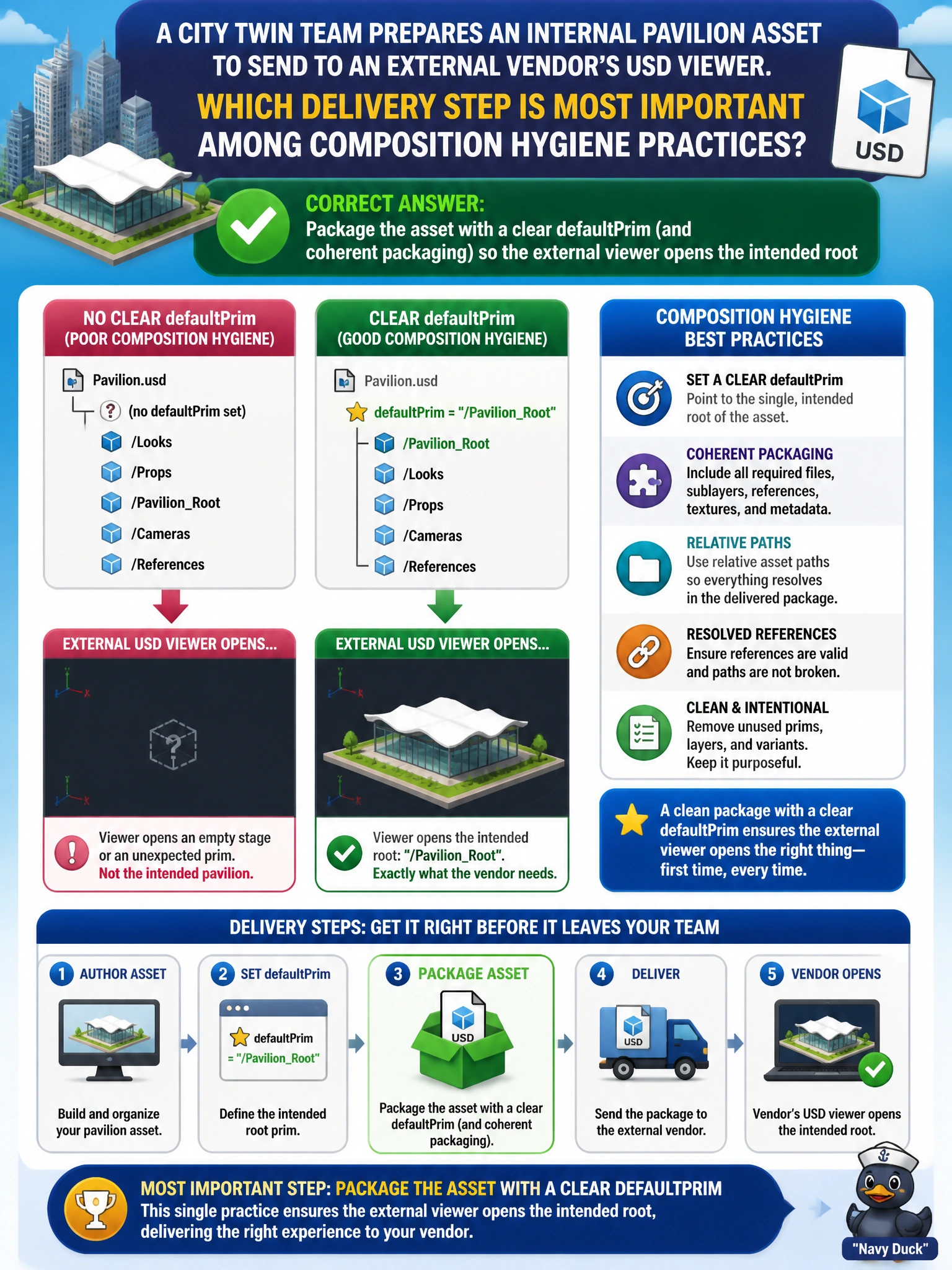
Handing a vendor a pavilion without defaultPrim is like mailing a building key with no address on the envelope. Set the defaultPrim and package the asset so their viewer lands on the right root. That small hygiene step saves a lot of “which prim is the building?” email.
Full Explanation
When a city twin team sends an internal pavilion asset to an external vendor’s USD viewer, composition hygiene starts with a clear defaultPrim and coherent packaging so the viewer opens the intended root. External consumers should not guess which prim is the building. Packaging relative dependencies with the asset and declaring defaultPrim reduces handoff friction and prevents “empty stage” or wrong-root confusion in vendor tools.
Stripping defaultPrim so the vendor must guess the entry prim is the opposite of hygiene. Leaving absolute internal farm paths unresolved and undocumented breaks resolution off-network. Requiring the vendor to install every proprietary city plugin before opening the file couples delivery to unavailable software and is not a reliable handoff practice for standard viewers.
Exam caveat: defaultPrim alone does not fix missing textures or unresolved payloads—package completeness still matters—but among composition hygiene practices for external open, clear defaultPrim plus coherent packaging is the critical entry-point step. Operational check: open the delivered package in a clean environment without city NAS mounts or proprietary plugins; confirm the stage roots on the intended pavilion prim, resolve listed dependencies, and document any remaining payload requirements. If the viewer lands on the wrong prim or an empty stage, fix defaultPrim and package layout before blaming the vendor’s tool.