
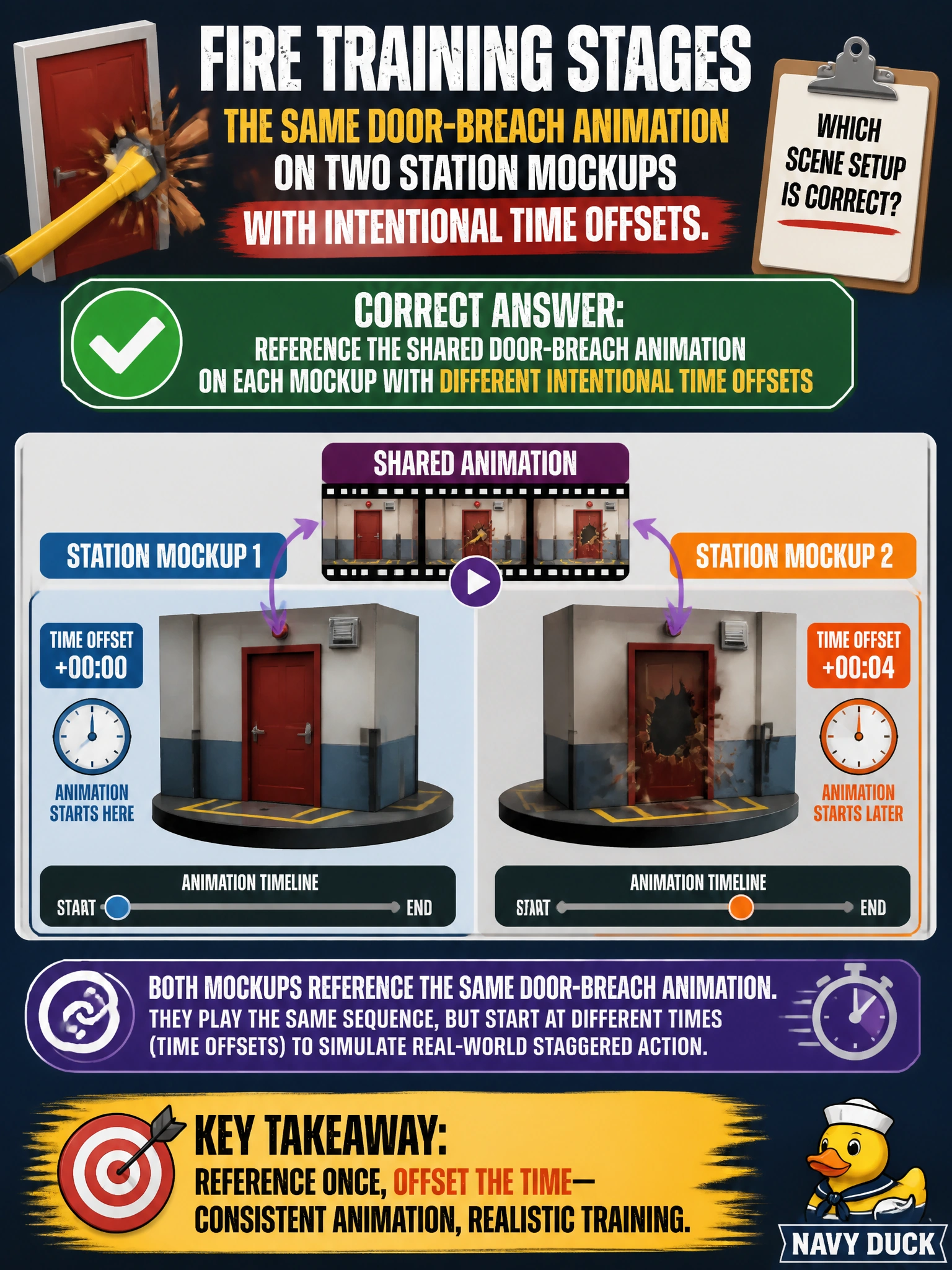
Fire training stages the same door-breach animation on two station mockups with intentional time offsets. Which scene setup is correct?
Select an answer to reveal the explanation.
Short Explanation
Two training rooms, one breach drill tape—hit play at different offsets on each reference. Forcing one shared clock or parking timing in a CSV misses the OpenUSD time-offset composition skill.
Full Explanation
Fire training that stages the same door-breach animation on two station mockups with intentional stagger should reference the shared door-breach animation on each mockup with different intentional time offsets. Offsets compose two training rooms from one drill clip so instructors can run asynchronous breach timing without maintaining two independent animation assets.
Parenting both mockups under one prim so they must share a single timeCode with no offsets fails conceptually: shared parent time without offsets prevents intentional stagger. Using only payload arcs because “payloads ignore time” fails because payloads do not magically ignore time, and arc choice alone does not create staggered playback. Storing breach timing exclusively in a non-USD CSV beside the stage fails because timing outside the stage is not composed OpenUSD time and breaks portable twin workflows.
Exam caveat: intentional stagger = shared reference + different time offsets; parenting tricks, payload myths, and side-car CSVs miss the skill. Operational check: reference the breach clip on both mockups with distinct offsets, play the training stage, confirm Room A and Room B breach at different times, and confirm the single clip asset remains the source for both.