
Emergency model serving sees alert spikes and underfilled GPU batches. How should ops keep Tensor Cores busy?
Select an answer to reveal the explanation.
Short Explanation
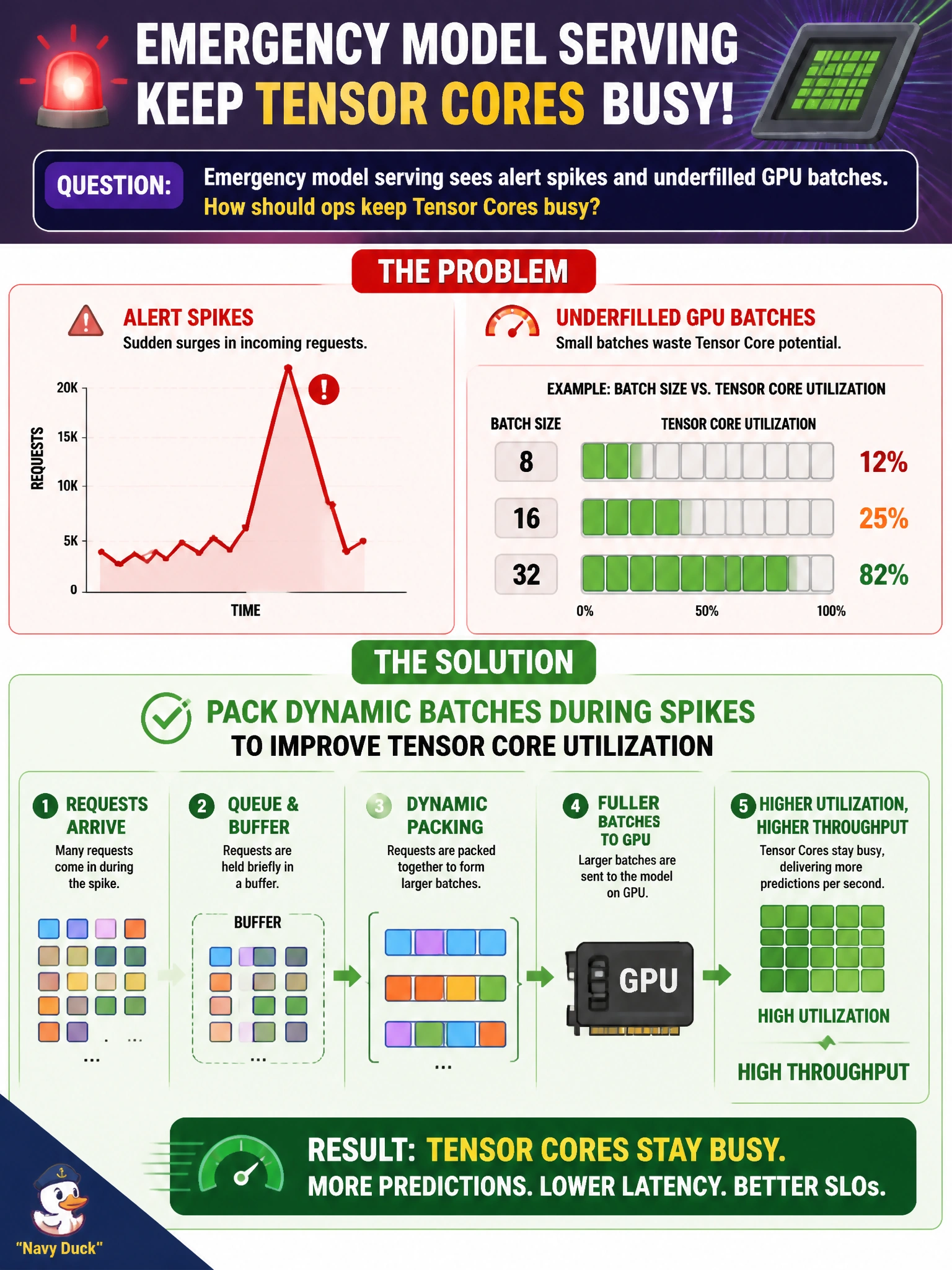
When alerts flood in, pack them into dynamic batches so the emergency GPU’s Tensor Cores stay busy. One-at-a-time empty slots waste the hardware right when residents need speed.
Full Explanation
Emergency model serving that sees alert spikes and underfilled GPU batches should pack dynamic batches during spikes so Tensor Cores stay busy and municipal alert throughput rises when residents need it most. Underfilled batches waste GEMM efficiency exactly when concurrency is available to fill them. Serving strictly one request at a time with empty batch slots leaves accelerator capacity idle during the surge and lengthens queues for downstream emergency workflows. Disabling batching so each alert runs in isolation forever institutionalizes underutilization and makes p95 latency worse under load rather than better. Dropping alerts randomly until the GPU looks idle invents availability failures and is unacceptable for emergency workloads where missed alerts have public-safety cost. Exam caveat: inference performance under bursty civic load is often a batching and scheduling problem—dynamic or continuous batching keeps accelerators saturated without changing model weights. Operational check: enable dynamic batching with safe max batch size and queue timeout policies, load-test with synthetic alert spikes that mirror peak incident volume, track GPU utilization, p95 latency, and drop rate, and page on-call if underfilled batches persist during declared emergencies.