
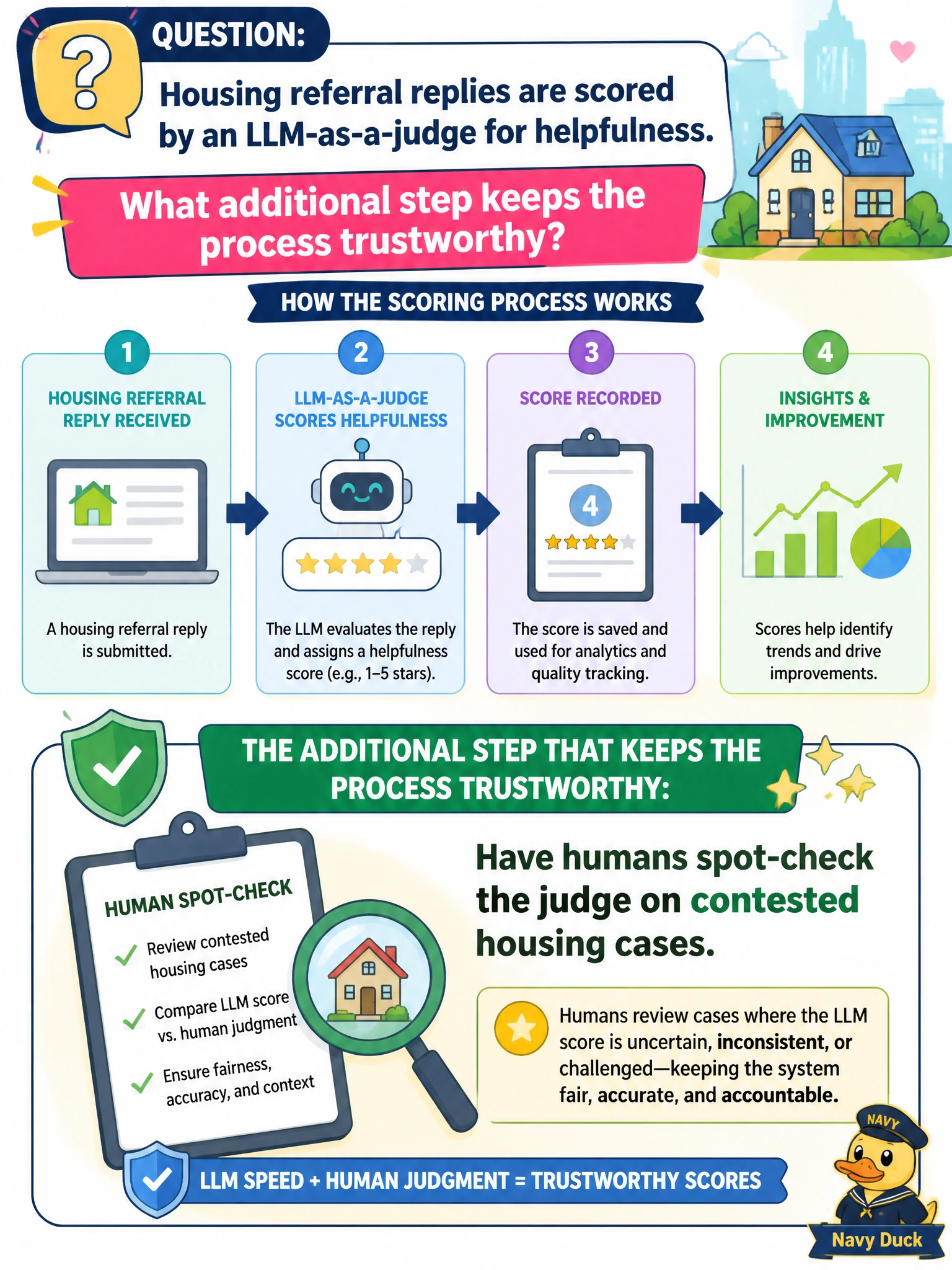
Housing referral replies are scored by an LLM-as-a-judge for helpfulness. What additional step keeps the process trustworthy?
Select an answer to reveal the explanation.
Short Explanation
An LLM judge can give you a useful first pass on housing referrals, but contested cases still need a human referee. Spot-checks help you keep the automated scorecard honest.
Full Explanation
When an LLM-as-a-judge scores housing referral replies for helpfulness, you keep the process trustworthy by having humans spot-check contested cases. Automated judges can be useful first-pass rankers, but they may be systematically wrong about edge eligibility, trauma-informed tone, or policy citations. Human review of disagreements and hard cases helps keep the municipal scorecard calibrated and creates an audit trail counselors can trust. Never letting humans see contested cases removes this calibration loop and lets judge bias harden into policy. Replacing the judge weekly with a random number generator destroys ranking validity and fairness. Publishing scores in a dashboard counselors can view at any time may make them visible, but visibility alone does not validate the judge or let staff contest and learn from opaque scores. Exam caveat: deliberately sample contested cases, including disagreements, low-confidence scores, and protected-class topics; random samples alone can miss the risky tail. Practical check: route a fixed weekly quota of contested housing replies to human reviewers, measure judge–human agreement, recalibrate or replace the judge when agreement drops, and store both scores in the case audit log.