
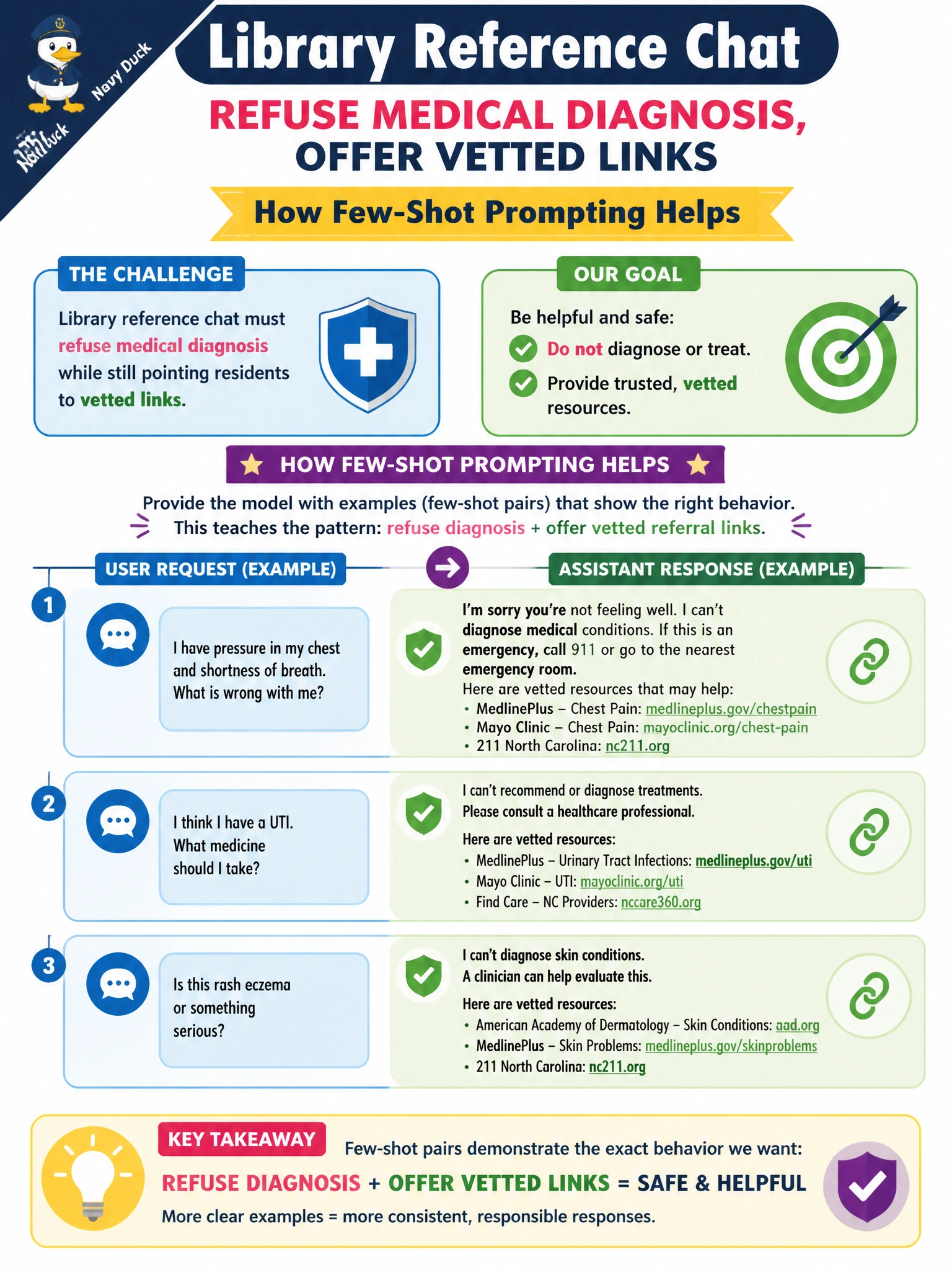
Library reference chat must refuse medical diagnosis while still pointing residents to vetted links. How can few-shot prompting help?
Select an answer to reveal the explanation.
Short Explanation
You can teach the safe pattern by showing example chats that refuse diagnosis and still offer vetted referral links; few-shot examples make that behavior concrete. Examples that invent diagnoses teach the opposite, while the other approaches do not show the model how to refuse and refer.
Full Explanation
Few-shot prompting is useful here when you include example pairs that show the chat refusing to diagnose while offering vetted referral links. These examples demonstrate the response pattern the library needs: decline diagnosis and direct residents to trustworthy resources, rather than relying on a general warning to shape the chat. Examples that invent diagnoses fail because they model unsupported clinical conclusions and reward harmful attempts to sound helpful. Omitting safety examples fails because the model receives no demonstrations of the required boundary and may produce clinical advice freely. Relying on one medical textbook chapter as unlabeled pretraining fails because it neither supplies few-shot examples for the live chat nor demonstrates safe refusals and vetted referrals. Exam caveat: a referral link is not a diagnosis or a substitute for emergency care; keep referrals appropriate to the library’s service area. Practical check: test the chat with symptom and medication questions, then review whether it refuses diagnosis and provides vetted links without inventing clinical advice.