
Housing under-uses Slurm GPUs while parks over-uses. How should civic team allocation be adjusted?
Select an answer to reveal the explanation.
Short Explanation
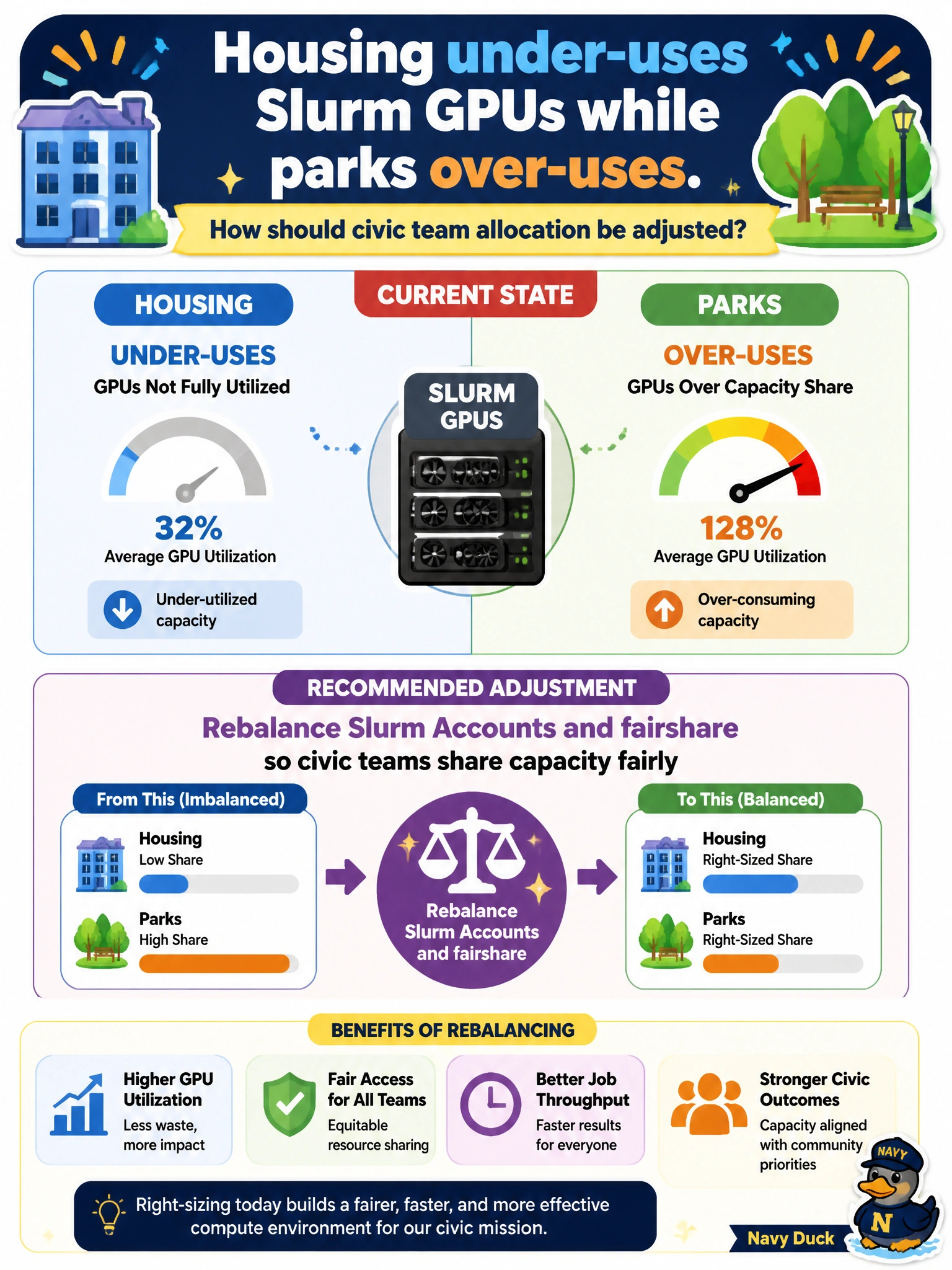
You can bring housing and parks into better balance by rebalancing Slurm Accounts and fairshare, so shared capacity follows civic policy. A permanent parks ban, deleting fairshare, or moving housing jobs to laptops would undermine fair and effective cluster use.
Full Explanation
Rebalancing Slurm Accounts and fairshare so civic teams share capacity fairly addresses the mismatch between housing’s under-use and parks’ over-use. Slurm fairshare is designed to correct historical usage imbalance over time, and adjusting Accounts, associations, and fairshare factors can realign scheduling priority with municipal policy as observed usage drifts from intent. This supports fair sharing without permanently excluding a department that may currently need GPUs. Banning parks jobs permanently even when housing leaves GPUs idle fails on utilization and fairness: idle capacity should remain shareable under policy rather than being wasted by a permanent ban. Deleting fairshare so the loudest department always wins overnight removes a mechanism for balancing usage and recreates priority chaos. Moving all housing jobs to personal laptops and leaving the cluster to parks only fails because laptops are not the municipal GPU platform and do not provide the cluster’s centralized environment. Exam caveat: a fairshare rebalance is gradual and policy-driven; it does not guarantee equal runtime every hour. Practical check: review Slurm fairshare and Account usage for housing and parks, apply the rebalance, then monitor pending times and share factors over subsequent weeks. Confirm that peers can use idle housing capacity without permanently banning parks jobs.