
County assessor needs a new imagery model version in production. How should inference roll out?
Select an answer to reveal the explanation.
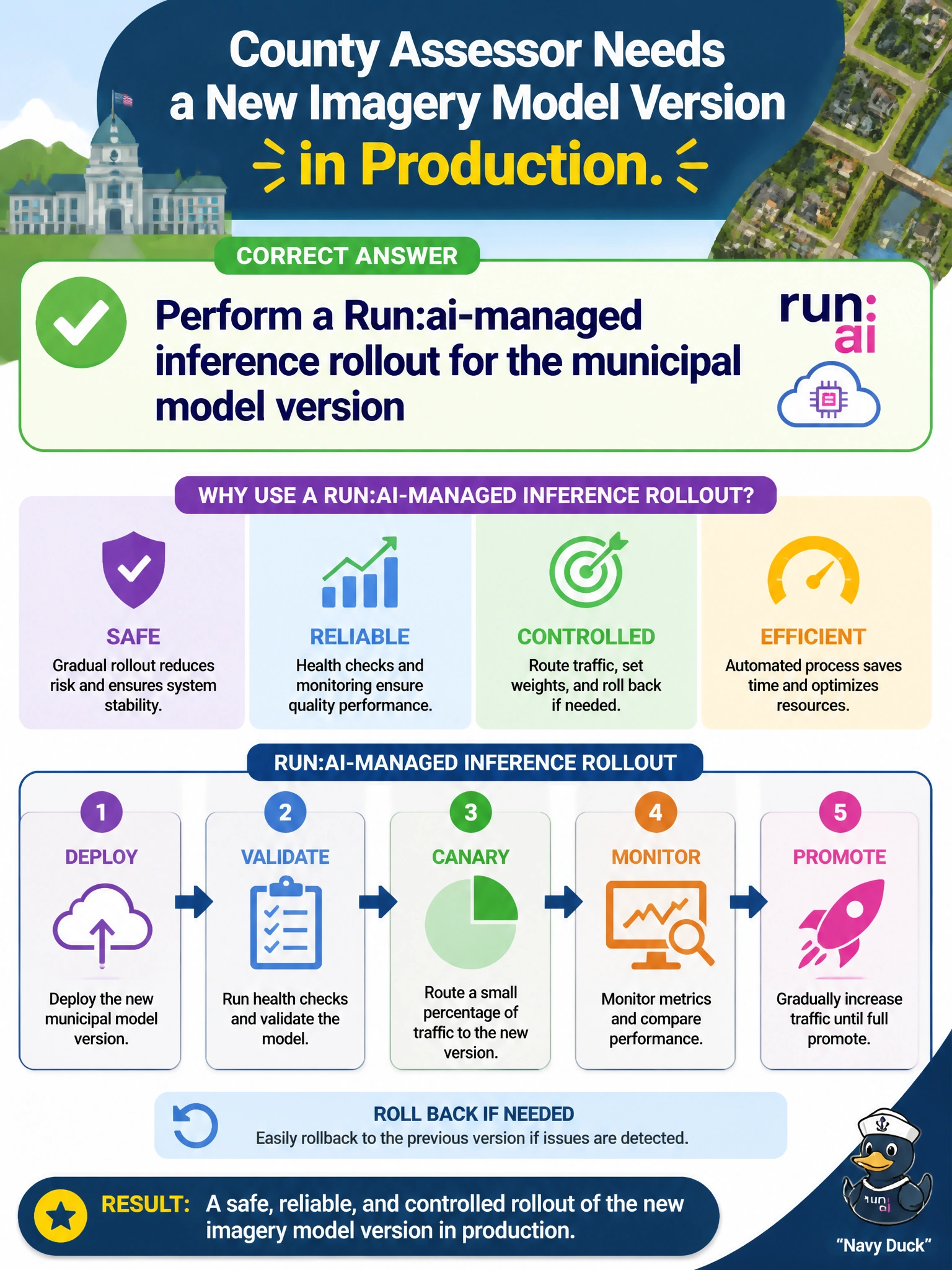
Short Explanation
Let Run:ai roll the assessor model forward—controlled release, not FTP lunch swaps. Hand-editing pods node by node is how version drift sneaks into civic serving.
Full Explanation
Perform a Run:ai-managed inference rollout for the county assessor's new imagery model version. Platform-managed rollout tracks versions, shifts traffic or replicas in a controlled way, and preserves rollback—essential when municipal valuations depend on consistent model behavior. Operators promote a known artifact through Run:ai rather than mutating nodes by hand.
Hand-editing pod YAML on every node with no platform rollout control guarantees drift and missed nodes. Swapping model files over FTP during lunch with no version tracking destroys provenance and audit trails. Restarting random worker nodes until new weights "appear" is nondeterministic and can interrupt unrelated civic workloads.
Exam caveat: managed rollout still needs a defined artifact registry, version tags, and health gates (latency, accuracy smoke tests on assessor imagery). Ensure GPU memory of the new weights fits the project's guaranteed shapes. Coordinate with change control—platform automation is not a substitute for approval when models affect public valuations.
Operational check: roll the new version via Run:ai in a staging project first, compare inference outputs on a golden imagery set, promote to production, and confirm the previous version remains restorable within the documented RTO.