
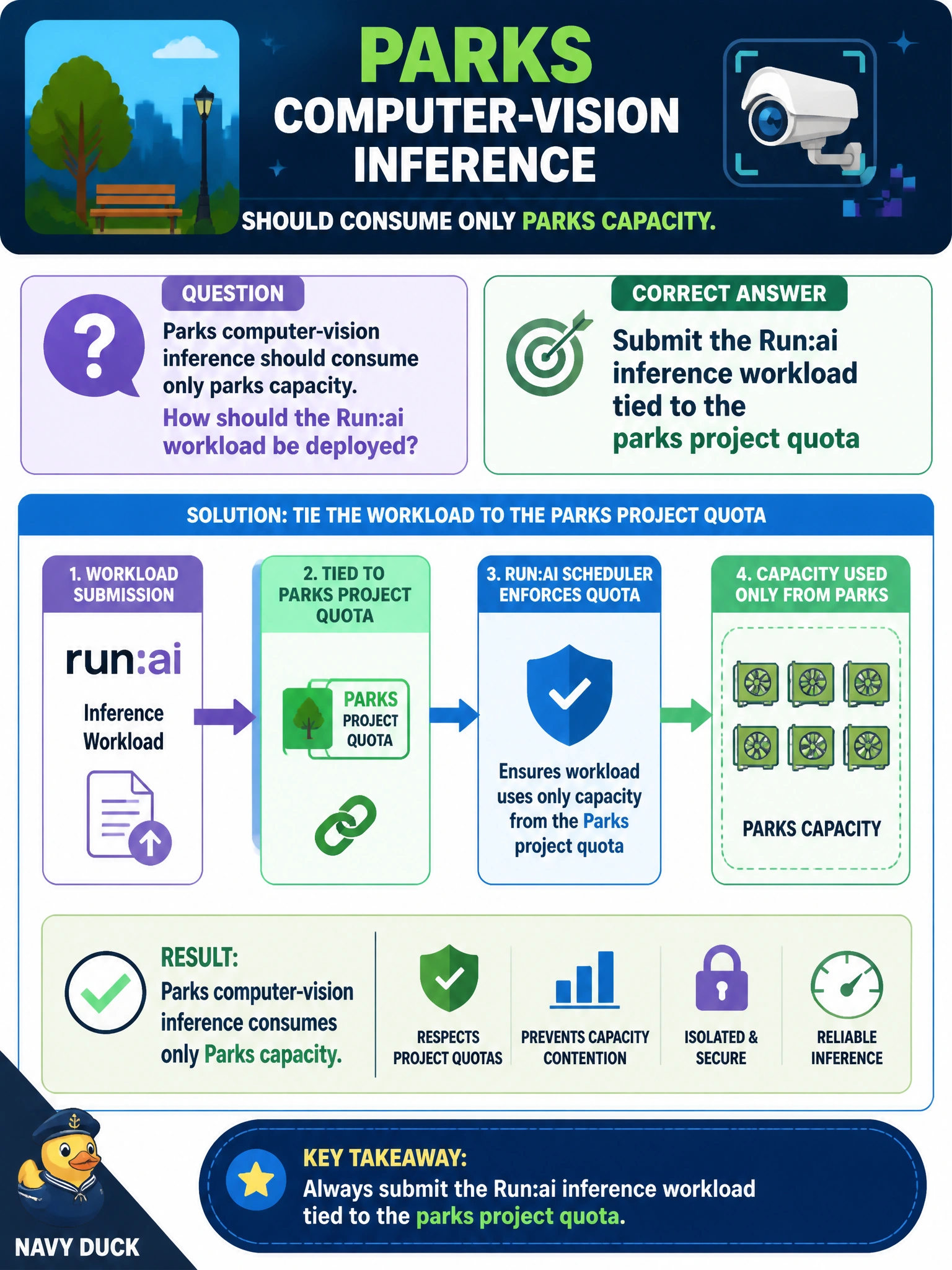
Parks computer-vision inference should consume only parks capacity. How should the Run:ai workload be deployed?
Select an answer to reveal the explanation.
Short Explanation
Tie parks CV inference to the parks project quota—department sticker on the windshield. Borrowing finance or library quotas just muddies civic chargeback and fairness.
Full Explanation
Submit the Run:ai inference workload tied to the parks project quota so parks computer-vision consumes only parks capacity. Project binding enforces departmental budgets, fairshare, and chargeback on the shared civic cluster—vision jobs debit parks, not another agency's allocation.
Submitting under the finance project to avoid parks quota is quota theft and corrupts financial reporting. Running as an anonymous cluster workload with no project binding escapes governance and makes cost attribution impossible. Charging GPU time to an unrelated library consortium account misassigns spend and can violate inter-agency agreements.
Exam caveat: project quotas must be reconciled with Kubernetes namespaces/PriorityClasses used underneath; mismatched mappings cause "mysterious" Pending jobs. Burst policies may temporarily exceed soft limits—know whether parks has guarantee, quota, or best-effort only. Training vs. inference projects are often separated to protect serving.
Operational check: launch CV inference as the parks project identity, verify the scheduler accounts GPUs against parks quota, attempt an over-quota submit and confirm rejection/pending behavior, and audit monthly chargeback so finance and library lines stay clean.