
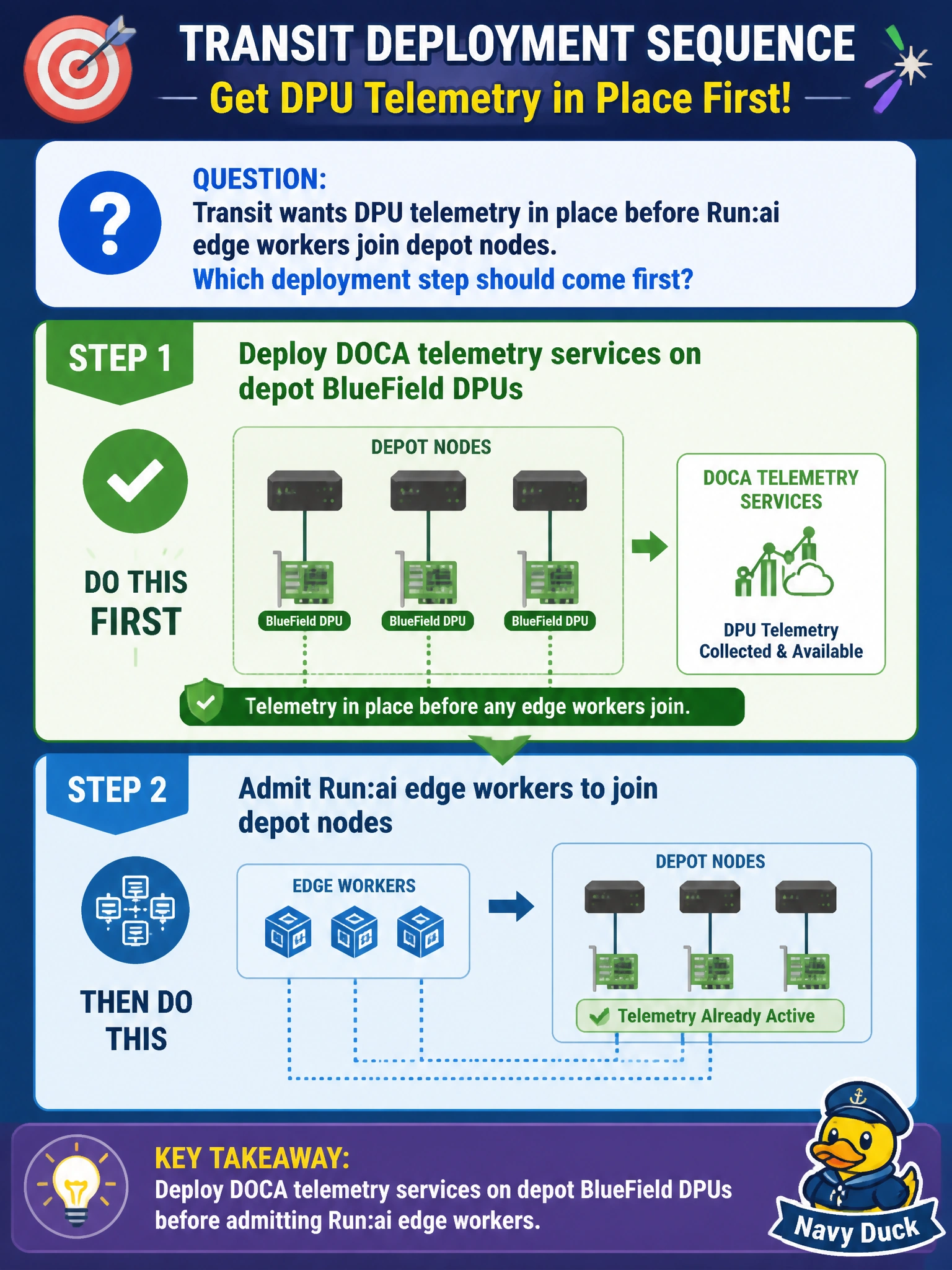
Transit wants DPU telemetry in place before Run:ai edge workers join depot nodes. Which deployment step should come first?
Select an answer to reveal the explanation.
Short Explanation
Get DOCA telemetry on the depot DPUs before Run:ai workers show up—otherwise you are flying blind on the fabric. Skipping DPU software or unplugging cards does not help. Run:ai belongs on the K8s GPU path, not as a substitute for DOCA on the DPU.
Full Explanation
Transit should deploy DOCA telemetry services on depot BlueField DPUs before admitting Run:ai edge workers. Telemetry and fabric visibility need to exist so edge joins can be validated against DPU health rather than hoped for later. Sequencing DOCA telemetry first is the sound municipal deployment order ahead of Run:ai worker admission. Without DPU telemetry, depot incidents become guesswork once workers are live and citizen-facing transit inference depends on that fabric.
Skipping all DPU software and hoping Run:ai invents fabric metrics later leaves depots blind and delays root cause when edge workers misbehave. Unplugging BlueField cards so workers cannot see any DPU endpoints removes the acceleration/telemetry platform the design requires. Installing Run:ai on DPUs instead of on the Kubernetes GPU cluster control path misunderstands Run:ai's governance role versus DOCA on DPU-Arm.
Exam caveat: DOCA telemetry on depot DPUs precedes Run:ai edge worker admission—Run:ai does not replace DPU telemetry install order. Operational check: deploy DOCA telemetry on depot BlueFields, confirm metrics/endpoints are visible, then join Run:ai edge workers and verify workers and DPU telemetry both report healthy before production transit edge jobs.