
A school-district intern accidentally received cluster-wide reboot capability on the education GPU lab. What should admins do?
Select an answer to reveal the explanation.
Short Explanation
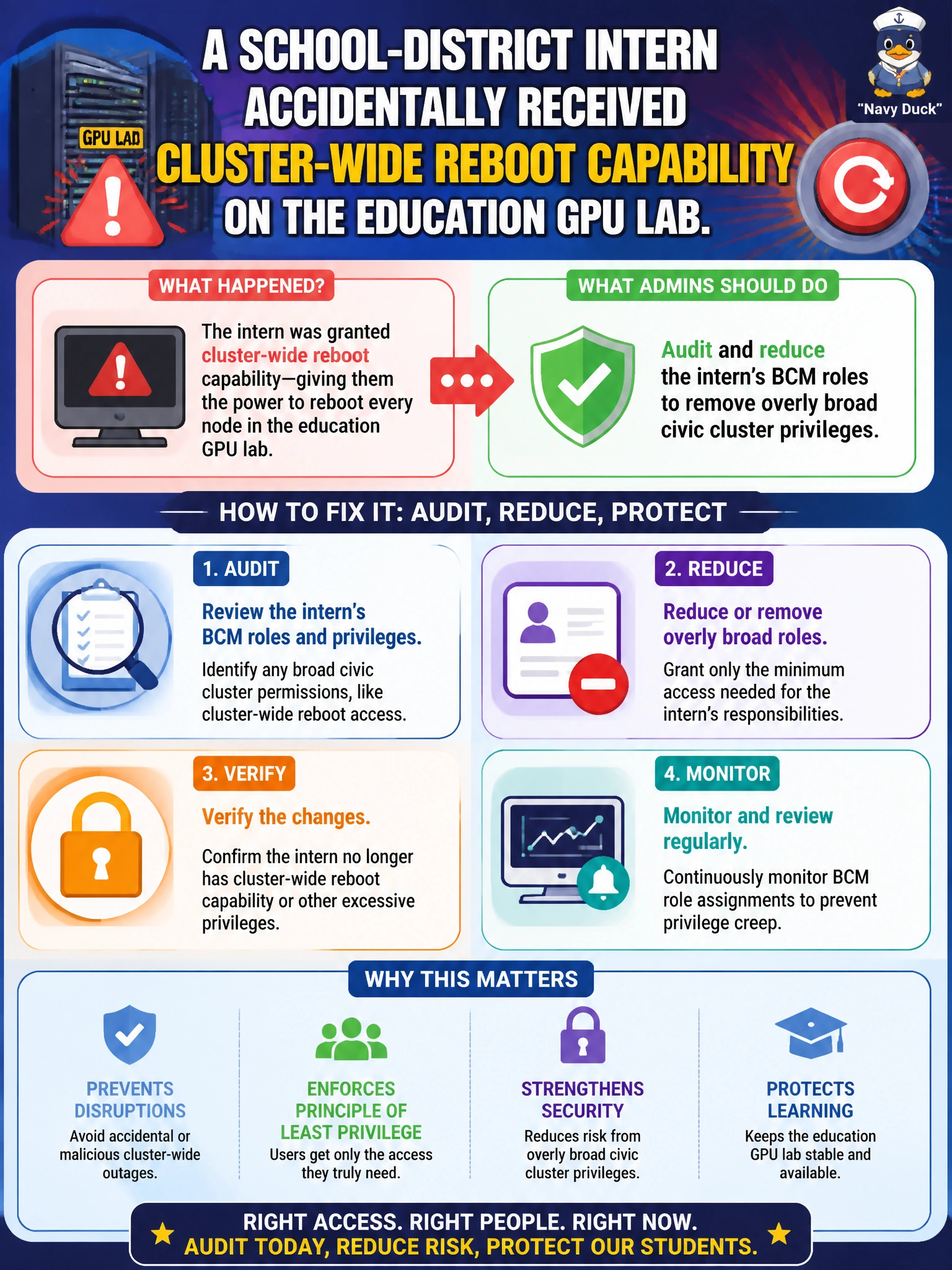
You can keep the education GPU lab dependable by auditing the intern’s BCM roles and removing cluster-wide reboot privileges they don’t need. Leaving the privilege in place, sharing the intern’s login details, or giving every student reboot access would each increase the risk of disruption.
Full Explanation
When a school-district intern accidentally receives cluster-wide reboot capability on the education GPU lab, admins should audit and reduce the intern’s BCM roles to remove overly broad civic cluster privileges. Least privilege matters in environments with rotating learners: reboot rights can immediately interrupt shared teaching and research capacity, even when used without harmful intent. Leaving the privilege in place so interns can “learn by rebooting” treats availability incidents as instruction and risks outages during class. Posting the intern’s login details on the class portal exposes access secrets, allowing others to authenticate as the intern and increasing the chance of misuse or compromise. Granting every student the same reboot right in the name of fairness spreads the excessive privilege across the cohort, multiplying the potential impact of a mistake. Exam caveat: removing the intern’s current access may not prevent the same privilege from being assigned to future interns through inherited group membership or a copied role template. Practical check: review the intern’s BCM role assignments and their source, remove the overly broad reboot capability, then verify that an attempted cluster-wide reboot is denied and document the role change.