
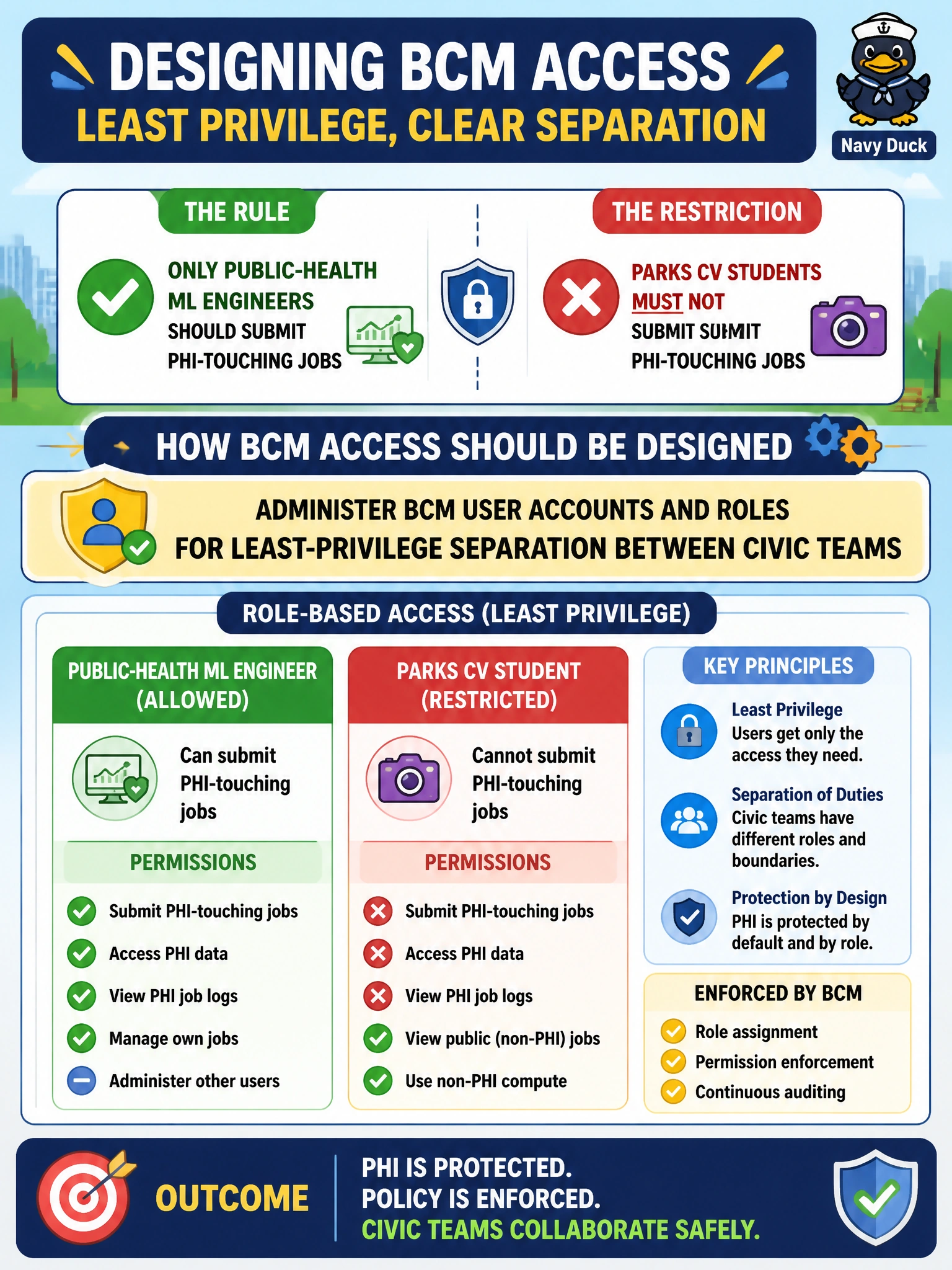
Only public-health ML engineers should submit PHI-touching jobs, while parks CV students must not. How should BCM access be designed?
Select an answer to reveal the explanation.
Short Explanation
PHI jobs and parks student CV are different keys to different doors. BCM roles carve least-privilege access so public-health engineers can submit sensitive work without handing students the same rights. Shared root and “everyone is admin” are how civic clusters spring leaks.
Full Explanation
Only public-health ML engineers should submit PHI-touching jobs while parks CV students must not: administer BCM user accounts and roles for least-privilege separation between civic teams. BCM’s user and permission model is how multi-tenant municipal clusters encode who may submit which work and touch which data paths. Giving every municipal account identical cluster-admin rights for simplicity maximizes blast radius and guarantees students inherit PHI-capable privileges they should never hold. Sharing one root password on a sticky note in the NOC destroys accountability and audit trails required for sensitive health data. Disabling authentication so jobs submit faster during incidents removes the control plane entirely and is incompatible with PHI safeguards under civic policy. Exam caveat: least privilege is role design plus authentication policy—named users, not shared project roots—and may integrate MFA per security mandate. Operational check: create distinct BCM roles for public-health submitters versus parks students, deny students PHI project/queue access, attempt a student submit to the restricted path and confirm denial, and verify public-health engineers retain required submit rights with logged identity.