
Transit InfiniBand on-call starts a fabric incident. What should come first in triage?
Select an answer to reveal the explanation.
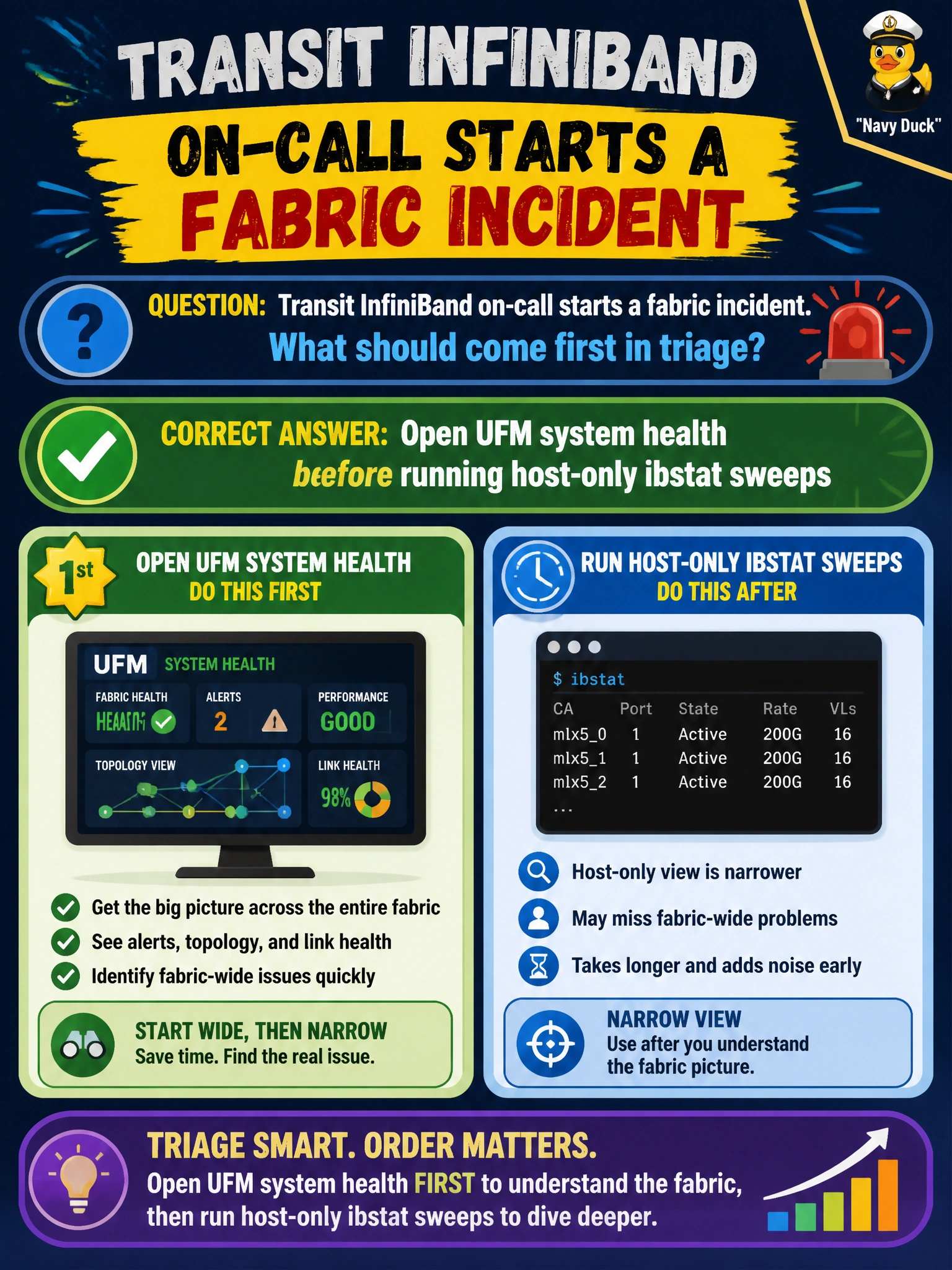
Short Explanation
Do not start by spelunking every host counter. Open UFM system health first, then decide whether host-only ibstat sweeps are even the right next step for transit IB.
Full Explanation
Transit InfiniBand on-call starting a fabric incident should open UFM system health before running host-only ibstat sweeps. Fabric-wide control-plane and system-health context prevents thrashing every GPU node when the fault is SM/HA or another centralized service, and it focuses subsequent host checks if the data plane is the true issue for municipal transit AI.
Why the other options fail by concept: Running host ibstat sweeps across nodes before opening UFM system health skips fabric-wide context, risks thrashing GPU nodes, and can miss SM/HA or centralized service faults. Exporting UFM telemetry port counters before checking system health status skips the big picture, risks misinterpreting counters without knowing SM/HA state, and delays identifying centralized faults. Restarting UFM subnet manager service before reviewing system health view can mask live symptoms, destroy evidence, and turn a transient SM issue into a prolonged outage.
Exam caveat: UFM-first does not mean UFM-only—after system health is reviewed, targeted host ibstat, counters, or RDMA tests remain appropriate. The exam point is triage order: fabric system health before indiscriminate host sweeps on the transit cluster.
Operational check: for a new transit IB incident, open UFM system health in the first minutes, note SM/HA and component status, then decide whether host ibstat sweeps are needed and on which nodes—document that order in the civic incident timeline before broader disruption.