
Parks computer-vision latency spikes align with Spectrum uplink symptoms. What should operators correlate?
Select an answer to reveal the explanation.
Short Explanation
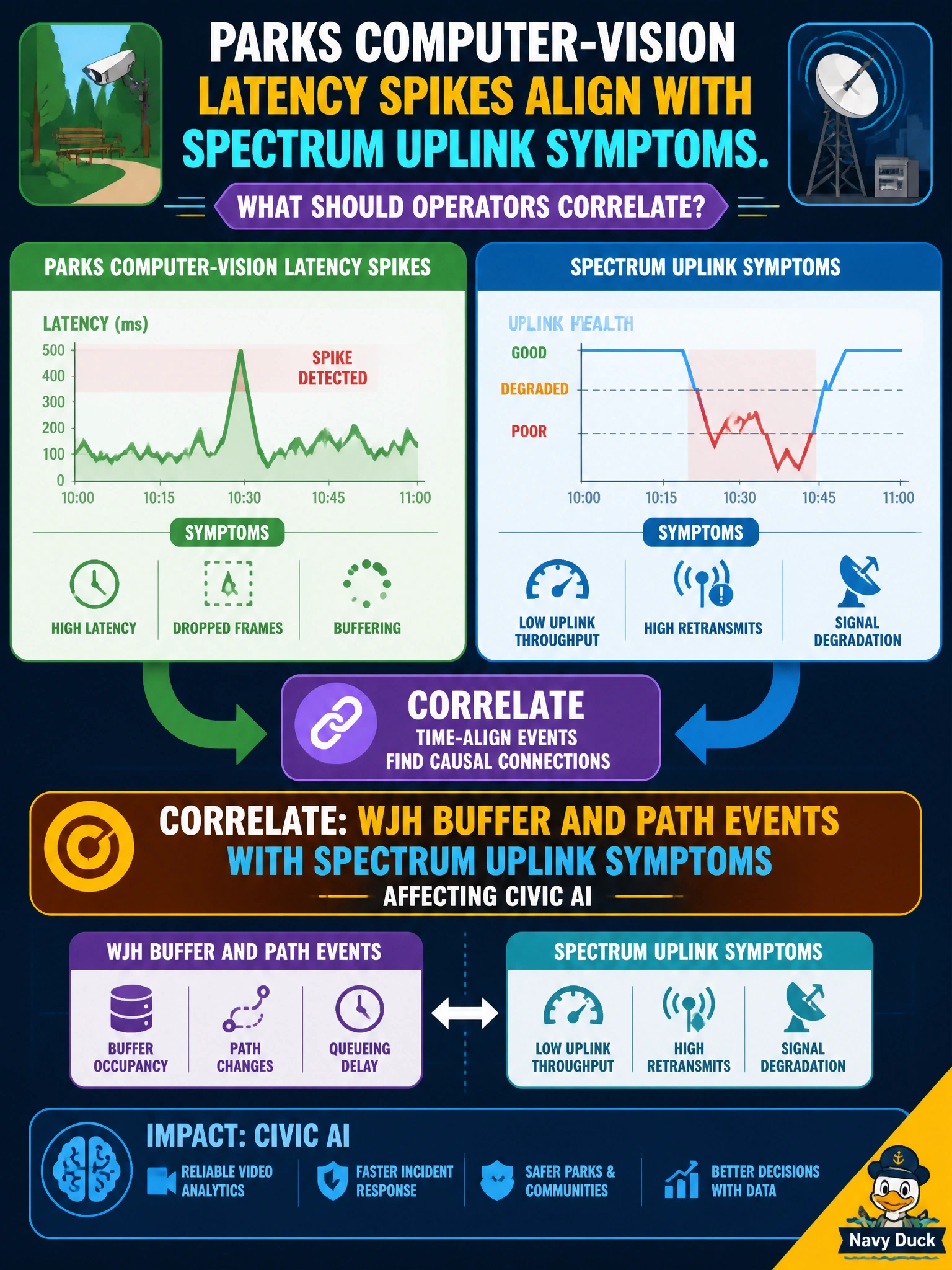
When parks CV latency spikes with the uplink, believe the breadcrumbs. Correlate WJH buffer and path events with those Spectrum symptoms so civic AI slowdowns have a network story.
Full Explanation
Parks computer-vision latency spikes that align with Spectrum uplink symptoms should be explained with fabric evidence, not camera folklore. Correlating WJH buffer and path events with those Spectrum uplink symptoms ties civic AI slowdowns to concrete congestion, discards, or path changes on the links that carry vision traffic, which is the actionable mapping operators need.
Why the other options fail by concept: looking only at Spectrum link state change timestamps during the same latency spike window fails because a link staying up or down is a narrower signal than the buffer and path events that actually explain congestion-driven latency; link-state alone can look unchanged while buffer pressure is still spiking. Comparing WJH path discard counts against Parks inference queue depth over daily trend fails because a daily trend is too coarse a window to tie discrete discard events to this specific latency spike; averaging across a full day smooths out exactly the short-lived congestion that caused the spike. Comparing Parks GPU thermal telemetry against vision inference latency baselines invents a host-side thermal explanation while leaving the uplink evidence unexamined; thermal baselines describe the GPU, not the Spectrum path the vision traffic actually crosses.
Exam caveat: correlation is not causation—thermal events and fabric events can coincide. Prefer multi-signal confirmation (WJH categories, interface counters, GPU metrics) and verify that the parks CV flows actually traverse the symptomatic Spectrum uplinks before declaring a fabric root cause.
Operational check: when parks CV latency spikes, pull WJH buffer and path events for the Spectrum uplinks serving the vision nodes for the same window, overlay GPU/host metrics, confirm matching buffer pressure or path events, and escalate a fabric ticket with port-level evidence rather than a blind camera firmware rollback.