
Emergency management must burn-in fabric nodes without starving 911 NLP inference. What scheduling approach fits?
Select an answer to reveal the explanation.
Short Explanation
Burn-in the emergency-management fabric in waves so 911 NLP keeps a seat—taking every inference node offline at once is not a civic flex.
Full Explanation
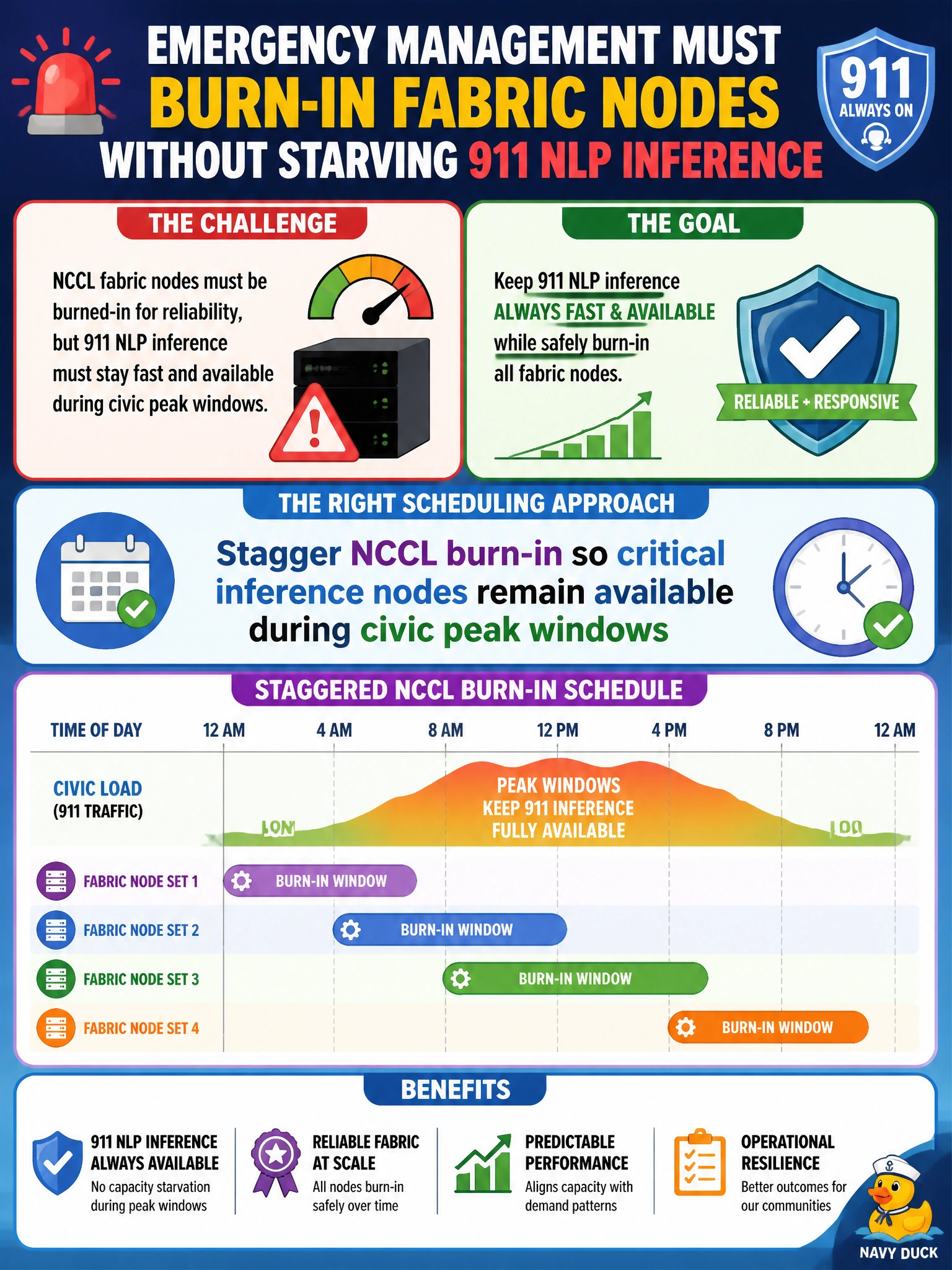
Emergency management must stagger NCCL burn-in so critical inference nodes remain available during civic peak windows, preserving 911 NLP capacity while still completing Domain 4 endurance validation. Burn-in is mandatory evidence work, but municipal availability constraints decide when and how many inference nodes can be offline together. Burning in every inference node simultaneously during a declared emergency maximizes fabric stress at the worst possible moment and risks collapsing 911 NLP capacity when it is needed most. Disabling 911 NLP for a week to simplify burn-in logistics trades operational convenience for unacceptable civic service impact and is not a Domain 4 scheduling strategy. Running burn-in only on nodes that are actively serving 911 traffic couples endurance testing with live emergency inference and can degrade latency or availability for callers. Exam caveat: staggering does not mean skipping nodes—every node still needs burn-in in a planned wave; the control is concurrency and timing relative to civic demand. Operational check: build a burn-in wave plan for emergency-management GPUs that keeps a documented inference reserve online during peaks, schedule waves in change calendar windows, and verify 911 NLP capacity SLOs remain green throughout.