
Transit ops defines the contents of every GPU rack acceptance package. What BlueField-3 practice should be included?
Select an answer to reveal the explanation.
Short Explanation
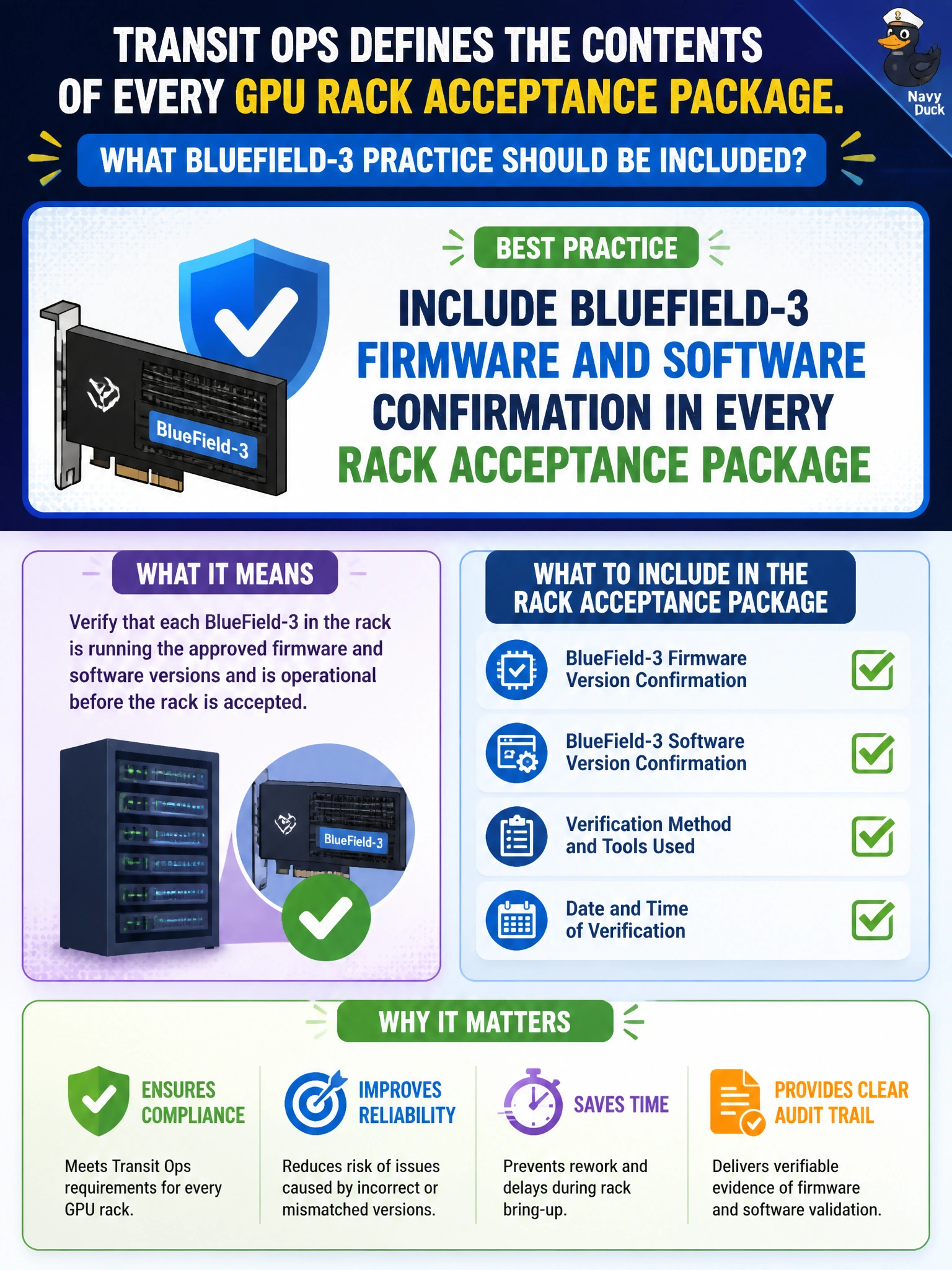
Every transit rack acceptance package should include BF3 FW/SW confirmation—photos of heat sinks and post-incident checks don't count as day-0 verification.
Full Explanation
Transit ops defines rack acceptance packages so every GPU rack exits the dock with the same evidence set; BlueField-3 confirmation belongs in that package. Including BlueField-3 firmware and software confirmation in every rack acceptance package makes DPU platform currency a required artifact rather than an optional follow-up after the rack is already live. Omitting BlueField-3 checks to shorten the package trades minutes of verification for weeks of mixed DPU risk across the transit fleet. Checking BlueField-3 versions only after the first production incident uses rider-facing outages as the discovery mechanism for factory or imaging skew. Replacing BlueField-3 confirmation with a photo of the DPU heat sink documents physical presence, not software fitness or approved levels. Domain 4 treats BF3 FW/SW confirmation as part of multifaceted rack verification for AI factories. Caveat: photo evidence can supplement physical install and seating checks but never substitutes for version strings against the approved matrix. Operational check: add BF3 firmware/software readouts to the transit rack acceptance checklist, fail the package if any DPU is missing or below standard, remediate, and store the results with the rack’s as-built package.