
A library consortium AI rack must keep compute and storage cables distinct during bring-up. Which cabling discipline helps?
Select an answer to reveal the explanation.
Short Explanation
Color and labels are the library’s Dewey Decimal for cables—keep compute and storage media from getting shelved in the wrong ports. Unmarked identical cords invite quiet, painful swaps.
Full Explanation
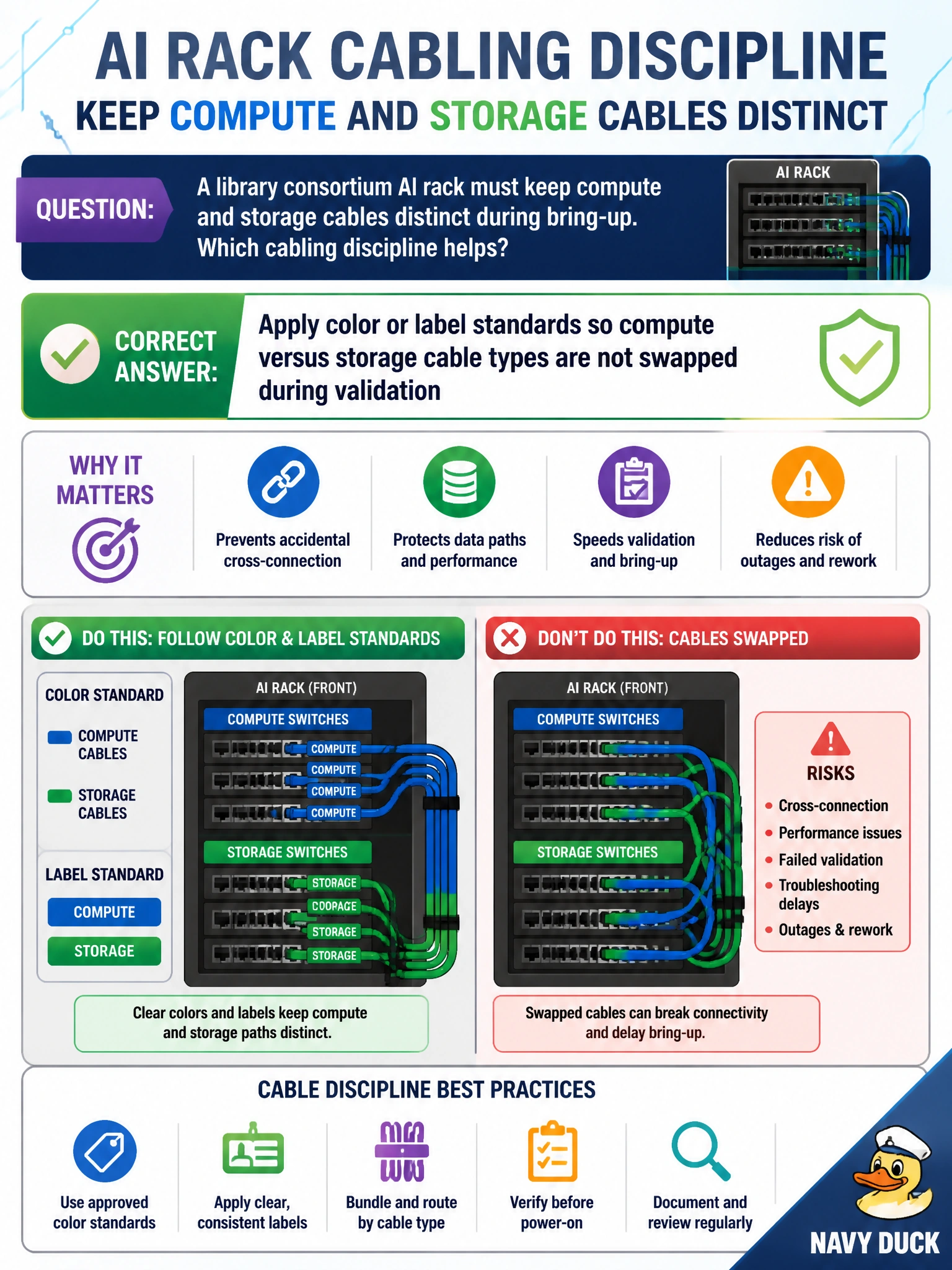
A library consortium AI rack that must keep compute and storage cables distinct during bring-up should apply color or label standards so compute versus storage cable types are not swapped during validation. Distinct media and ports are easy to cross-plug under time pressure; color and label discipline makes the wrong cord visually obvious before validation signs off. That cabling hygiene protects both the GPU fabric and the storage path the consortium’s AI workloads depend on.
Using identical unmarked cords for every port so swaps are harder to notice intentionally removes the cues validators need and increases silent misplugs. Relying on memory alone without labels after a weekend install rush fails as soon as another crew touches the rack. Routing storage cables into GPU fabric ports to save patch-panel space creates exactly the class of swap the discipline exists to prevent and can damage or disable fabric links.
Exam caveat: compute-versus-storage cable separation at bring-up depends on color/label standards—not identical unmarked cords, memory, or intentional cross-routing into GPU ports. Operational check: define and apply consortium color/label rules for compute and storage media, verify during validation that no storage cord lands in GPU fabric ports (and vice versa), correct any swaps, and photograph or document the labeled state in the bring-up package.