
Transit operations finishes pulling GPU fabric cables for a municipal AI factory. What documentation check validates cable types?
Select an answer to reveal the explanation.
Short Explanation
The cabling plan is the transit map—label lengths and types, then check the pull against it before you call the fabric done. Mystery black cables in a bin are how wrong media sneak into GPU rows.
Full Explanation
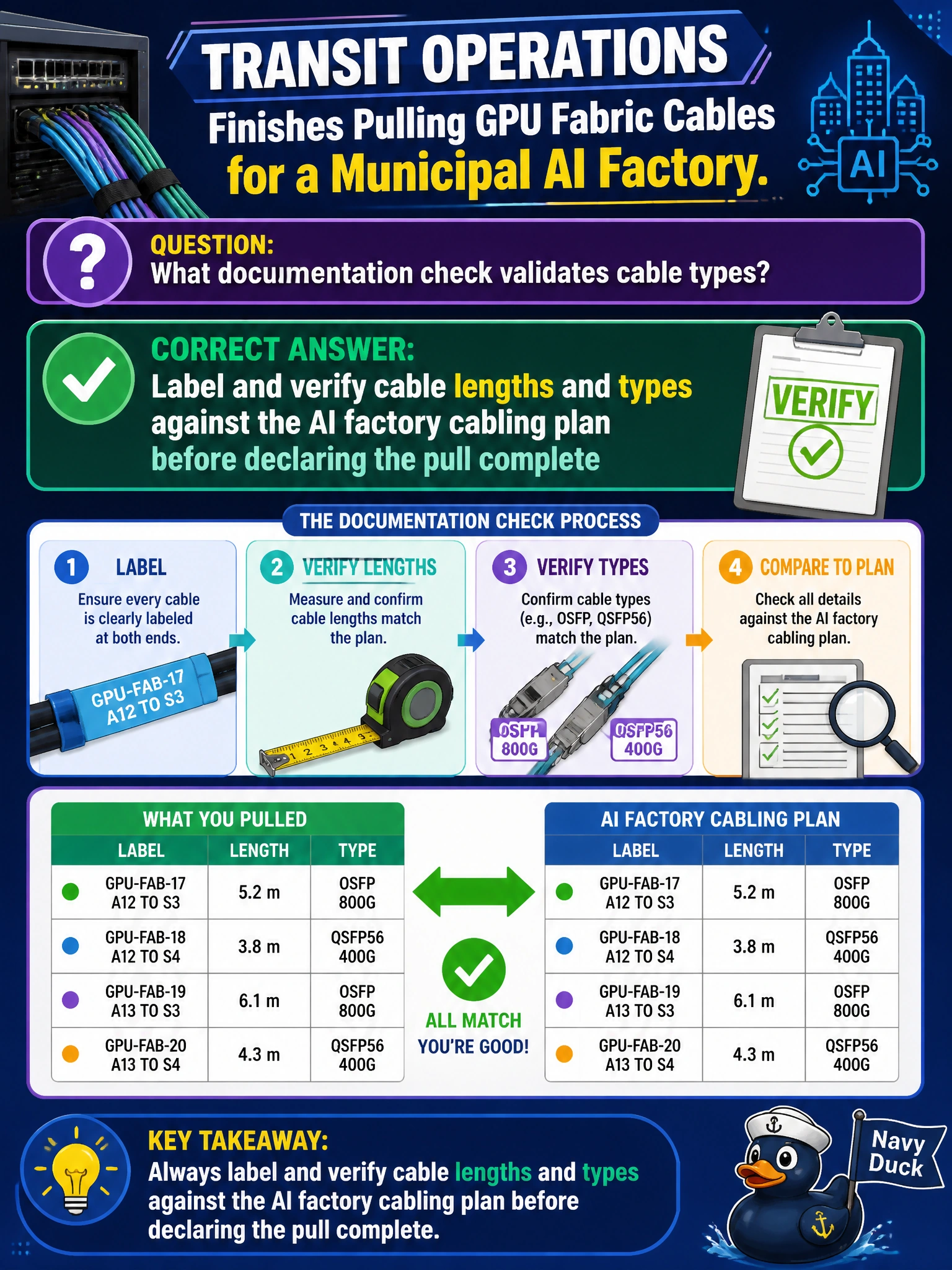
After transit operations finishes pulling GPU fabric cables for a municipal AI factory, documentation validation means labeling and verifying cable lengths and types against the AI factory cabling plan before declaring the pull complete. The plan specifies media class and reach for each path; labels and verification prove the installed plant matches that plan instead of becoming a bin of anonymous black cables. Completing that check before “pull complete” prevents NCCL and link surprises that are really undocumented media mismatches.
Tossing leftover cables unlabeled into a bin for mystery reuse destroys traceability and encourages later unqualified reuse. Assuming every black cable is identical regardless of DAC versus optics class erases critical media distinctions. Updating the plan only after the first NCCL timeout in production uses a training failure as the documentation trigger instead of bring-up verification.
Exam caveat: GPU fabric pull completion requires labeled length/type verification against the cabling plan—not unlabeled leftovers, “all black cables are equal,” or post-NCCL plan updates. Operational check: walk the transit AI-factory pull with the cabling plan, confirm each labeled run’s type and length, correct mismatches, update as-built only with verified changes, and then sign the pull complete.