
A housing-authority analytics cluster runbook validates nvidia-smi health only after firmware upgrades finish. Why is that sequencing correct?
Select an answer to reveal the explanation.
Short Explanation
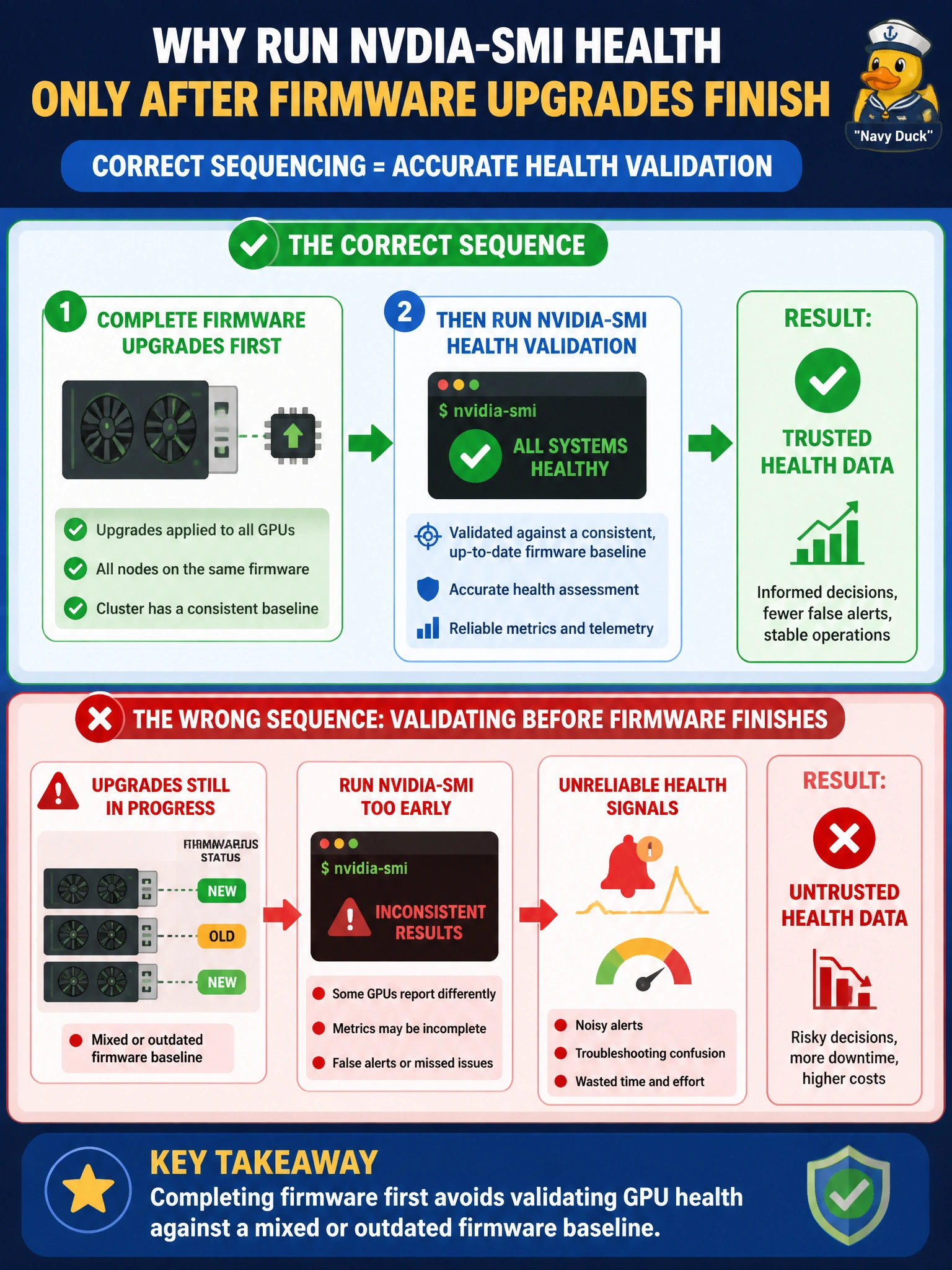
Checking GPUs with nvidia-smi before the firmware wave finishes is like inspecting elevators while the controllers are mid-upgrade—you get a confusing snapshot. Finish firmware, then let SMI confirm the housing cluster’s GPUs against a known-good baseline.
Full Explanation
Housing-authority analytics clusters validate nvidia-smi health after firmware upgrades finish so GPU checks reflect a known, consistent firmware baseline rather than a mixed or outdated train. Firmware changes can alter device behavior, enumerations, and error reporting; SMI results collected mid-wave or against stale firmware can pass or fail for the wrong reason and pollute acceptance evidence. Completing the firmware wave first, then running SMI and related health probes, ties “healthy GPU” to the versions operations actually intends to run. SMI results are not meaningless until Slurm accepts a job—device health is a host-level gate that should pass before schedulers see the node. Upgrading firmware only after weeks of production SMI burn-in inverts risk: production has already trusted an unaligned baseline. Running SMI before BMC credentials exist so out-of-band stays unused sacrifices the recovery path needed when an in-band driver or GPU probe hangs the host. Exam caveat: some pre-checks may confirm devices are present before a firmware wave, but final health acceptance for the housing cluster still follows completed, verified firmware. Operational check: after the firmware set reports success across GPUs and BMC, run nvidia-smi (and vendor health utilities) on each node, archive versions plus health output, then allow analytics jobs.