
The permitting agent can propose fee waivers. How should system security control who approves them?
Select an answer to reveal the explanation.
Short Explanation
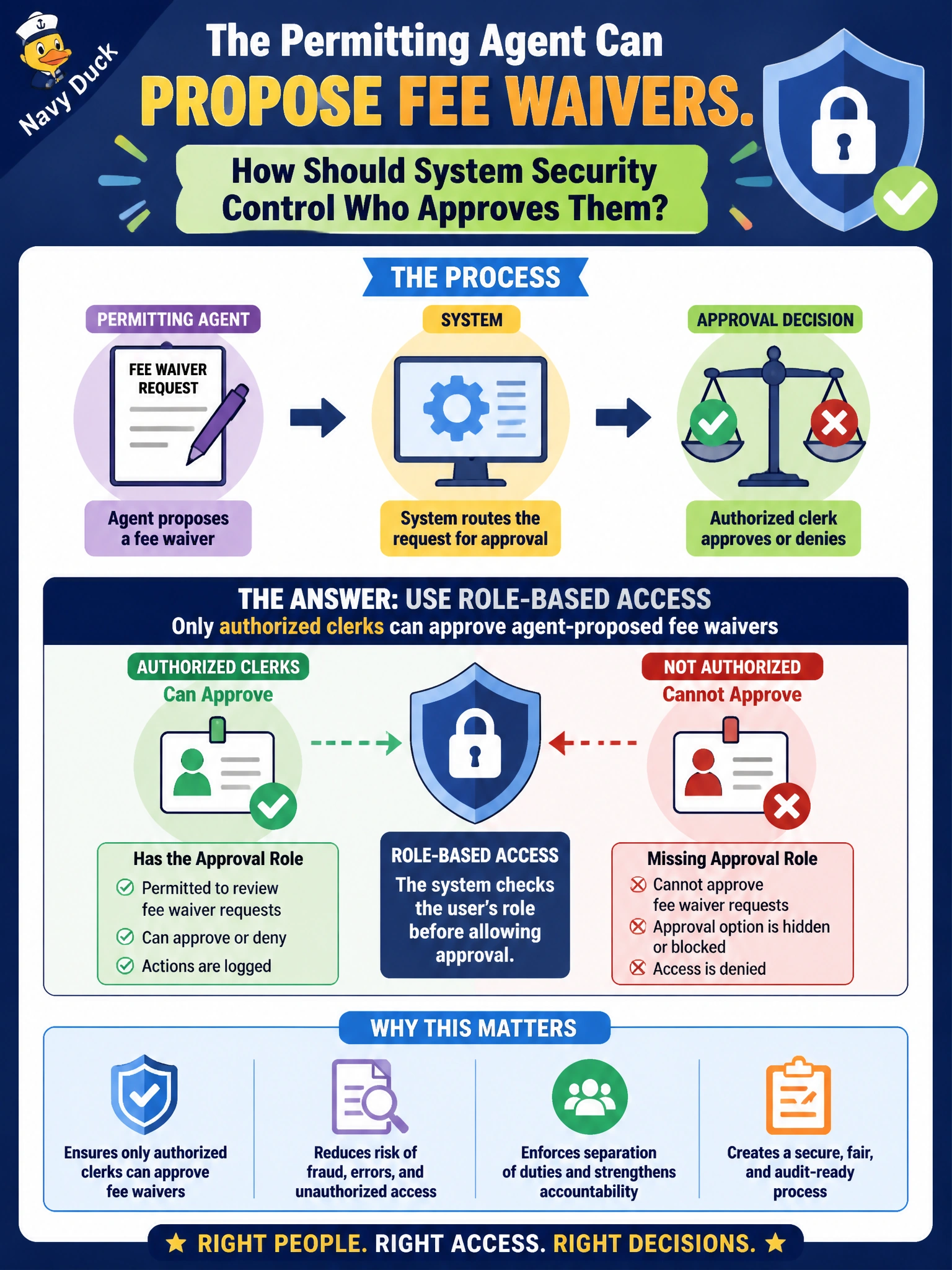
Fee waivers are privileged city money moves. Role-based access that lets only authorized clerks approve agent proposals keeps those capabilities locked down.
Full Explanation
Fee waivers proposed by a permitting agent are privileged municipal financial actions. System security should enforce role-based access so only authorized clerks (or equivalent roles) can approve agent-proposed waivers. Separating proposal from approval keeps the agent useful for drafting while preventing anonymous or unauthorized execution of money-impacting decisions. RBAC on the approval step is the control that binds capability to accountable human roles and supports later audit of who granted a waiver.
Letting any anonymous portal visitor approve fee waivers instantly fails by concept because anonymous public users are not privileged fiscal actors; that design is privilege escalation by default. Auto-approving every agent-proposed waiver with no human role check fails because it collapses proposal and authorization, allowing model error or prompt abuse to grant real fee relief without accountability. Hiding waiver tools from audit logs so approvals cannot be reviewed fails because concealment defeats detection of misuse and breaks municipal financial oversight.
Exam caveat: NCP-AAI authorization items often contrast agent suggestion with human-gated privileged actions. When the stem involves fee waivers or similar high-impact approvals, prefer RBAC-bound human approval over anonymous, automatic, or unaudited execution.
Operational check: map fee-waiver approval to a clerk (or finance) role in the identity system; deny approve APIs to unauthenticated and unauthorized callers; require the agent to submit a proposal only; verify audit logs record proposer, approver, amount, and permit ID before any waiver posts to the billing system.