
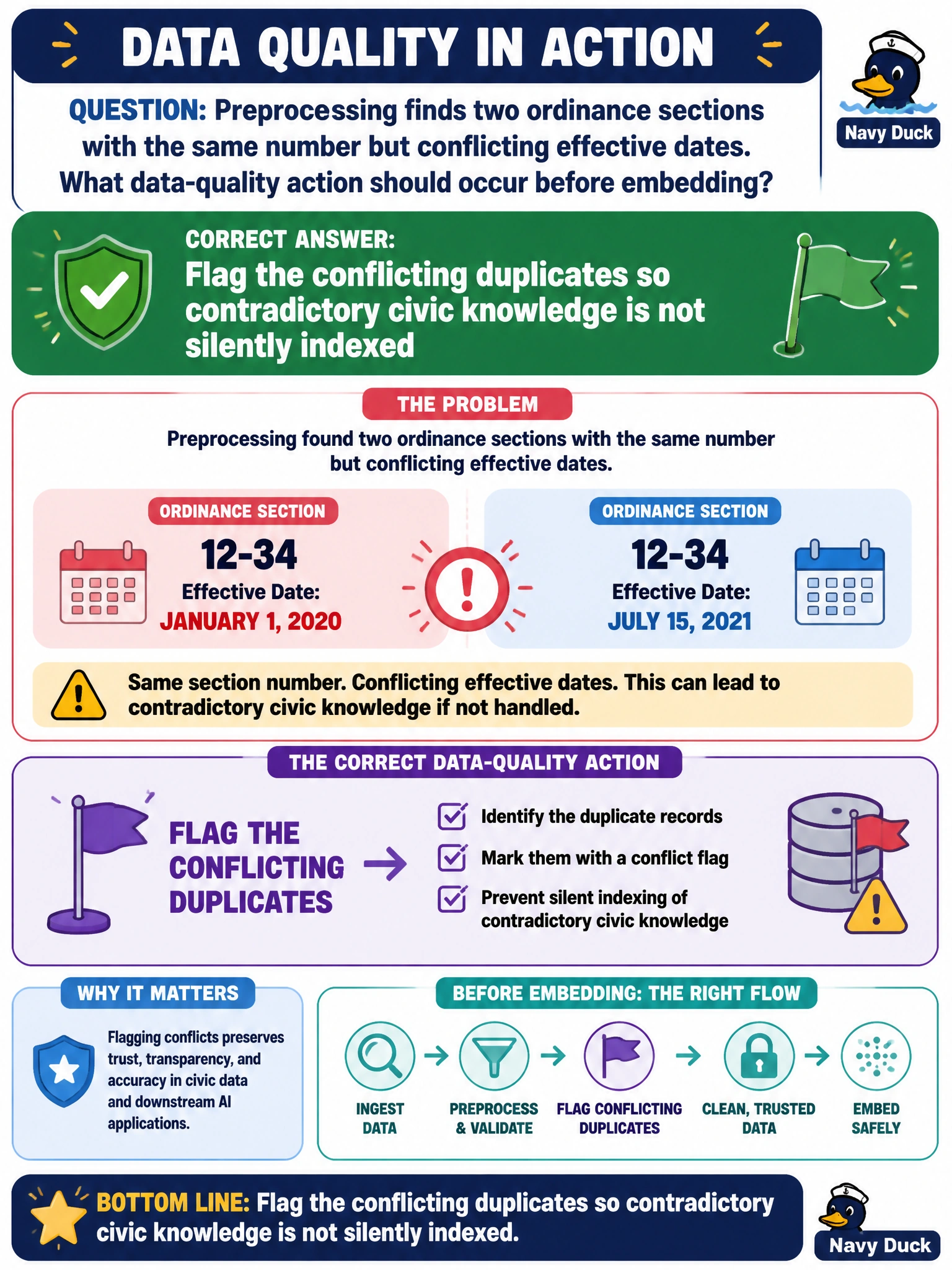
Preprocessing finds two ordinance sections with the same number but conflicting effective dates. What data-quality action should occur before embedding?
Select an answer to reveal the explanation.
Short Explanation
Two “same” ordinances with different dates is a minefield—don’t quietly embed both and hope. Flag conflicting duplicates in data quality so contradictory code never slips into the index unnoticed.
Full Explanation
Preprocessing that finds two ordinance sections with the same number but conflicting effective dates must flag the conflicting duplicates so contradictory civic knowledge is not silently indexed. Data-quality gates before embedding protect agents from being grounded on mutually inconsistent law when answering zoning or permit questions.
Embedding both versions without flags invites the model to average or randomly prefer conflicting rules. Deleting the entire municipal code corpus to avoid conflict resolution destroys the knowledge base. Preferring the older date always, regardless of repeal status, systematically surfaces superseded text.
Exam caveat: flagging should route to human or rules-based resolution (effective/repealed status), not stall forever without an owner. Operational check: inject a known conflicting pair in a pre-prod corpus, confirm the quality check flags and blocks silent dual embedding, and verify resolved singles carry correct effective-date metadata into the index. Record conflict tickets with owners and due dates so flagged ordinance duplicates do not linger unresolved. Escalate unresolved ordinance conflicts older than a defined SLA to the municipal code steward responsible for the title.