
The nightly ETL that refreshes fee tables fails, but a release pipeline still wants to promote a fee-quoting agent. What should happen?
Select an answer to reveal the explanation.
Short Explanation
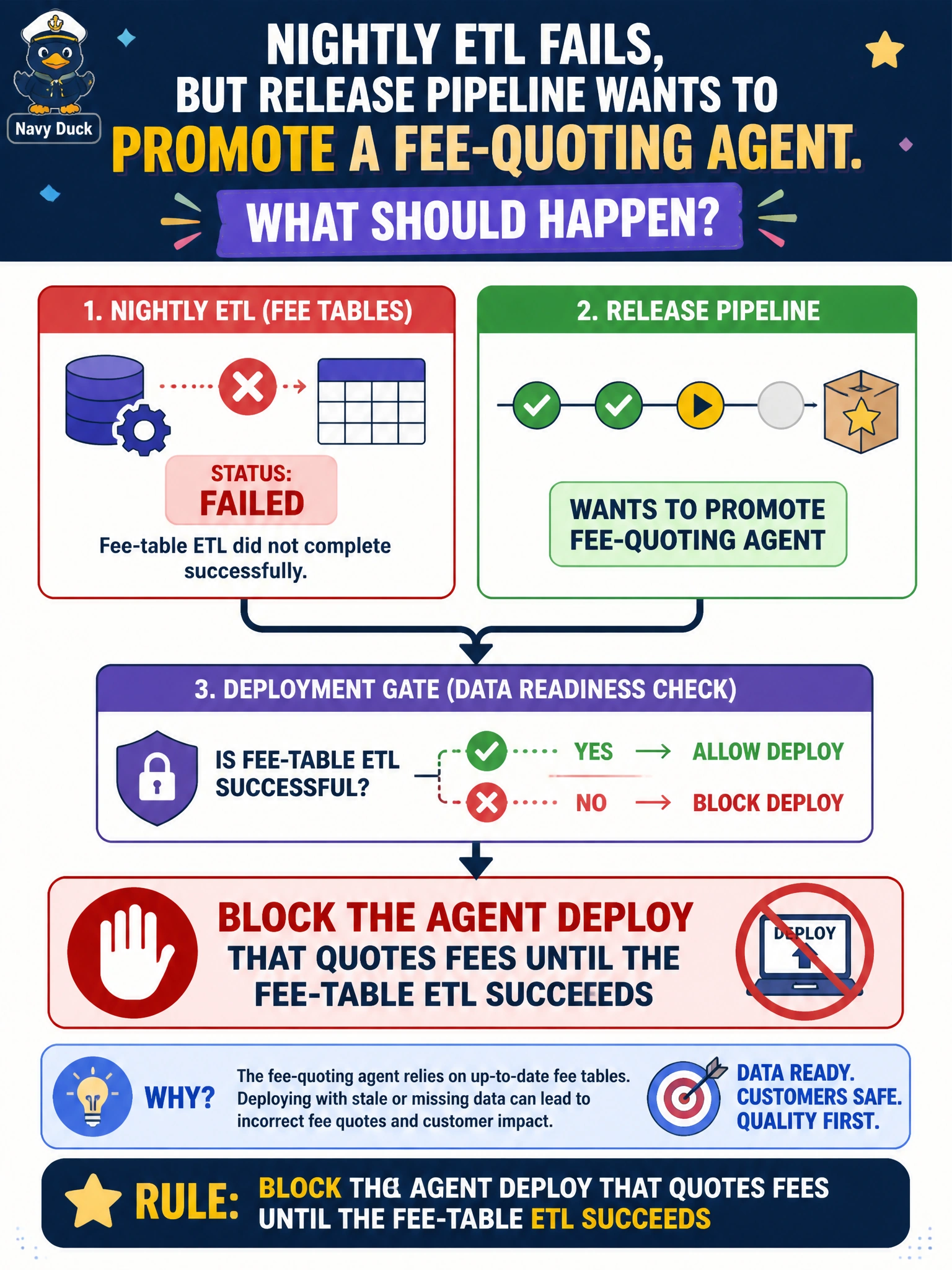
If the nightly fee-table ETL fails, you should block the agent deploy that quotes fees until it succeeds. That gate keeps stale prices from reaching residents.
Full Explanation
When the nightly ETL that refreshes fee tables fails, you must not promote a fee-quoting agent against stale or missing data. Blocking the agent deploy until the fee-table ETL succeeds ties data health to release readiness and protects residents from incorrect amounts on permits and applications. Promoting immediately and hoping residents do not notice stale fees shifts the financial harm onto the public. Replacing fee quotes with randomly sampled historical amounts invents charges and undermines trust. Disabling monitoring so the ETL failure is not visible to release gates hides the defect rather than controlling it. Exam caveat: not every agent deploy depends on fee tables, so gate only components that quote or bill from them; never skip the gate for fee-quoting paths. Practical check: simulate ETL failure in staging and verify that the fee-quoting release is blocked; after ETL succeeds, verify that deployment proceeds and quoted fees match the refreshed table. Make ETL health a required status check in the release pipeline, and require acknowledgment from both data engineering and agent release owners before an emergency bypass.