
Where is it appropriate to use spot or preemptible nodes in a municipal agent platform?
Select an answer to reveal the explanation.
Short Explanation
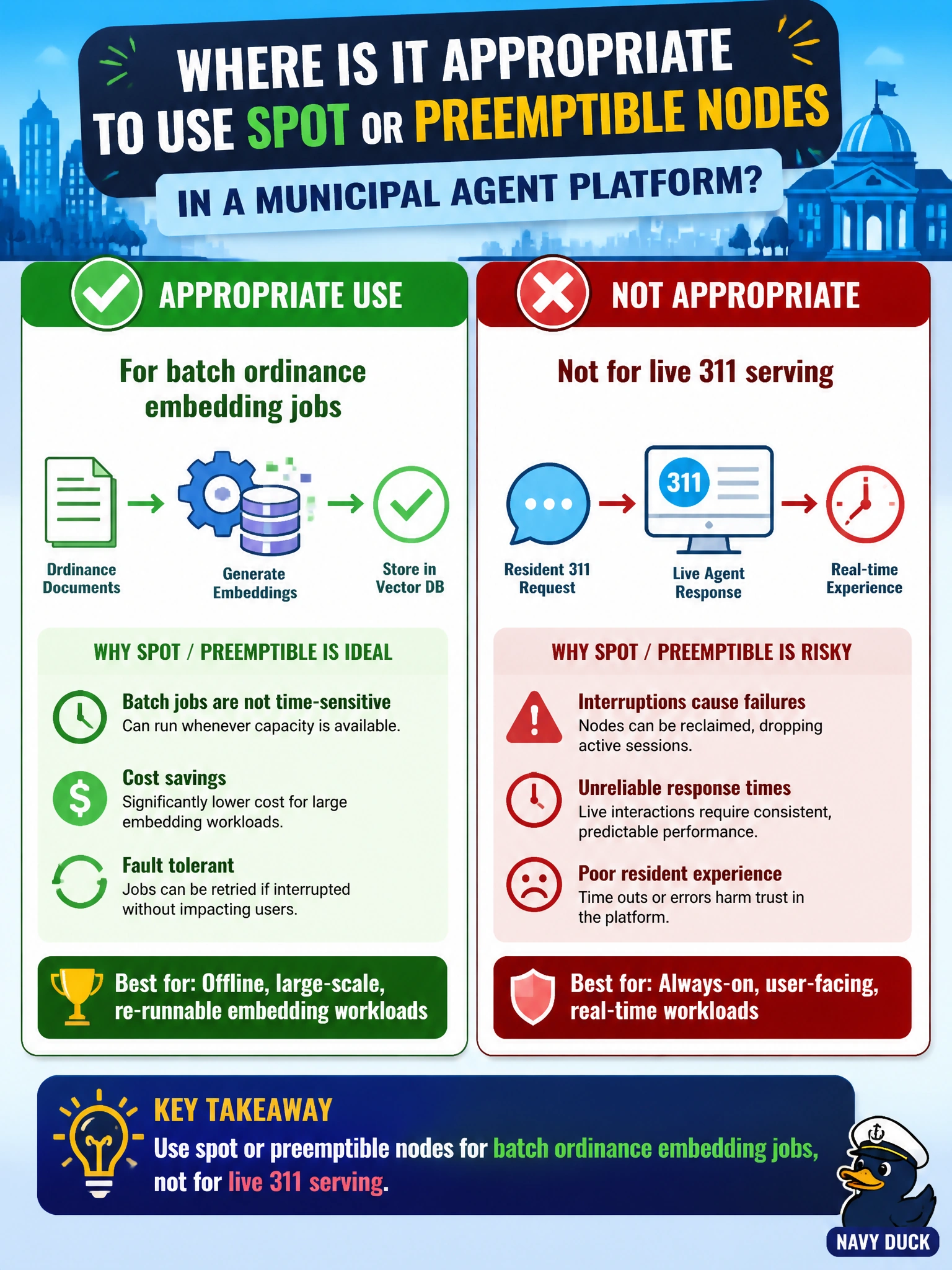
Spot nodes are great for overnight ordinance embedding chores—not for the live 311 line residents lean on. Keep interactive serving on stable capacity. Putting the only case DB on spot is asking for a bad day.
Full Explanation
Spot or preemptible nodes are appropriate in a municipal agent platform for interruptible batch work such as ordinance embedding jobs—not for live 311 serving. Embeddings and offline index builds can checkpoint and retry when capacity is reclaimed; residents calling 311 cannot tolerate sudden preemption mid-conversation. Using cheaper reclaimable capacity for batch lowers cost while keeping interactive inference on on-demand or reserved nodes with stable availability.
Placing the only live 311 inference path on spot nodes fails conceptually because preemption directly risks resident-facing outages. Putting every workload on spot so on-demand is never purchased fails because critical stateful and interactive civic services need stability guarantees. Using spot for the sole database replica storing active case state fails because database loss/preemption endangers durability of tickets and eligibility data.
Exam caveat: even batch jobs need eviction handling, checkpoints, and queues; “spot for batch” is not “no reliability engineering.” Mixed node pools with taints/tolerations keep live serving off preemptible hardware.
Operational check: schedule ordinance embedding on spot/preemptible pools with restart policies, pin live 311 Deployments to on-demand pools, simulate eviction, and confirm serving SLOs never depend on reclaimable nodes.