
A permitting office wants safe Kubernetes cutover for its agent with instant rollback. Which pattern fits?
Select an answer to reveal the explanation.
Short Explanation
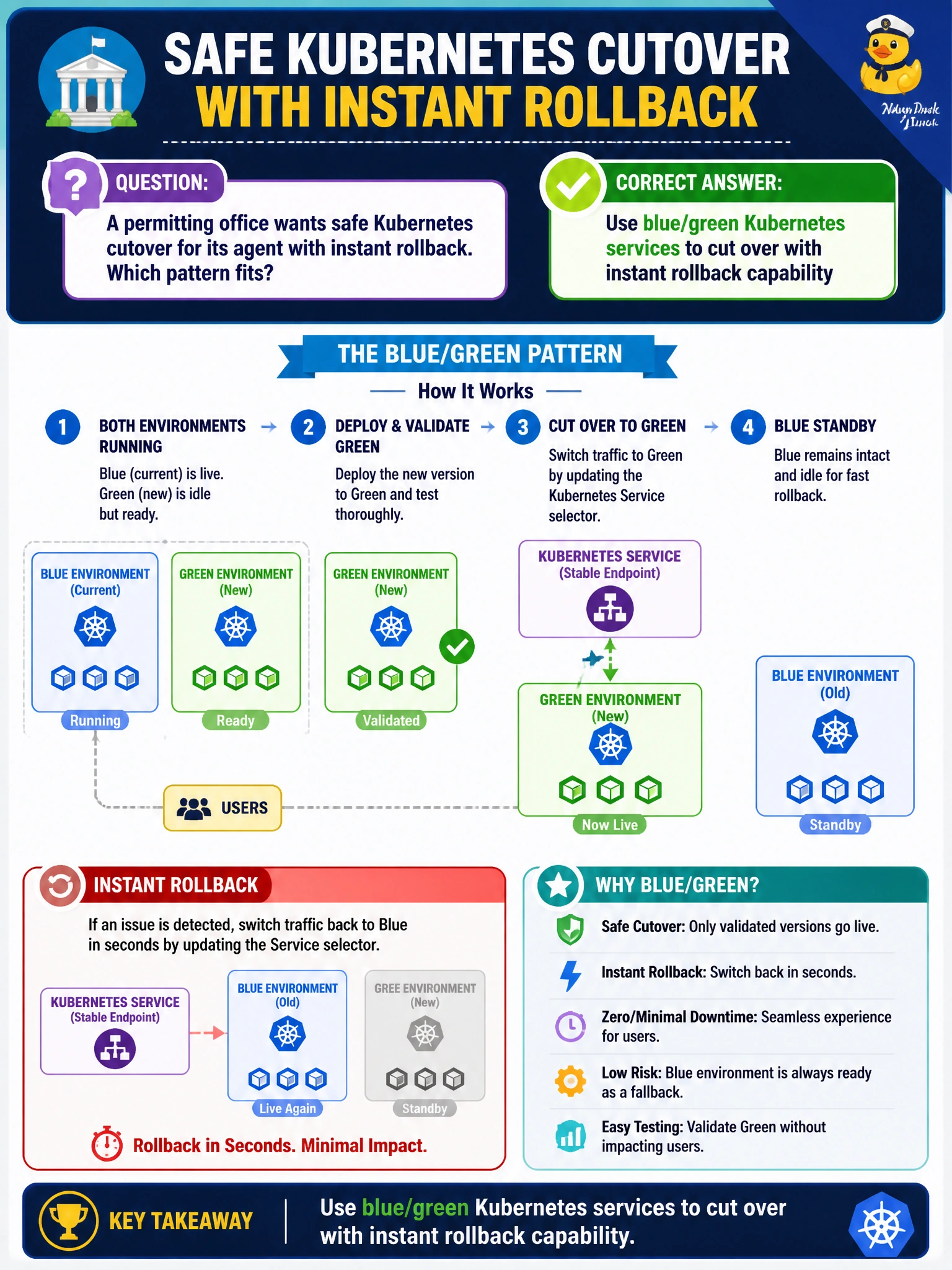
You can use blue/green services to move traffic to the new permitting agent and quickly return to the known-good version if it falters. Replacing live pods in place, deleting backups, or requiring a week of downtime leaves you without the safe, immediate cutover and rollback you need.
Full Explanation
Blue/green Kubernetes services fit a permitting office that needs a safe cutover with instant rollback. Keep the current blue environment serving requests while green runs the new image; once it is ready, switch Service or Ingress traffic to green and retain the ability to switch back immediately if errors rise. This limits disruption to licenses and inspections and preserves a known-good environment without rebuilding it. Replacing the live agent pods in place does not preserve a separate healthy baseline, so a failure in the new version can leave you relying on restarts rather than making an immediate traffic rollback. Deleting backups before deployment deliberately removes recovery options and undermines resilience. Requiring a week of downtime for every image-tag change imposes an unnecessary service interruption; parallel environments allow a controlled cutover instead. Exam caveat: blue/green temporarily requires extra capacity, and an incompatible or irreversible data-schema migration can prevent a true rollback even when traffic can be switched back. Practical check: deploy green alongside blue, run smoke tests and synthetic permitting flows against green, switch traffic, monitor errors and latency during a soak window, and confirm that the documented rollback to blue works.