
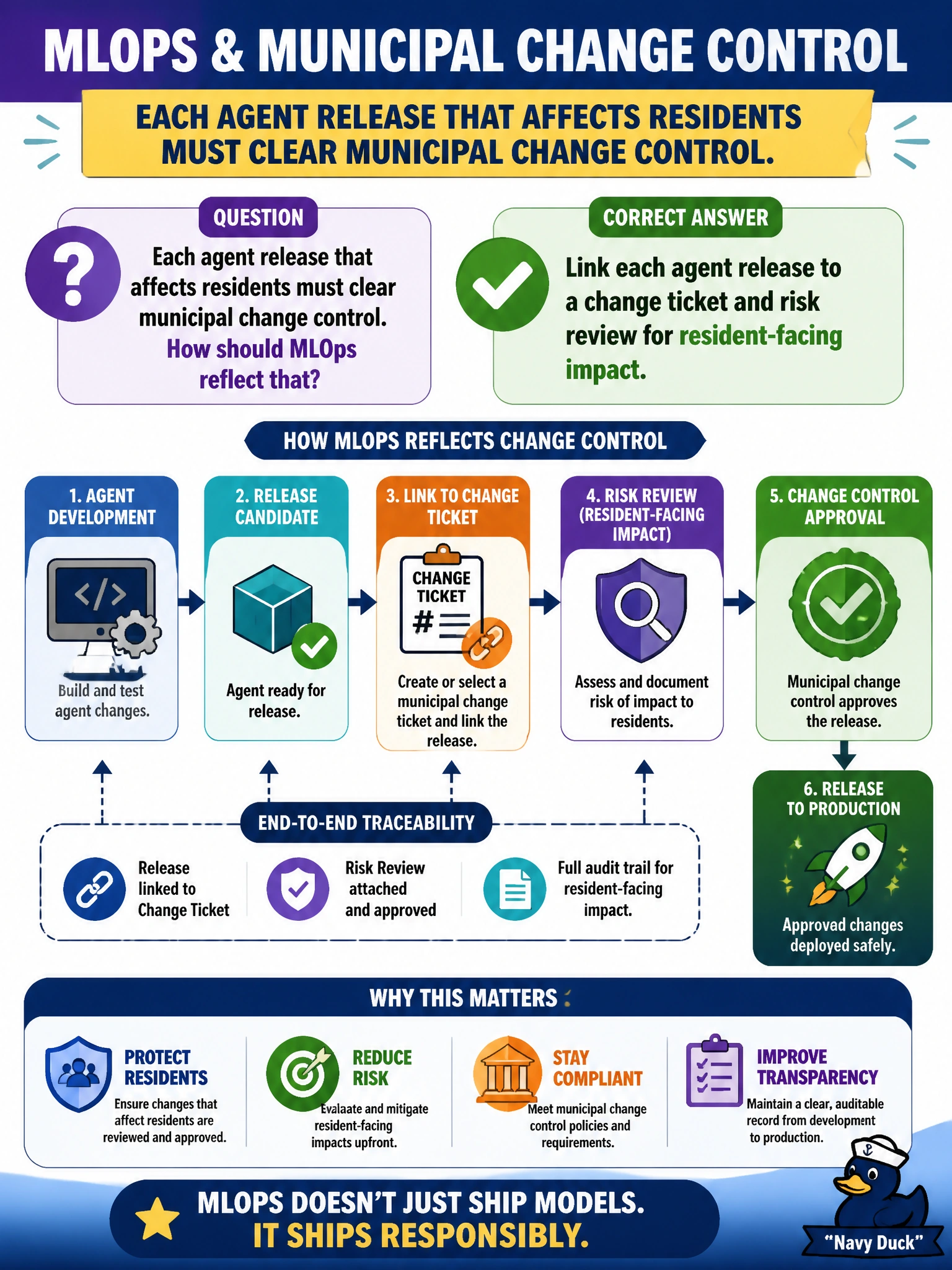
Each agent release that affects residents must clear municipal change control. How should MLOps reflect that?
Select an answer to reveal the explanation.
Short Explanation
If residents feel the change, it needs a ticket and a risk look—same as any other city system cutover. Silent ships and ‘hobby’ releases skip the grown-up process. Tie agent releases to change control.
Full Explanation
MLOps governance for municipal agents aligns releases with change-control processes by linking each resident-facing deploy to tickets and risk review. When each agent release that affects residents must clear municipal change control, MLOps should require that linkage so impact assessment, communications, rollback, and approval are planned like any other city system cutover. Agent logic changes are production changes, not informal experiments on live residents.
Shipping silently so change boards are never bothered bypasses required governance and leaves no approved rollback story. Treating releases as optional hobbies outside IT governance creates shadow changes on production civic services. Linking only cosmetic CSS tweaks to risk reviews while ignoring agent logic examines the wrong risk surface and misses prompt, model, and tool impacts.
Exam caveat: resident-facing agent logic changes belong in change control with ticket and risk review—not silent or “hobby” deploys. Operational check: for a sample release, confirm a change ticket ID is attached in pipeline metadata, risk review is recorded before production promotion, rollback instructions are present on the ticket, and on-call knows the change window.