
Before any production merge for the benefits bot, what governance control should MLOps enforce?
Select an answer to reveal the explanation.
Short Explanation
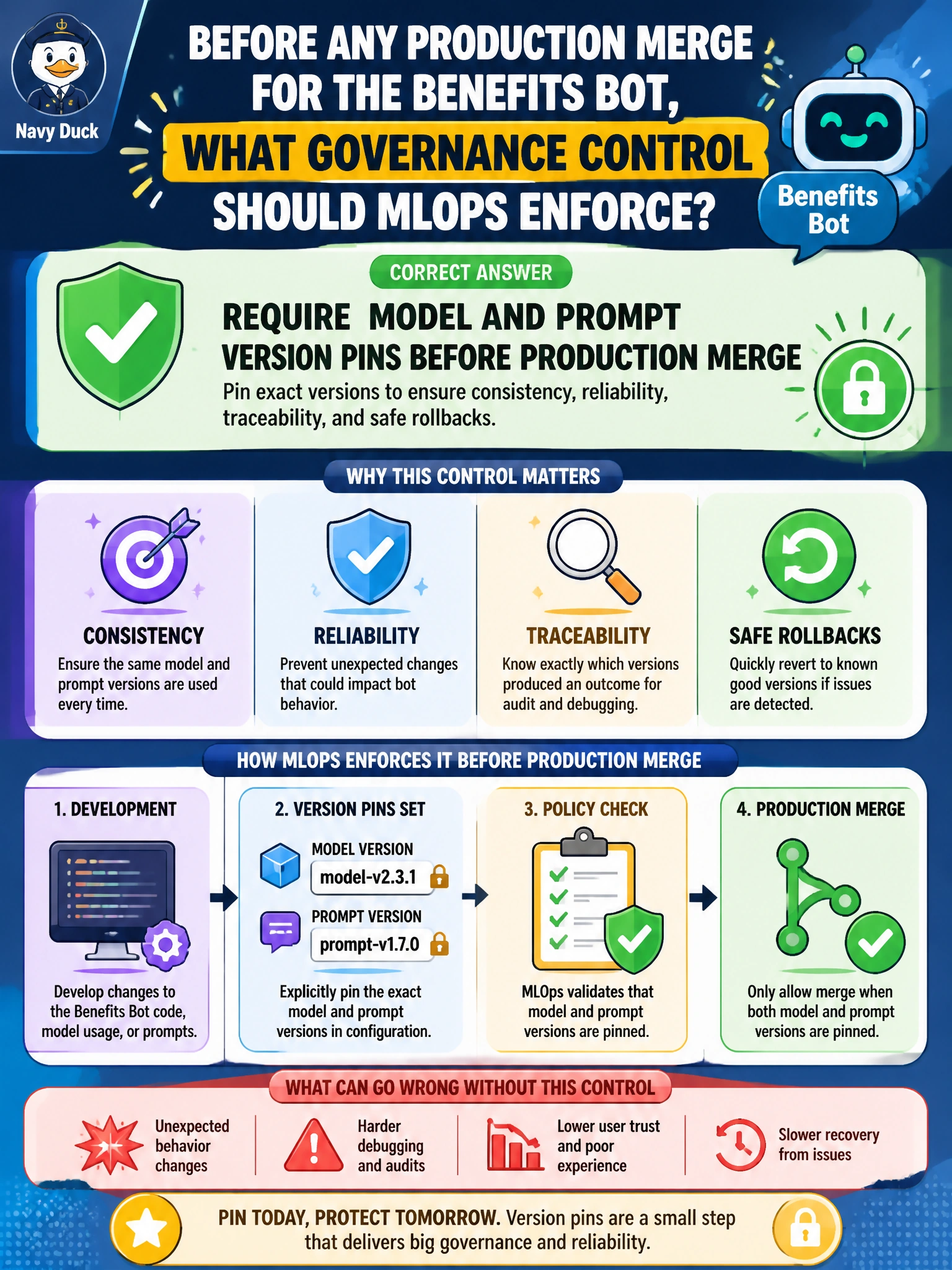
Pin the recipe before it hits the cafeteria line—model and prompt versions locked for merge. Hurry-up unsigned changes and deleted history leave you unable to say what residents actually got. Governance means pins first, merge second.
Full Explanation
Civic MLOps governance requires pinned model and prompt versions before production merges so releases are reproducible and auditable. Before any production merge for the benefits bot, enforcing model and prompt version pins means reviewers and operators can state exactly what residents received, compare behavior across releases, and roll back to a known pair when quality or compliance issues appear. Pins are a merge-time control, not optional paperwork.
Allowing unsigned model and prompt changes because a developer is in a hurry bypasses the control when pressure is highest and mistakes are most likely. Deleting version history after each successful deploy erases the audit trail municipalities need for investigations and public accountability. Merging first and inventing version numbers only if auditors ask later is after-the-fact fiction, not governance.
Exam caveat: version pins for model and prompt are a merge-time control for resident-facing agents—not optional documentation written under audit pressure. Operational check: attempt a merge without pins and confirm the pipeline blocks; deploy a pinned model/prompt pair; roll back to the previous pins after a simulated regression; show auditors the immutable version record tied to a sample production answer.