
Latency budgets fail only on multimodal photo-ticket turns. How should optimization proceed?
Select an answer to reveal the explanation.
Short Explanation
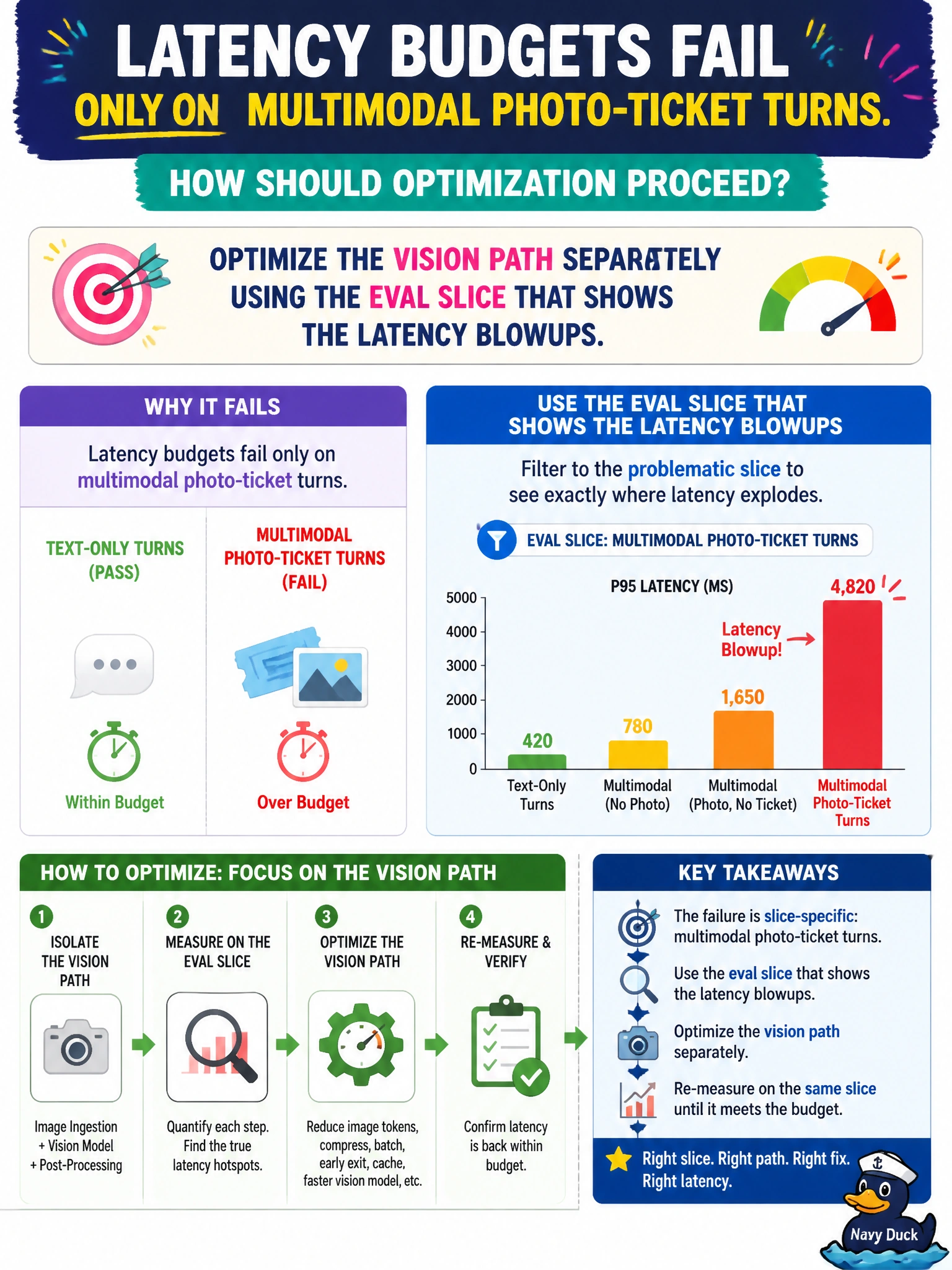
If only the photo line is slow, don’t make the whole DMV crawl. Slice the eval, then tune the vision path that actually blows the budget. Averaging everything together or punishing text FAQs hides the real bottleneck.
Full Explanation
Targeted optimization from eval slices isolates multimodal photo-ticket latency rather than applying global retuning. When latency budgets fail only on multimodal photo-ticket turns, the correct path is optimizing the vision path separately using the eval slice that shows the blowups—image size limits, compression, async vision calls, caching of embeddings, or a lighter vision model—while leaving healthy text FAQ paths alone. Slice-aware work attacks the true bottleneck instead of averaging pain across all routes.
Slowing every text-only FAQ equally so all paths “feel consistent” punishes working routes and does not fix vision latency. Disabling photo intake citywide without measuring the vision path abandons a useful civic channel before root-cause engineering. Ignoring slice-level latency because only average latency matters lets a minority multimodal path breach SLOs while portfolio averages still look acceptable to leadership.
Exam caveat: slice-aware tuning is required when one modality dominates municipal latency budgets—optimize the failing path, do not average the problem away. Operational check: break latency dashboards by modality, profile photo-ticket spans end-to-end, apply vision-path fixes, confirm the photo slice meets budget without regressing text-only p95, and add a CI latency gate on the multimodal eval slice.