
Multi-agent and single-agent setups are candidates for rental-assistance completion. How should teams compare them fairly?
Select an answer to reveal the explanation.
Short Explanation
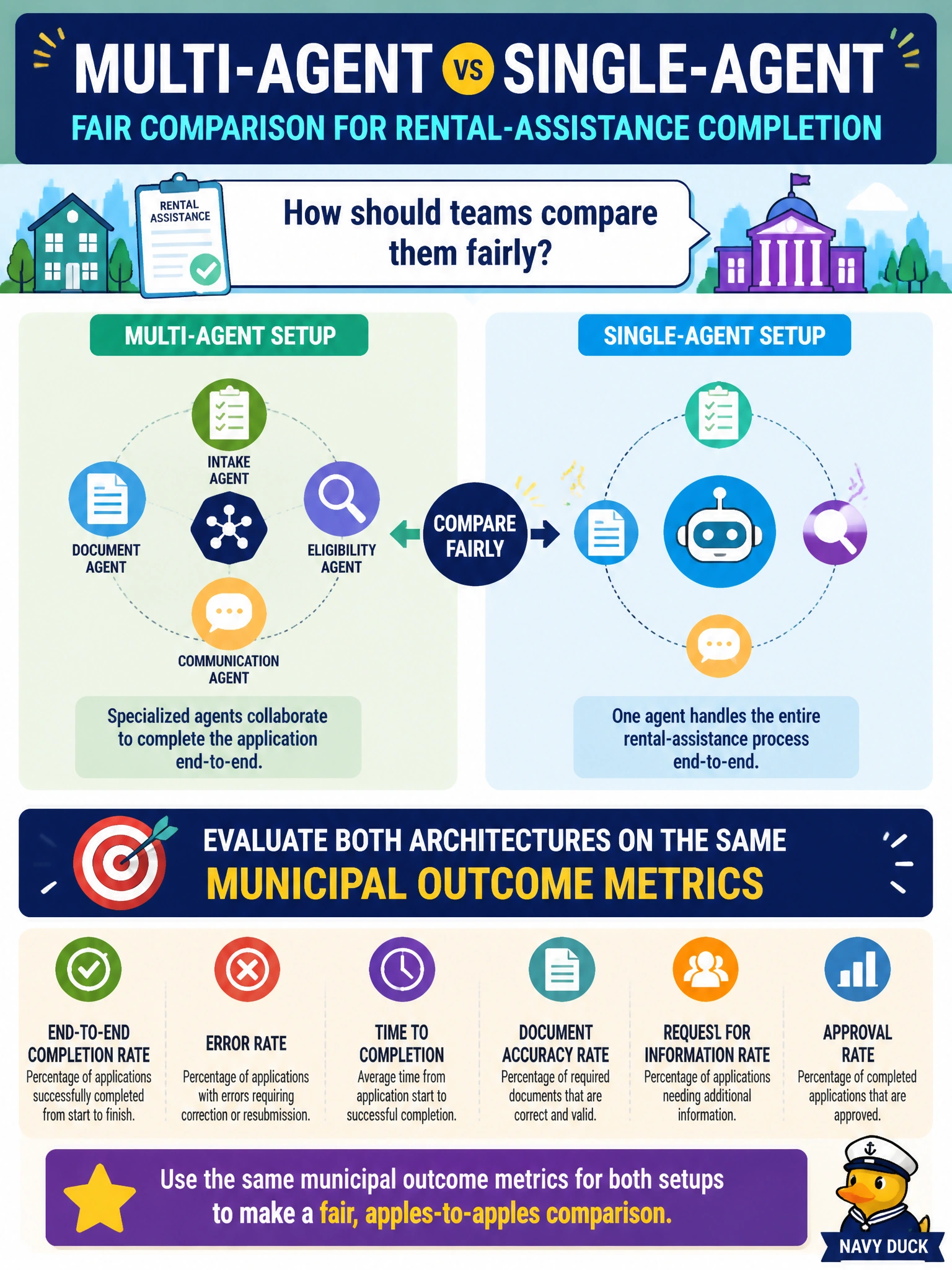
You can make a fair comparison by giving both setups the same rental-assistance finish line: end-to-end completion and error rates. More components don’t prove better performance. Testing unrelated tasks or choosing the diagram that looks modern won’t show which setup helps residents.
Full Explanation
Multi-agent and single-agent setups for rental-assistance completion should be compared using the same municipal outcome metrics, such as end-to-end completion and error rates. This makes architecture choice an empirical civic question: more components do not automatically improve performance. Giving both setups identical tasks, success definitions, and error categories helps teams determine which design actually helps residents complete assistance workflows. Declaring multi-agent superior because it uses more components confuses complexity with results. Testing each setup on unrelated tasks breaks experimental control, so a claimed winner may reflect task differences rather than architecture. Skipping metrics and choosing the diagram that looks more modern substitutes visual appeal for resident outcomes. Exam caveat: where possible, also control for model, tools, and prompt budget so hidden resource differences do not explain the metric gap. Practical check: run both setups on the same rental-assistance scenario suite, report completion and error rates side by side, and choose the setup that meets civic targets at acceptable cost and latency; retire the other rather than keeping both without evidence.