
A housing chatbot should ask clarifying follow-ups when retrieval confidence is low. How should its dynamic conversation flow behave?
Select an answer to reveal the explanation.
Short Explanation
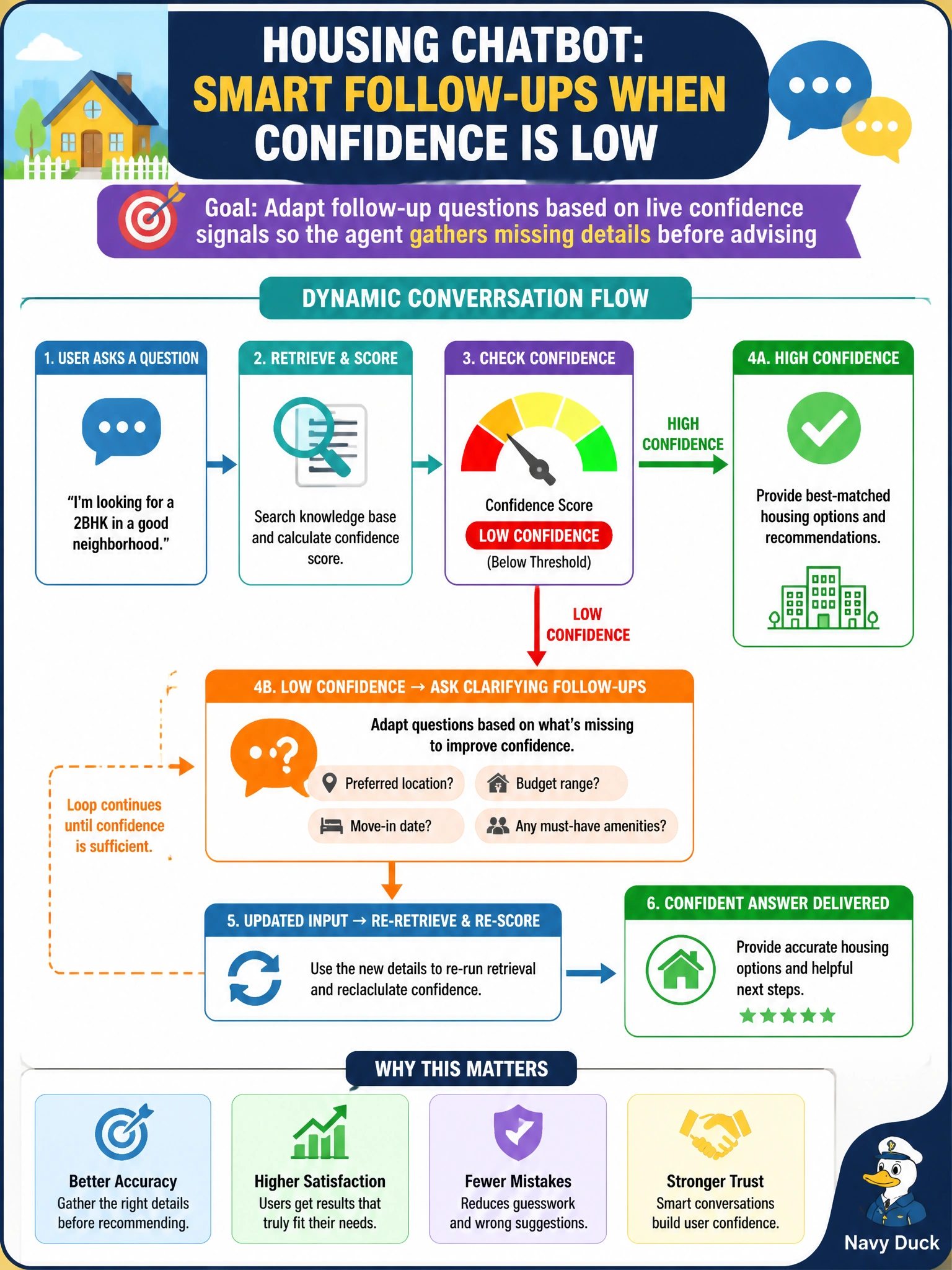
Low confidence is a nudge to ask better questions, not a license to guess or hang up. When retrieval looks shaky, the bot should adapt and dig for the missing details. Guessing eligibility facts is how residents get hurt.
Full Explanation
A housing chatbot that sees low retrieval confidence should adapt its dynamic conversation flow by asking clarifying follow-ups that gather missing eligibility details before advising. Live confidence or retrieval signals become control inputs: when grounding is weak, the agent narrows the resident’s situation (household size, income band, program type, jurisdiction) instead of guessing. That behavior reduces harmful advice, improves later retrieval with better query context, and keeps the civic agent inside a verify-then-advise pattern appropriate for benefits and housing guidance.
Always inventing missing eligibility facts when confidence is low fabricates municipal criteria and can deny or encourage applications incorrectly. Never asking follow-ups and ending the chat immediately abandons recoverable conversations where one clarifying question would restore enough context. Switching permanently to a different language model whenever any score dips confuses model routing with conversation strategy and does not itself collect the missing civic details needed for a sound answer.
Exam caveat: confidence-triggered clarification is a flow control, not permission to hallucinate eligibility; if ambiguity remains after follow-ups, refuse or escalate per policy. Operational check: feed a low-confidence housing retrieval scenario, confirm the agent asks adaptive clarifying questions instead of inventing facts or hanging up, verify advice is withheld until required details are present or a governed escalation occurs, and log confidence thresholds that triggered the follow-up branch.