
A parks reservation agent stores recurring group preferences across seasons but expires one-off picnic details. What memory policy best describes that architecture?
Select an answer to reveal the explanation.
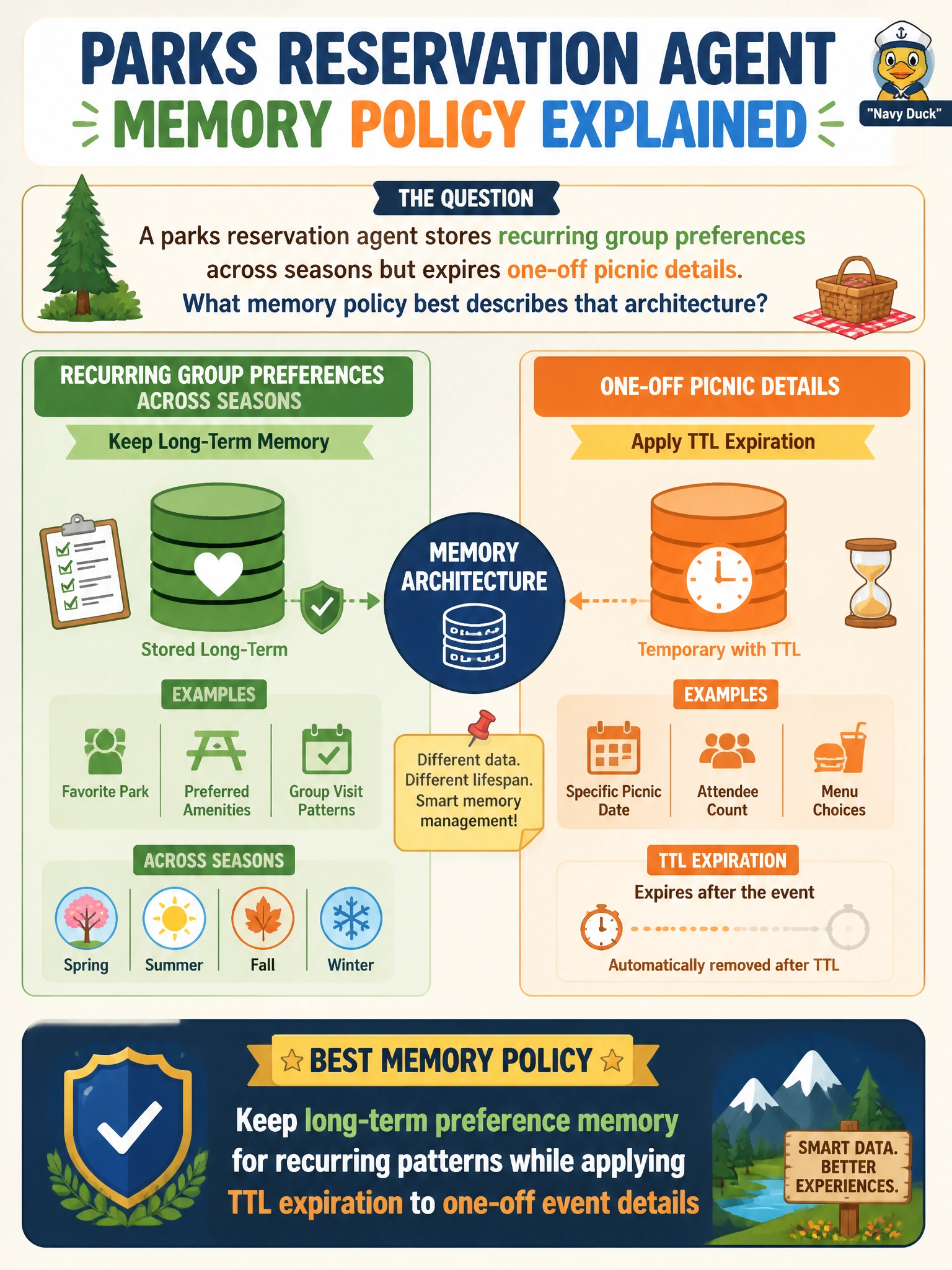
Short Explanation
Remember that the Saturday soccer club likes field B every spring—but forget last Tuesday's one-off birthday balloons. Preferences stick; picnic ephemera gets a timer and walks away.
Full Explanation
A parks reservation agent that keeps recurring group preferences across seasons while expiring one-off picnic details implements differentiated memory policy: long-term preference memory for recurring patterns plus TTL expiration for ephemeral event details. That architecture matches municipal recreation operations—stable group needs persist; transient picnic logistics should not clutter durable memory.
Treating every picnic detail as immortal long-term memory fails because one-off facts rot and create stale personalization. Disabling all memory so groups re-enter preferences each visit fails by concept: it ignores the recurring-pattern requirement. Mirroring reservation chatter into public social feeds as “durable memory” fails as an inappropriate disclosure channel and is not a controlled memory store.
Exam caveat: memory questions often hinge on what to retain versus expire. Look for dual policy—long-term for stable preferences, TTL for ephemeral details—rather than all-or-nothing memory.
Operational check: store a recurring group preference and a one-off picnic note with short TTL; after TTL, confirm the picnic note is gone while the preference remains; attempt a booking and verify personalization uses only non-expired preference fields.