
A courts / clerk e-filing analytics desk is doing EDA on inspection outcomes that include rare fail labels. What descriptive check should come early?
Select an answer to reveal the explanation.
Short Explanation
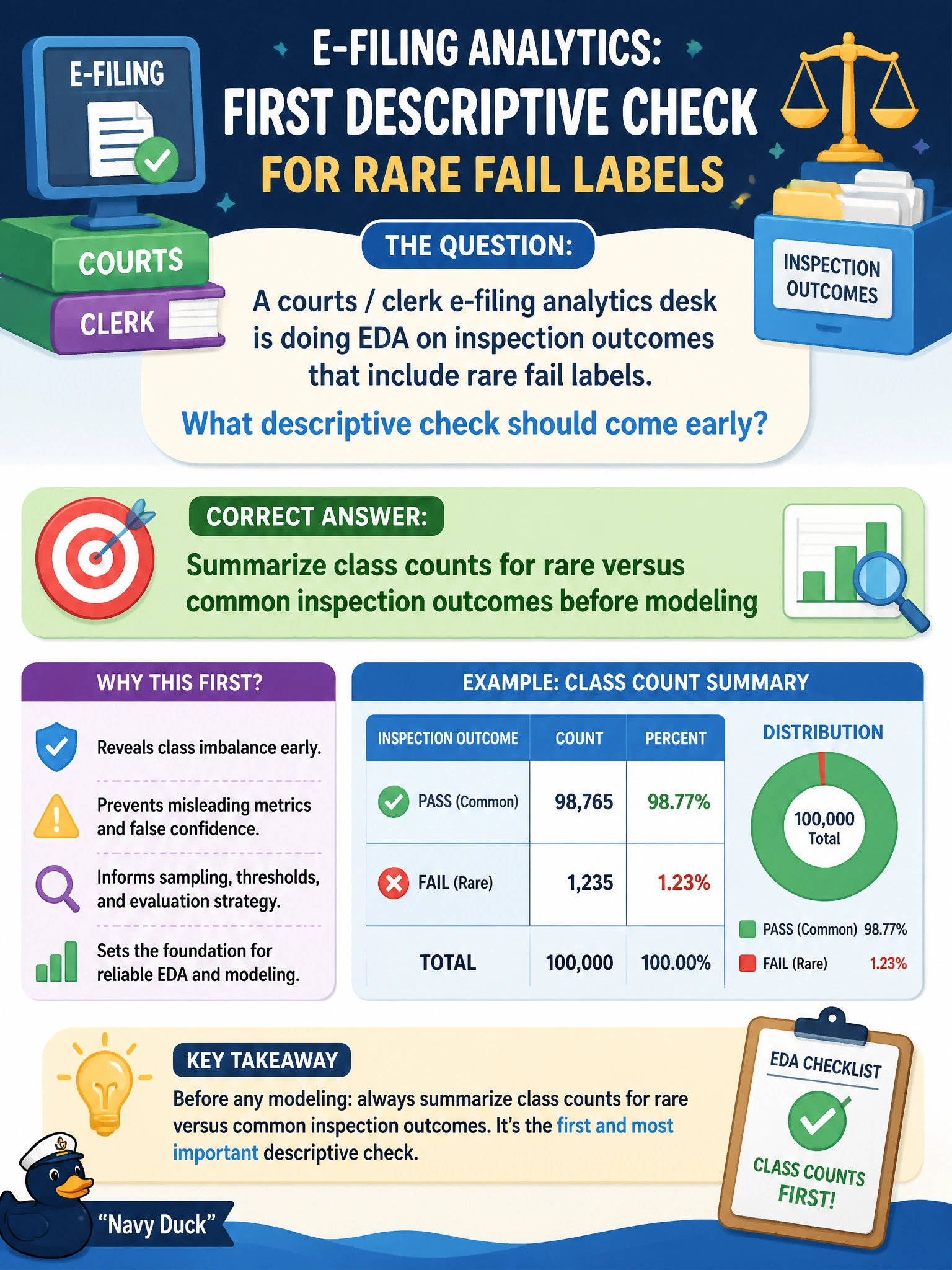
Rare inspection fails are the needles in the clerk’s haystack—count them first. A simple class-count summary in EDA tells you whether labels are wildly imbalanced before any model. Pretty charts without those counts leave the imbalance surprise for later.
Full Explanation
When courts or clerk e-filing inspection outcomes include rare fail labels, early EDA must summarize class counts for rare versus common outcomes. Class imbalance governs sampling strategy, metric choice, and whether a naive accuracy story will look excellent while missing every fail. Quantifying how rare the fail class is—before modeling—tells the analytics desk whether stratified splits, class weights, or anomaly-style approaches are required. Skipping that count leaves imbalance as a late surprise after models are already tuned on the wrong objective.
Skipping class counts because rare fails “never affect later models” is false: rare fails are often the operationally critical class in inspection workflows. Plotting only aesthetics without quantifying frequencies prioritizes presentation over measurement and hides base rates. Merging rare fails into the majority class during EDA to make the table look balanced destroys the signal the authority needs to detect and destroys any chance of learning fail patterns.
Exam caveat: descriptive analysis of classification targets starts with class-frequency summaries, especially under rarity—do not collapse minority labels for cosmetic balance. Operational check: print value counts and percentages for pass/fail (and any graded outcomes), compare across filing channels, record the minority rate in the model card draft, and choose metrics (precision/recall/F1 on fail) aligned to that base rate before training.