
A municipal fleet telematics desk wants one automated pipeline to serve all boroughs instead of forking per district. What design choice supports that?
Select an answer to reveal the explanation.
Short Explanation
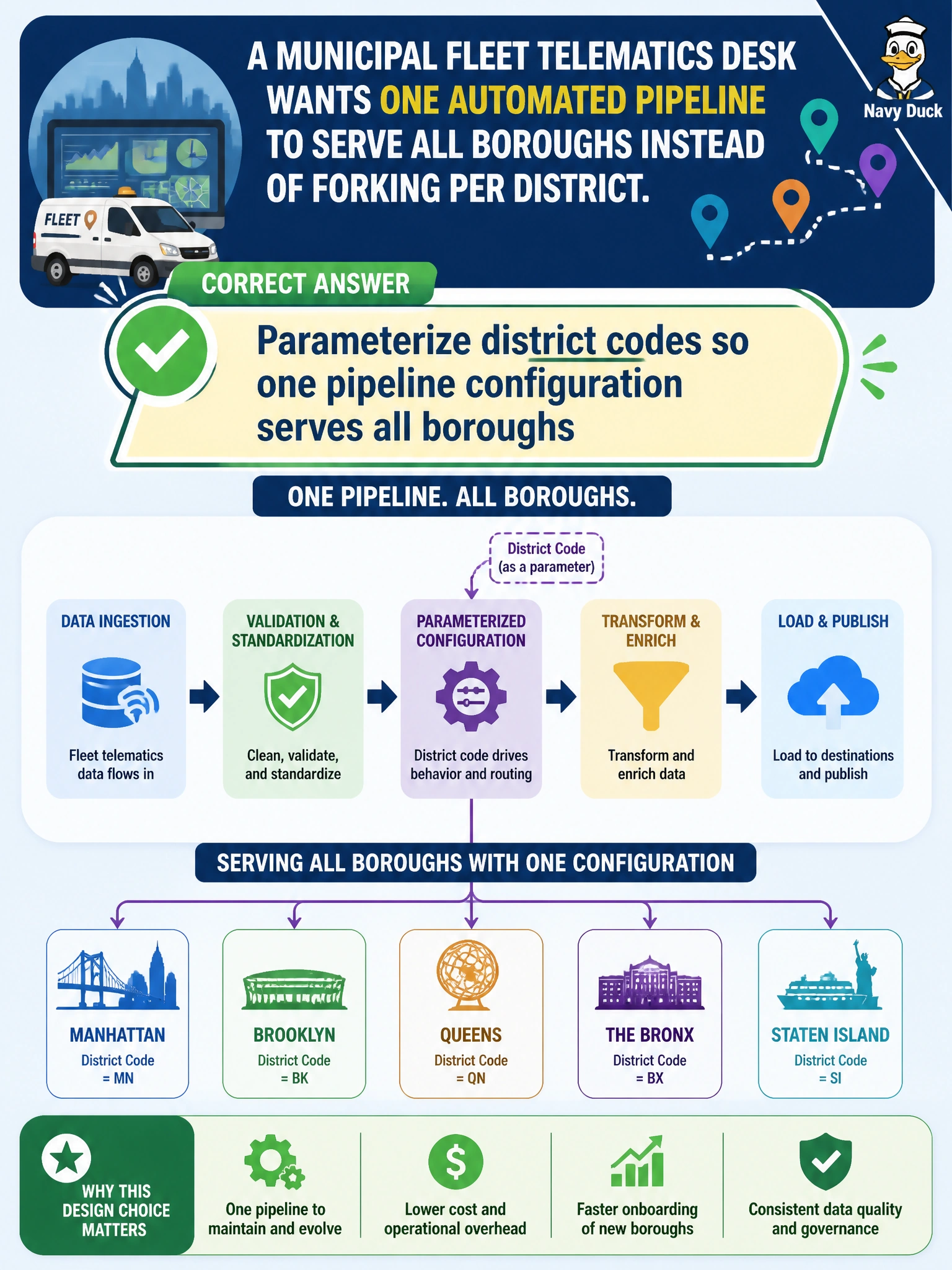
One recipe, many neighborhoods—parameterize the district code so the same pipeline cooks for every borough without forking the kitchen.
Full Explanation
A municipal fleet telematics desk serving all boroughs should parameterize district codes so one pipeline configuration covers every borough. Parameters keep filters, paths, and outputs configurable without forking logic—supporting automation, testing, and consistent upgrades across the city when a new district code appears. Hard-coding each borough’s filters into copy-pasted scripts creates drift: bug fixes and metric changes land in one fork and miss others, producing inconsistent civic telematics results. Requiring analysts to edit source for every new district code does not scale and invites production typos in filters that affect fleet routing inputs. Disabling multi-borough runs to keep only downtown abandons the citywide automation goal stated in the stem. Exam caveat: multi-tenant civic pipelines should expose geography as parameters rather than copy-paste forks or per-district source edits. Operational check: externalize borough or district as a config parameter, run the same telematics DAG for each code in CI, and promote one parameterized pipeline rather than N divergent scripts. In municipal practice for this NCA-ADS scenario (item q097), document the decision, retain evidence for auditors, and re-validate holdout civic metrics after any change so operational owners can defend the choice under scrutiny.