
A fire and EMS response-time analytics team has scarce positive high-severity labels. Which augmentation approach is appropriate?
Select an answer to reveal the explanation.
Short Explanation
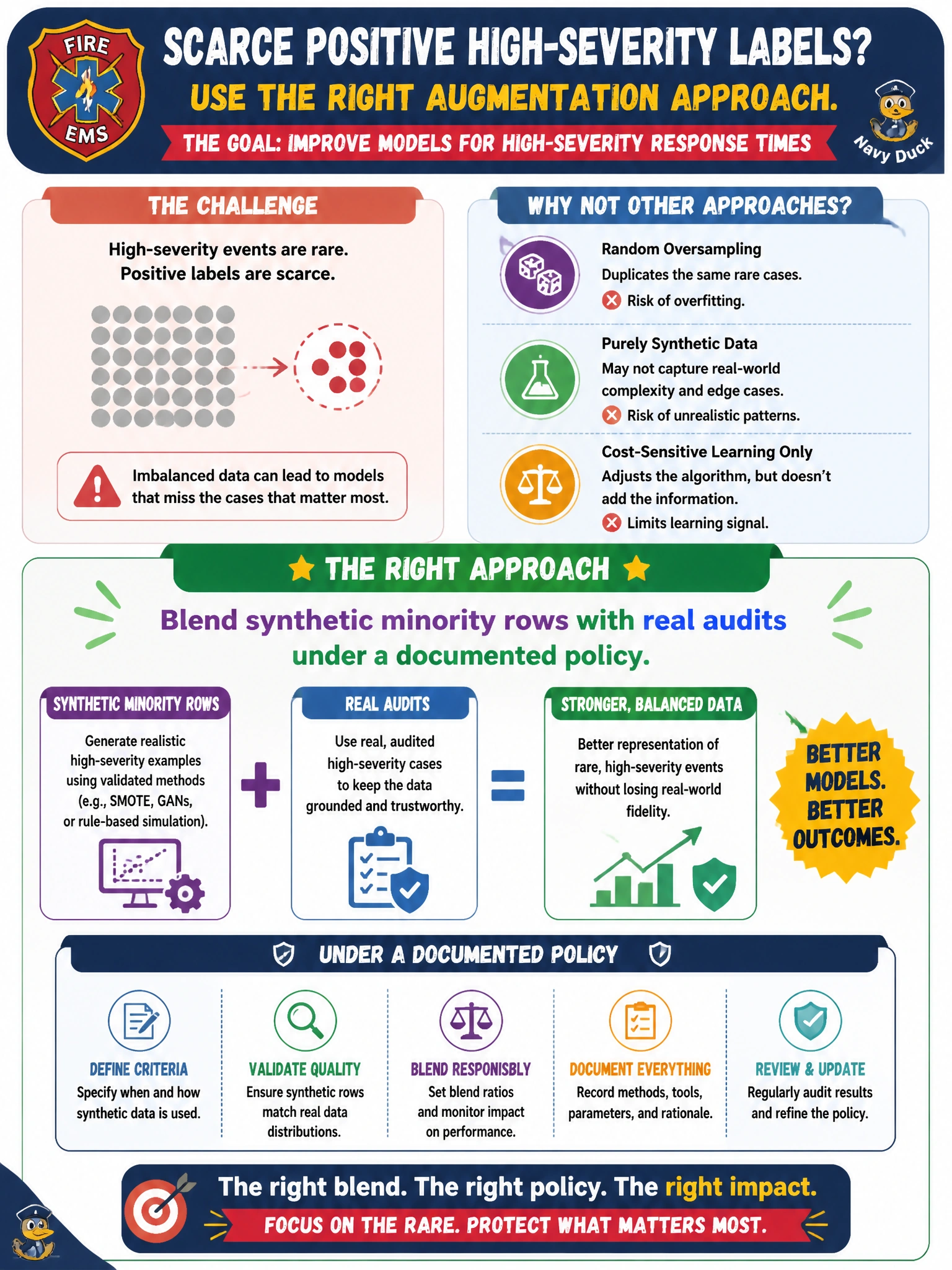
Scarce severity labels need a recipe card: mix carefully labeled synthetic minorities with real audits, and write down the policy so nobody confuses them with reality.
Full Explanation
Fire and EMS response-time analytics often lack enough high-severity positives. An appropriate approach is blending synthetic minority rows with real audits under a documented policy—what was synthesized, how labels were assigned, how synthetics are tagged in lineage, and that they are never published as real incidents. Silently replacing all real audits with unlabeled synthetic noise destroys the ground truth the EMS desk needs to trust severity learning. Publishing synthetic rows to open data as if they were real incidents falsifies the civic record, misleads the public, and violates operational trust. Ignoring scarcity and optimizing only majority on-time responses neglects the high-severity tail that drives life-safety performance and resource planning. Exam caveat: synthetic minority augmentation is acceptable when governed and blended with real audits—not as a silent replacement or as fake open-data publishing. Operational check: implement a written synthetic-data policy, tag synthetic rows in training lineage, keep a pure real-audit evaluation slice for fire and EMS metrics, and review minority recall before operational use. In municipal practice for this NCA-ADS scenario (item q094), document the decision, retain evidence for auditors, and re-validate holdout civic metrics after any change so operational owners can defend the choice under scrutiny.