
Your team is deploying new racks of high-density AI servers (such as DGX nodes) that consume over 30 kW of power per rack. To prevent thermal throttling and ensure efficient operation, which cooling strategy is most effective at managing this concentrated heat load?
Select an answer to reveal the explanation.
Short Explanation and Infographic
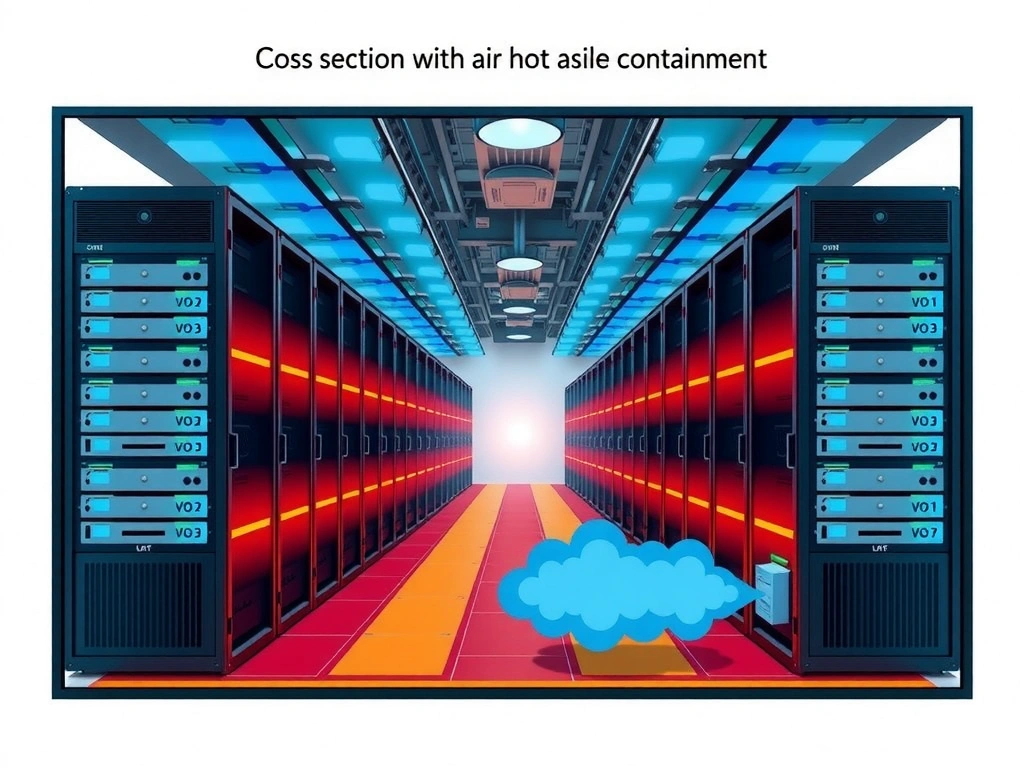
Imagine running thirty space heaters inside a single server rack. That's the kind of heat we're talking about with high-density AI nodes! If you just pump cold air from the floor and hope it cools things down, the hot exhaust air will mix with the cold supply air, causing hot spots and shutting down your GPUs. You need to isolate that heat. Using a CRAH system with hot-aisle containment physically seals off the hot exhaust air and routes it directly back to the cooling unit, keeping your intake air cold and your cluster running smoothly.
Full explanation below image
Full Explanation
Modern AI hardware pushes power densities far beyond traditional data center limits, often exceeding 30 kW per rack. Standard raised-floor cooling (C) becomes highly inefficient at these densities because of bypass air and recirculation, where hot exhaust air mixes with cold intake air. The most effective air-cooling architecture is to deploy Computer Room Air Handler (CRAH) systems with hot-aisle containment (B). Hot-aisle containment physically traps the hot exhaust air from the rear of the servers using doors or plastic curtains. This design prevents hot air from escaping back into the room. Instead, the trapped hot air is pulled directly into the CRAH units, which run it over chilled water loops to cool it down before recirculating it to the cold aisle. - Distributed cooling without airflow management (D) and passive ventilation (A) cannot prevent hot spots or manage the massive volume of heat generated by dense GPU servers, leading to thermal throttling and hardware degradation.