
When deploying containerized AI workloads at scale, container orchestration is critical. Which two of the following statements correctly describe the core orchestration features natively provided by Kubernetes?
Select all correct answers, then click Submit.
Short Explanation and Infographic
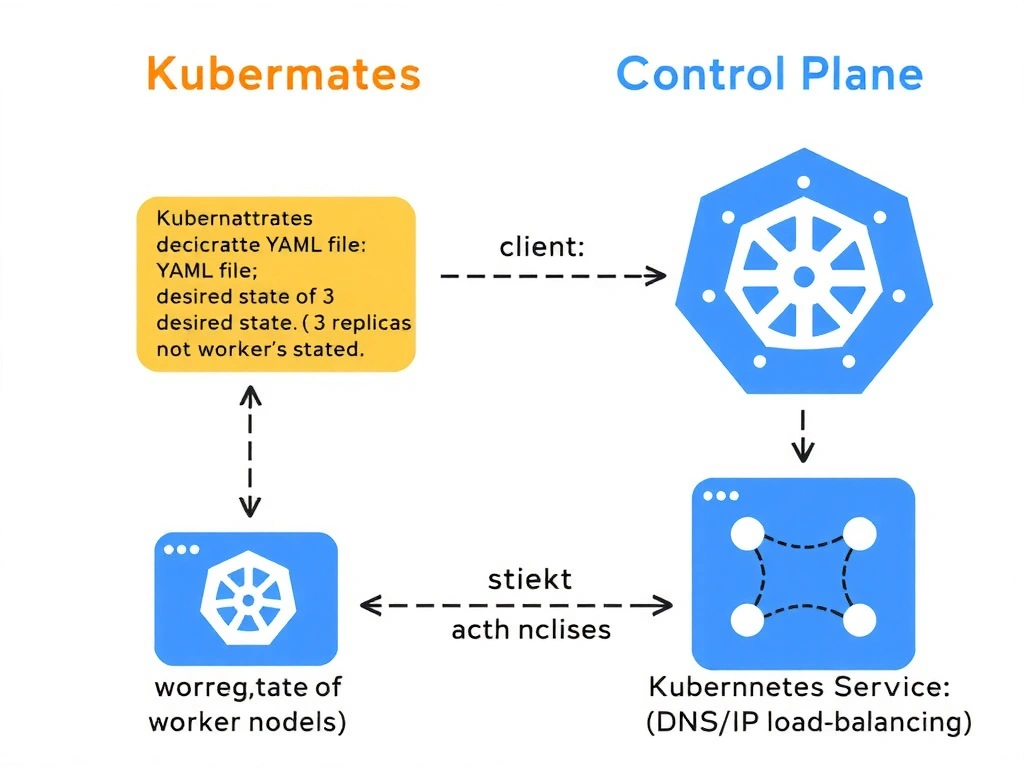
If you're running containers in production, Kubernetes is the gold standard. First, it uses declarative configuration. Instead of typing commands to start individual containers, you write a YAML file that says, "I want three replicas of this PyTorch container running," and Kubernetes makes it happen. Second, it handles service discovery. It automatically gives containers their own IP addresses and groups them under a single DNS name, load-balancing traffic between them. Ignore the distractors about manual scaling and manual restarts — K8s does all of that automatically!
Full explanation below image
Full Explanation
Kubernetes is built on a declarative architecture and self-healing design principles: 1. Declarative Configuration Management: Rather than running imperative scripts (e.g., docker run), administrators define the desired state of their workloads (such as replica counts, network ports, and resource limits) in YAML or JSON manifests. The Kubernetes Control Plane continuously compares the actual state of the cluster with this desired state and takes corrective actions to reconcile them. 2. Service Discovery and Load Balancing: Kubernetes manages network connectivity for dynamic container environments. It exposes containers using Services, which assign a stable IP address and a DNS entry to a group of pods. Traffic is automatically load-balanced across the pods, allowing microservices or model-serving layers to locate each other without hardcoded endpoints. - Statement A is incorrect because Kubernetes supports auto-scaling (Horizontal Pod Autoscaler and Vertical Pod Autoscaler) based on resource usage. - Statement B is incorrect because self-healing is a core feature; Kubernetes automatically monitors container health and restarts or replaces failed containers to maintain availability.