
An IT leader is evaluating infrastructure options for an AI development environment and needs to weigh on-premises versus cloud solutions. From an operational perspective, what's the primary advantage of on-premises infrastructure for sensitive AI workloads?
Select an answer to reveal the explanation.
Short Explanation and Infographic
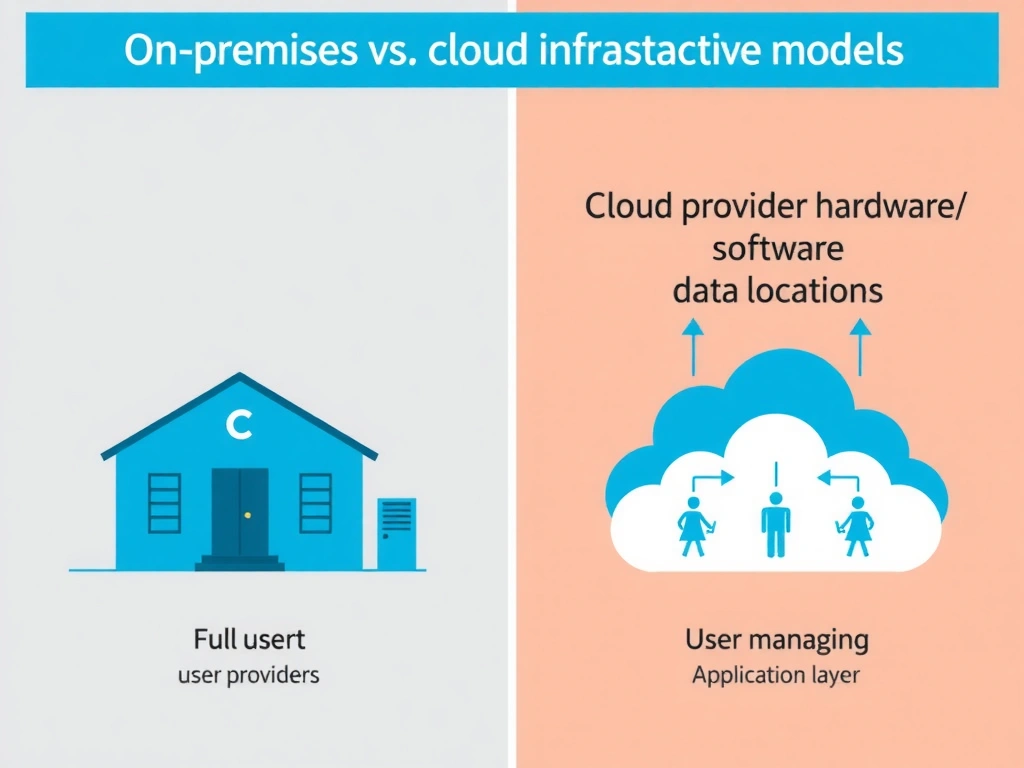
On-premises gives you physical control and data sovereignty — your data stays in your data center, not on someone else's servers. That's crucial for sensitive/regulated workloads. Cloud beats on-premises on cost, remote access, and scalability.
Full explanation below image
Full Explanation
On-premises infrastructure's primary advantage is control. Your GPUs are in your data center, under your direct physical control. Your data never leaves your facility (unless you explicitly transfer it). For organizations with strict data residency requirements (financial institutions, healthcare, defense), regulated data (HIPAA, PCI-DSS, classified information), or competitive sensitivity, this is paramount. You own the security posture entirely — no third-party breach risk, no shared infrastructure concerns. Cloud providers offer excellent security, but they're managing thousands of customers' data in shared infrastructure. Some organizations simply cannot accept that model. On-premises does NOT offer lower upfront costs (that's cloud's advantage). It does NOT offer simplified remote management (managing on-premises infrastructure is more hands-on). And it does NOT offer scalability comparable to cloud (cloud can provision resources globally in minutes; on-premises requires physical procurement). For sensitive workloads, on-premises wins on data sovereignty and control. For cost, agility, and ease of management, cloud wins. The question tests whether you understand the tradeoff landscape.