
You're evaluating Kubernetes as an orchestration layer for AI workloads, and you want to confirm its actual capabilities. Which two of these statements accurately describe what Kubernetes can do?
Select all correct answers, then click Submit.
Short Explanation and Infographic
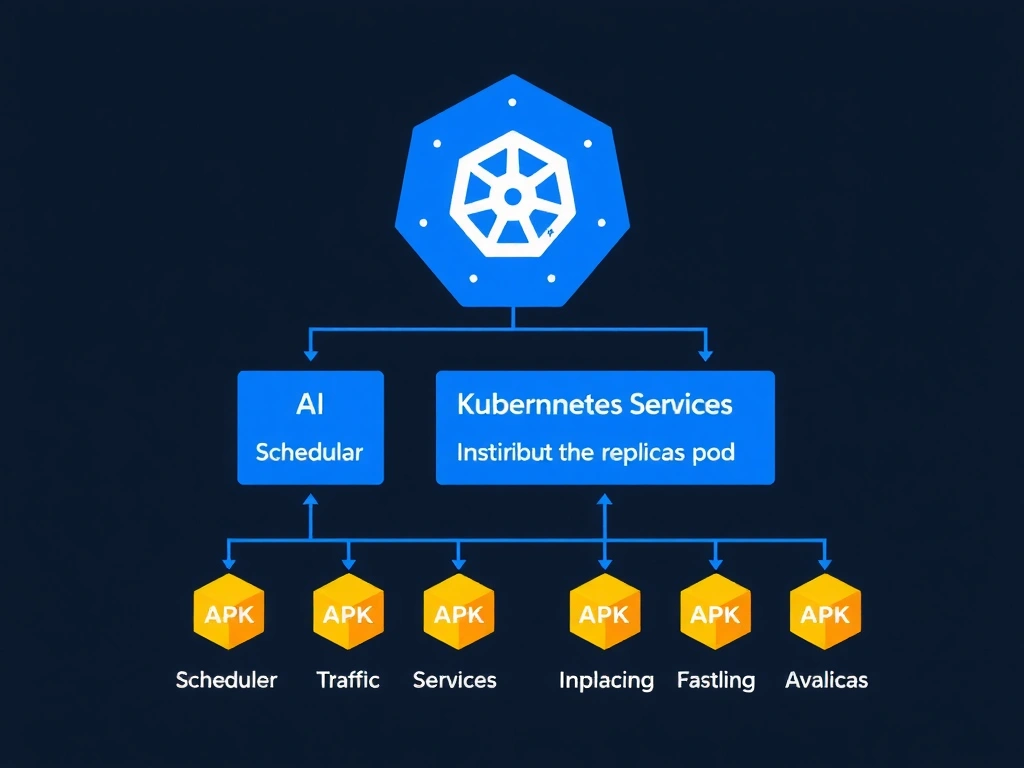
B and D are correct. Kubernetes has sophisticated scheduling that packs workloads efficiently, and built-in service abstraction with load balancing. It doesn't lack inferencing capabilities (you can run inference workloads in Kubernetes), and it's not limited to bare-metal or incompatible with containers — containers are its native workload.
Full explanation below image
Full Explanation
Kubernetes is fundamentally a container orchestration platform. It schedules containers (typically Docker images) across a cluster of nodes. Scheduling is one of its superpowers — it has sophisticated algorithms that consider node capacity, resource requests, affinities, tolerations, and workload priorities to place containers intelligently. This is essential for AI workloads where you want to pack your training jobs efficiently without overcommitting resources. Load balancing and service abstraction are built-in. When you deploy multiple instances of an inference service, Kubernetes automatically distributes traffic across them. This enables high availability and horizontal scaling. Now, does Kubernetes lack inferencing capabilities? Not at all. You can run inference workloads in Kubernetes just fine — containerize your model server, deploy it, let Kubernetes manage scaling and load balancing. Kubernetes operates on any infrastructure that runs a Linux-compatible OS — bare metal, VMs, cloud instances. It's not limited to bare-metal. The question tests whether you understand Kubernetes's actual scope and capabilities for AI workloads.