
An organization is scaling its machine learning operations and needs to manage a shared pool of GPU accelerators across multiple development teams. They require a cluster orchestration solution that can automatically provision GPU resources, handle containerized workloads, scale tasks based on demand, and schedule jobs based on current hardware availability. Which approach represents the most efficient strategy for this infrastructure?
Select an answer to reveal the explanation.
Short Explanation
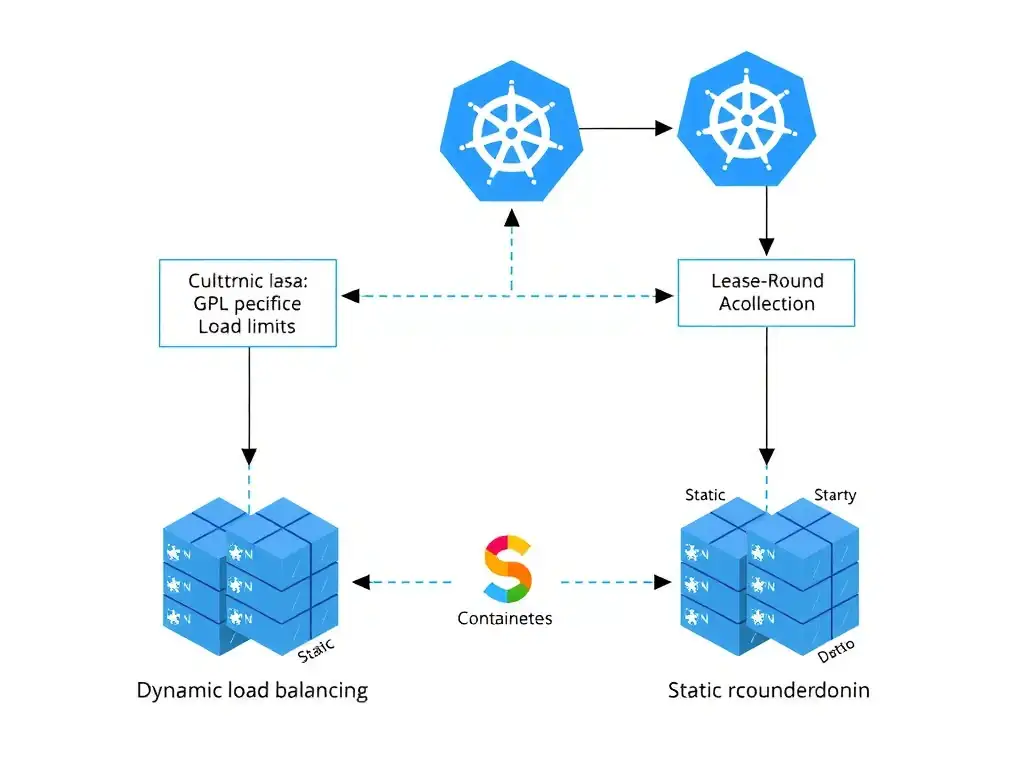
Check this out: when you're managing a shared GPU pool, you need an automated orchestrator that sees the whole cluster and places containerized jobs where GPUs are actually free. Kubernetes with GPU-aware scheduling dynamically allocates accelerators, scales demand, and keeps teams from waiting on idle hardware.
Full Explanation
Effective GPU cluster orchestration is essential for maximizing hardware utilization and preventing resource bottlenecks in enterprise AI environments. Modern deep learning workloads are highly resource-intensive and variable; static or simplistic scheduling mechanisms fail to adapt to these fluctuating requirements. Deploying a container orchestration framework like Kubernetes to dynamically schedule and scale GPU resources based on active request metrics is the most efficient strategy. Kubernetes has emerged as the industry-standard container orchestration platform for AI infrastructure. By utilizing custom resource definitions and device plugins—such as the NVIDIA GPU device plugin—Kubernetes can detect GPU availability, model types, and memory capacities across the cluster. It dynamically schedules containerized workloads to appropriate nodes, ensuring that training and inference workloads are allocated the precise number of GPUs they require. This dynamic resource allocation prevents resource fragmentation, balances the computational load, and supports auto-scaling and self-healing configurations. Analyzing the alternatives: a static round-robin scheduler that routes incoming jobs to the next sequential GPU regardless of active load treats all GPUs and jobs as identical. It does not account for the varying computational requirements of jobs or the current load of the GPUs, frequently leading to situations where some GPUs are severely overloaded while others remain idle. Routing all training and inference requests to a single master GPU node creates a point of failure and a massive processing bottleneck, rendering the rest of the cluster's compute capacity useless. Configuring the scheduler to exclusively run jobs on the lowest-power consumption GPUs is counterproductive for high-performance computing environments. While energy efficiency is important at the facility level, restricting execution to low-power nodes typically results in slower execution times, lower overall throughput, and prolonged job queues, ultimately increasing total energy consumption for long-running workloads.