
An enterprise data center manager is tasked with lowering the utility bills and heat output of a cluster of NVIDIA-accelerated servers running mixed AI workloads. The goal is to minimize power draw during idle or low-utilization periods without bottlenecking performance during peak deep learning training runs. Which strategy achieves this balance?
Select an answer to reveal the explanation.
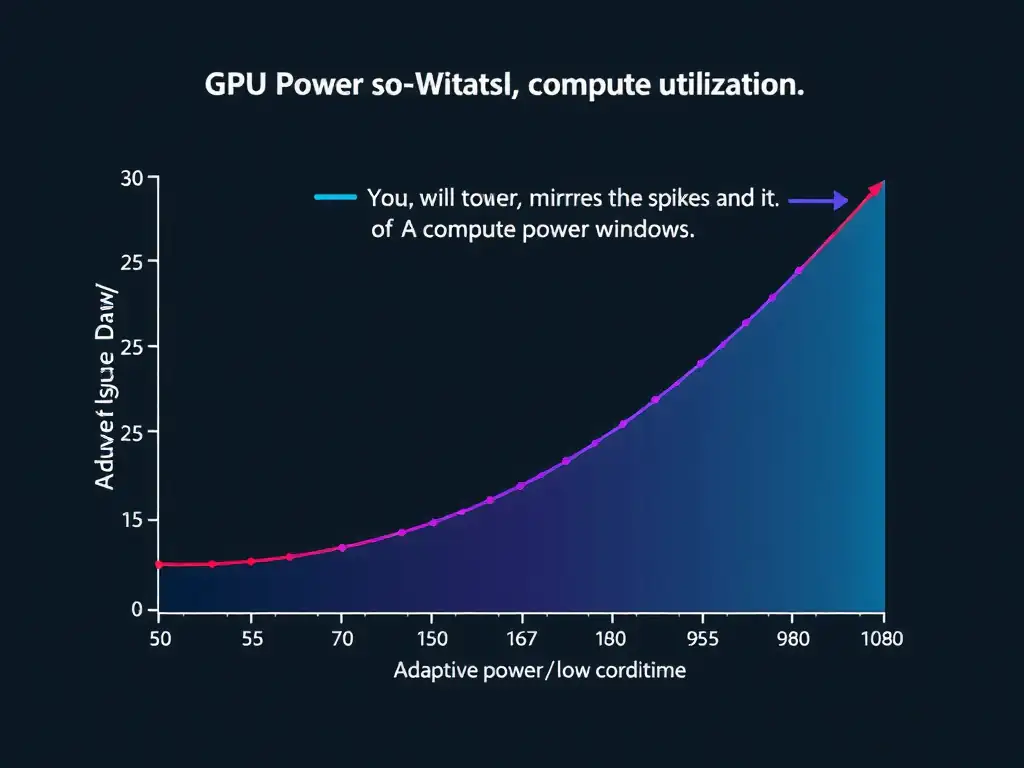
Short Explanation
You need power savings without wrecking training throughput, so use NVIDIA's adaptive power management and dynamic power capping. These features scale GPU clocks and power draw with the actual workload, backing off during idle or I/O waits and ramping up when the GPUs are doing real compute.
Full Explanation
Managing the power envelope of a high-performance computing (HPC) or AI data center is critical for reducing operational expenditure (OpEx) and thermal output. NVIDIA GPUs support advanced power management technologies, such as dynamic power management and power capping, which optimize energy consumption based on active workloads.
By activating adaptive power management and dynamic power capping features, such as NVML-based power management or dynamic power states like P-states, the system automatically scales down the GPU's clock speeds and operating voltages when it is under-utilized, idle, or waiting for I/O operations, such as fetching data from storage. When intensive computational tasks are executed, the GPU scales up to its required operational frequency. This ensures that energy is not wasted during non-compute phases of training pipelines, without degrading the performance of active compute phases.
The other strategies fail because they either waste power or reduce efficiency. Locking all GPU cores to run at their maximum boost clock rates continuously prevents the hardware from stepping down to lower power states, resulting in maximum power consumption and heat generation even when the system is idle. Replacing modern accelerators with legacy GPUs that have lower maximum TDP ratings is counterproductive because older GPU architectures are significantly less power-efficient per watt than modern architectures, which offer better performance-per-watt ratios. Disabling hardware power limiters to allow unrestricted voltage draw permits unrestricted voltage and power consumption, which can lead to thermal throttling and excessively high energy consumption without necessarily improving execution speed.
Implementing adaptive power management and dynamic power capping ensures that the infrastructure adapts to real-time workload demands, yielding the best balance between computational throughput and energy efficiency.