
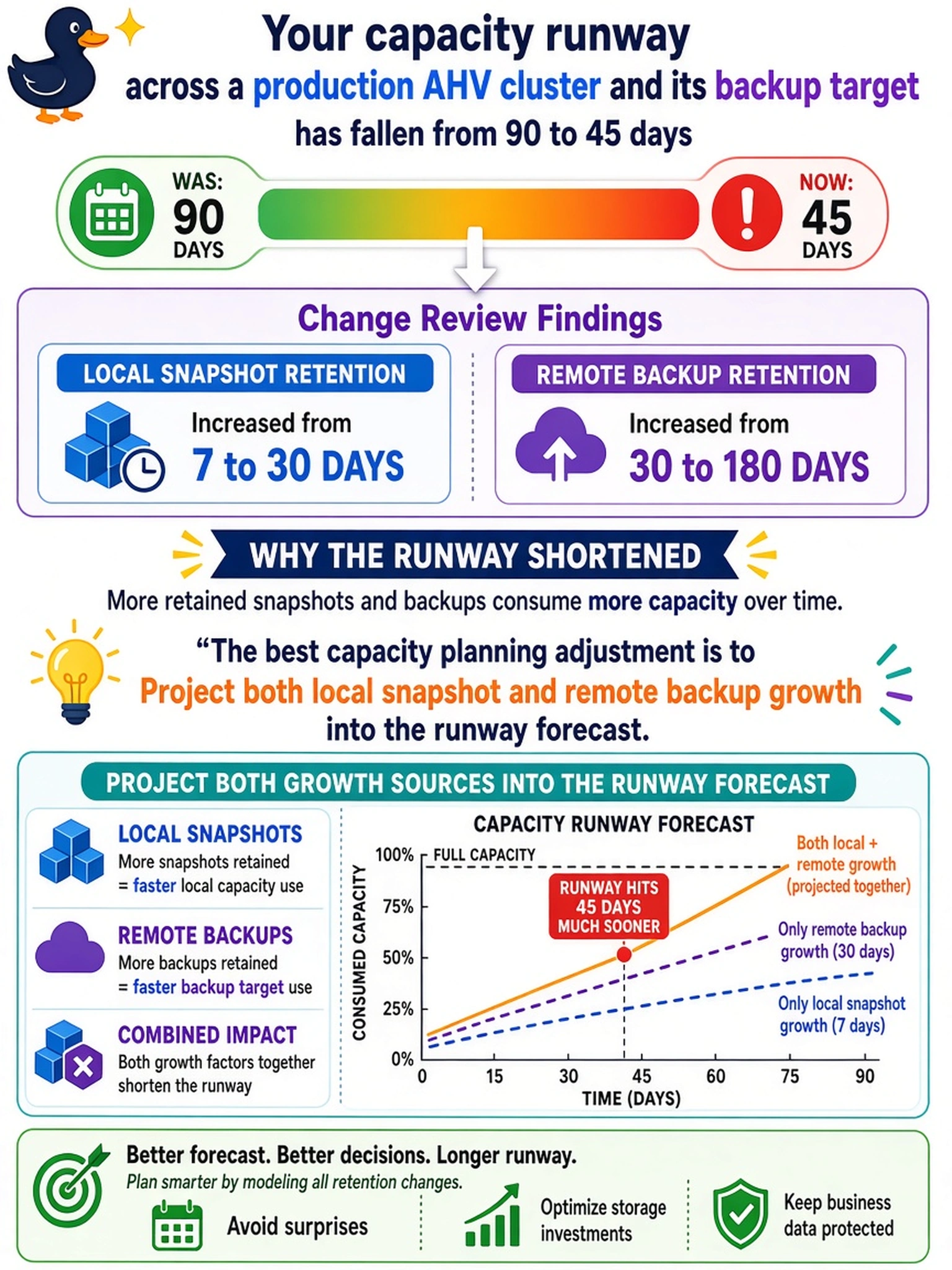
Your capacity runway across a production AHV cluster and its backup target has fallen from 90 to 45 days. A change review shows local snapshot retention increased from 7 to 30 days and remote backup retention from 30 to 180 days. Which capacity planning adjustment best explains the shorter runway?
Select an answer to reveal the explanation.
Short Explanation
Think of runway like your gas tank: every extra day of snapshot or backup retention makes the tank drain faster, not slower. You can't just watch VM writes and call it done — you've got to count the protected copies eating space too. If retention went from 7 days to 30 days locally and 30 to 180 remotely, that's exactly why the runway dropped.
Full Explanation
Capacity runway is a forward-looking estimate of how long available storage will last under current consumption trends. When retention changes are made for local snapshots and remote backups, the protected-copy footprint grows: each retained snapshot can hold unique blocks that CVM storage services must still account for in cluster storage, and remote backup targets consume capacity as well. Forecasting must therefore include both snapshot and backup growth alongside VM working-set changes; otherwise the runway looks artificially healthy even though the estate is storing more retained data. Treating local snapshots as metadata-only is wrong because snapshots can retain physical data until blocks are reclaimed, especially after write activity. Relying only on VM working-set growth is wrong because protection retention changes can dominate capacity consumption even when VM writes are flat. Assuming compression or deduplication will absorb all extra copies is also wrong because those features reduce, but do not eliminate, the space consumed by unique retained blocks. Exam caveat: capacity planning questions often test whether you account for all growth sources, not just primary VM capacity. Operational check: review snapshot and backup retention changes in the capacity report, then compare retained protected-copy growth against free capacity and runway trend.