
A Nutanix cluster uses backups for 90-day recovery. Management now wants copies kept for five years, but only for occasional audits, at lower cost. What placement should you choose?
Select an answer to reveal the explanation.
Short Explanation
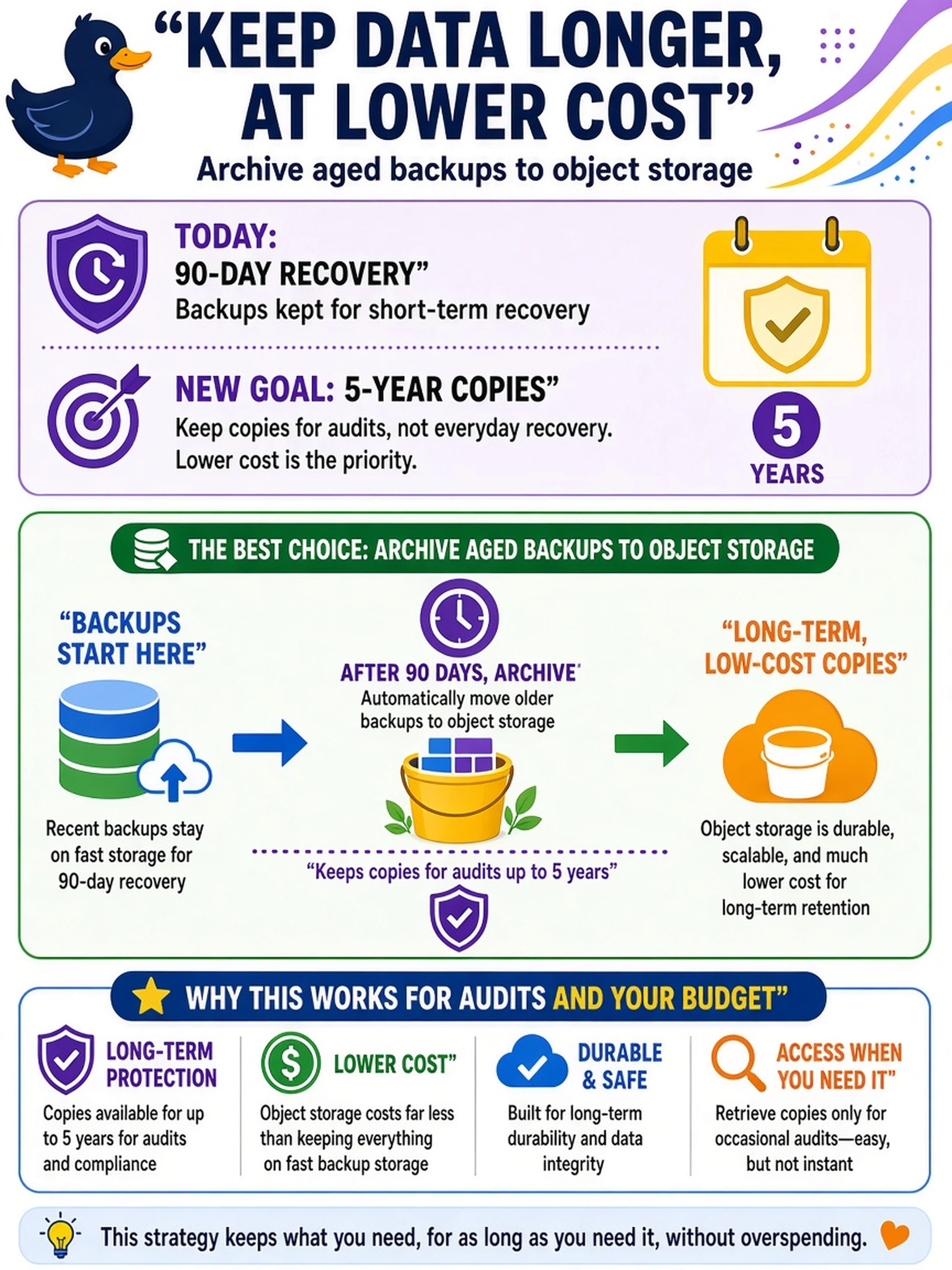
Think of backups like filing cabinets: hot copies live nearby, old audit copies go to the warehouse. You want cheap, durable storage for data you rarely touch, not more prime cluster capacity. That's why aged backups belong on object storage.
Full Explanation
Long-term backup placement should match access frequency and cost. When copies are retained for years but rarely read, an archive or object-storage tier provides lower capacity cost than keeping them on performance-oriented cluster storage. Backup integration can promote aged copies to object storage while preserving the backup catalog and retention policy, allowing occasional audit restores without consuming primary or secondary cluster capacity. Keeping snapshots on the primary cluster is wrong because snapshots are local point-in-time data and consume cluster capacity; extending retention on the same expensive tier does not create an archive tier. Replicating backups to a second site is wrong because replication serves availability and recovery, not low-cost archival; deleting local copies after ninety days also weakens recovery locality. Enabling compression and deduplication on local snapshots is wrong because reduction optimizes space but still leaves long-term copies on cluster storage, not lower-cost archive storage. Exam caveat: choose the tier that matches retention and access pattern, not the feature that merely reduces footprint. Operational check: confirm the backup retention policy moves copies to object storage after ninety days and that an audit restore can be requested from that tier.