
Your recovery plan fails over a protected VM group from the primary AHV cluster to a disaster recovery cluster after a site outage. Which recovery source does Nutanix use to power on the VMs?
Select an answer to reveal the explanation.
Short Explanation
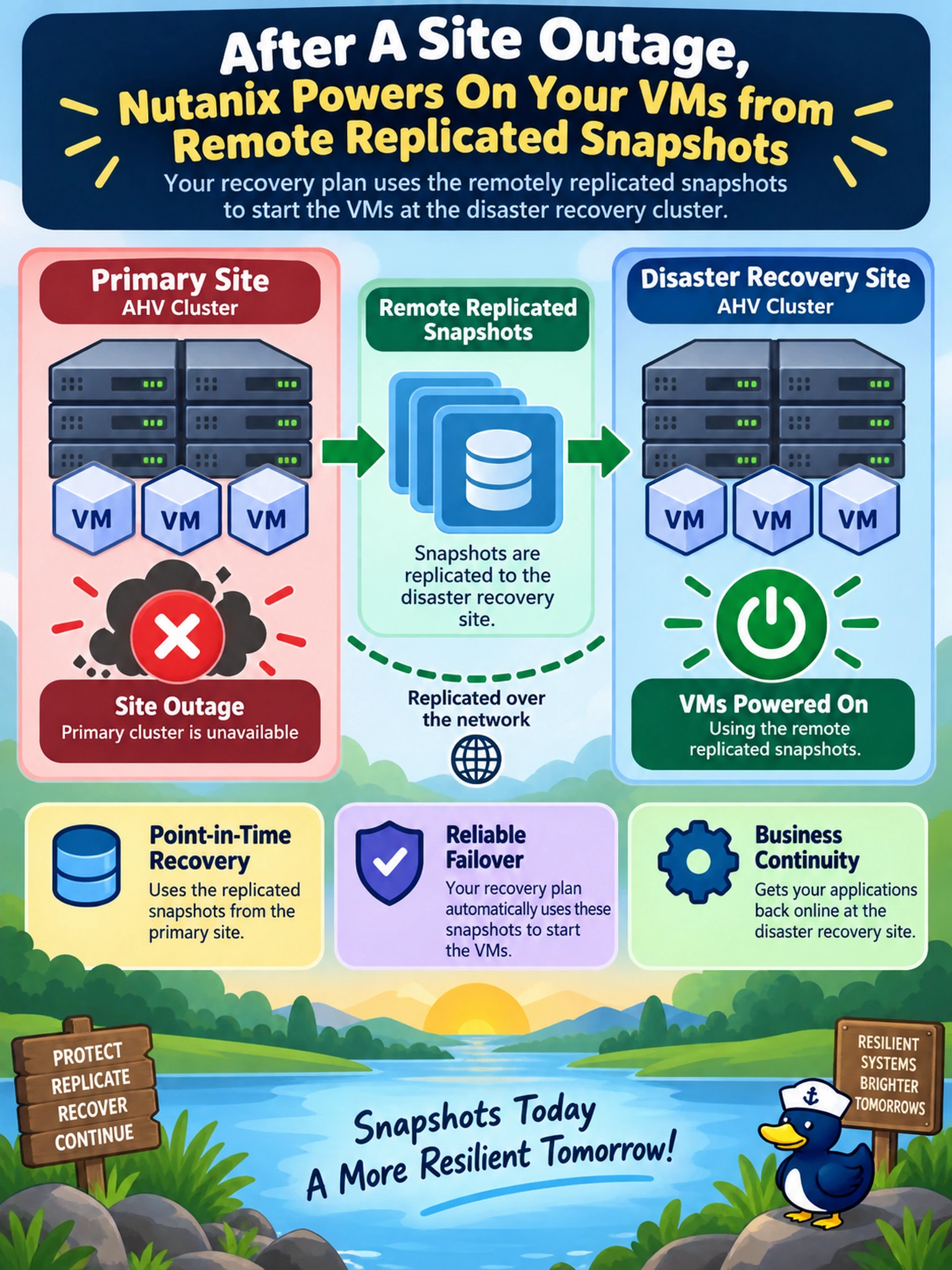
Think of failover like a fire drill: you don't wake up the original building, you run the copy that already made it to the safe house. Nutanix uses the remote replicated snapshots on the DR cluster, not the live source VMs. If you're expecting the primary site to boot, you're testing failover in the wrong place.
Full Explanation
In Nutanix async DR, replication copies VM state from the protected cluster to the recovery cluster as snapshots. A failover action selects the most recent available remote snapshot and powers on the recovery VM from that image, because the protected site may be unreachable or intentionally isolated. This makes the DR site the execution point and keeps recovery independent of the source environment. Using live source VMs is wrong because a failover is designed for loss or outage of the source, and booting from the primary cluster would defeat site separation and risk split-brain. Using local snapshots on the protected cluster is wrong because those snapshots remain at the failed site and cannot be used when that site is unavailable. Using external backup copies is wrong because backup restore is a different recovery workflow with longer RTO and repository access, not the native failover path from replicated snapshots. Exam caveat: distinguish failover, which consumes remote replicated snapshots, from restore, which may use backups or local snapshots. Operational check: verify replication health and the latest successful remote snapshot timestamp for each protected VM before executing a recovery plan.