
A finance team needs departmental showback for VMs running on a Nutanix AHV cluster managed by Prism Central. Which metadata approach best supports cost allocation across departments?
Select an answer to reveal the explanation.
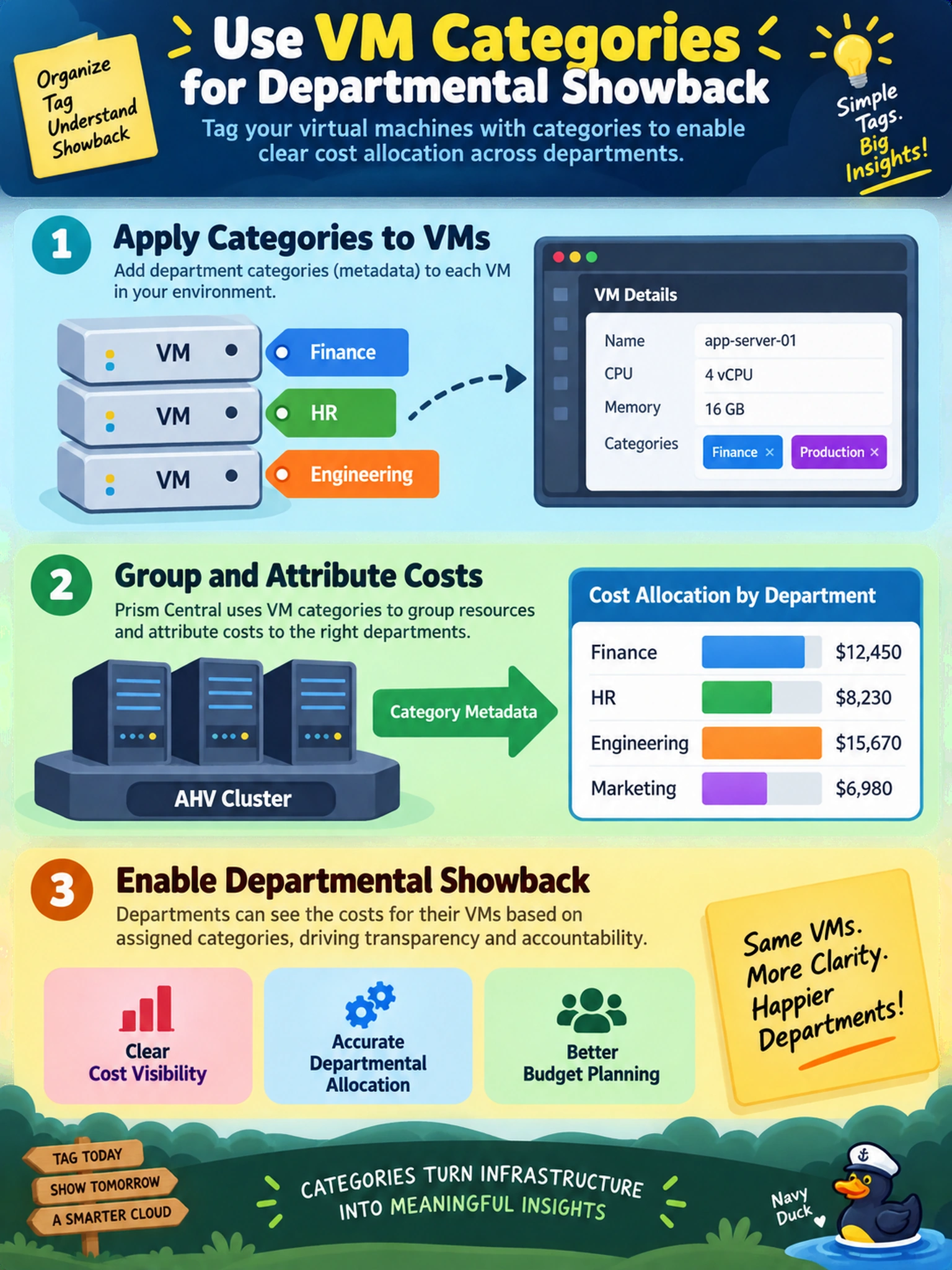
Short Explanation
Think of categories as labels you stick on VMs so reporting can sort by department. If you rely on names or containers, you’re guessing; if you use categories, finance gets clean showback.
Full Explanation
Categories are structured metadata objects that can be applied to VMs in Prism Central and used to group workloads for reporting, policy, and self-service. For cost allocation, you assign a category such as Department:Finance to each VM, then aggregate CPU, memory, and storage consumption by that category. Storage container names describe infrastructure placement, not business ownership, and a single workload can span containers, so they are an unreliable cost basis. AHV bridges or VLANs separate network traffic, not workload accounting; deriving chargeback from network constructs is indirect and can be wrong when VMs share networks or move. VM naming prefixes are human-readable but fragile, inconsistently enforced, and not a structured reporting dimension, so they create brittle reports instead of reliable showback. Exam caveat: categories are the intended Nutanix metadata construct for grouping VMs; naming conventions or network constructs are not substitutes. Operational check: review a sample of VMs in Prism Central and confirm each has the expected category before publishing a departmental report.