
An AHV VM that runs a write-intensive database is moved to a storage container named Capacity. The admin observes higher VM write latency and increased cluster CPU, while storage utilization drops. The source container had no storage optimizations enabled. Which destination container setting most likely explains the performance change?
Select an answer to reveal the explanation.
Short Explanation
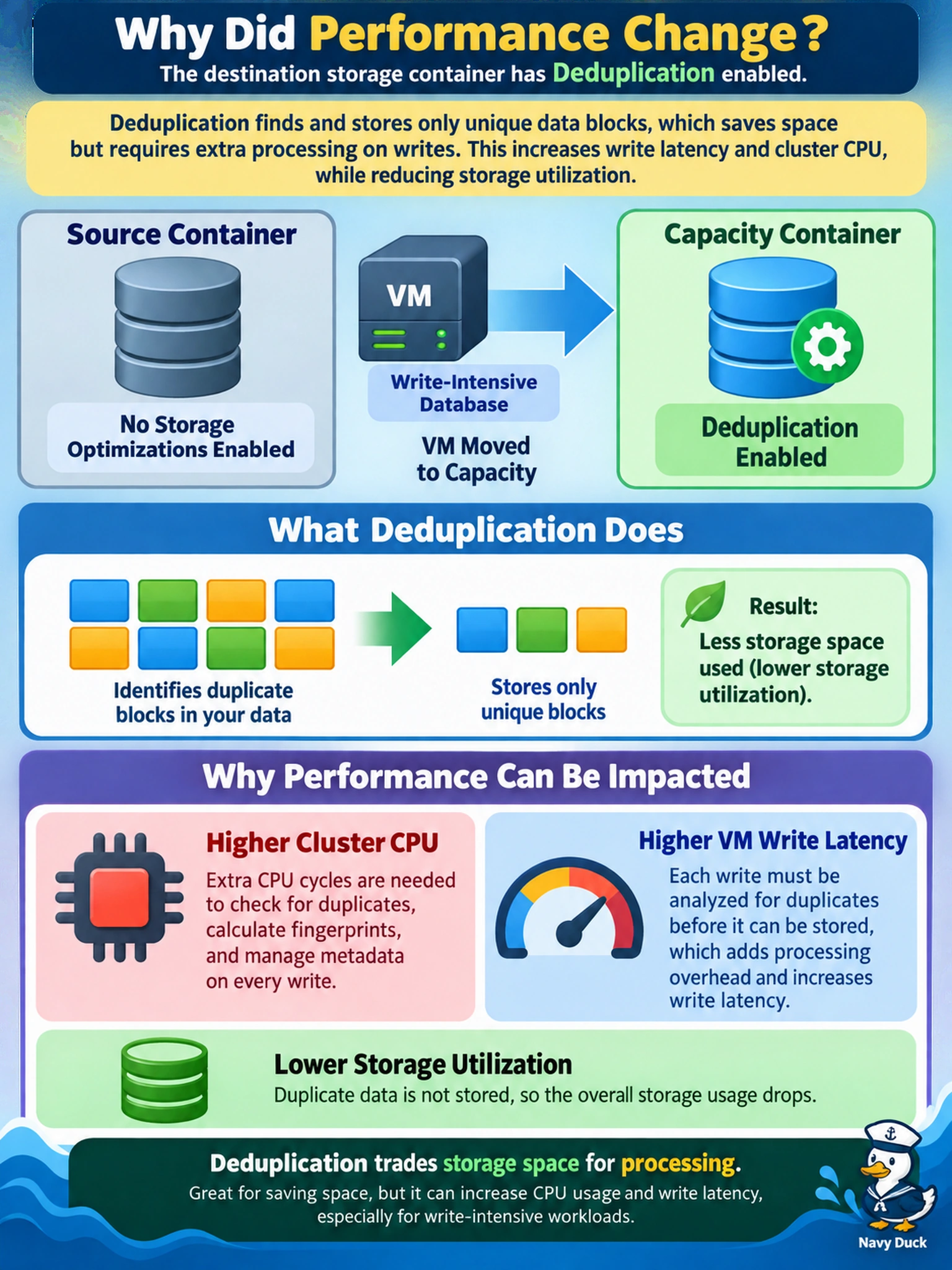
Think of deduplication like a librarian checking every book for duplicates before shelving it. You save shelf space, but that extra check costs time and CPU, especially when writes are busy. The trap is seeing storage drop and assuming the VM is happier; its latency may be paying for the savings.
Full Explanation
In Nutanix AOS, a storage container is a logical partition of a storage pool, and container-level storage-efficiency settings apply to disks placed in that container. Deduplication fingerprints data blocks and keeps only unique blocks, reducing capacity use but adding CPU work and possible latency for write-heavy VMs. Moving a VM from a container without optimizations to one with deduplication enabled can produce lower storage use plus higher write latency and elevated cluster CPU because each write is fingerprinted and compared. Setting a container to RF2 generally reduces write amplification versus RF3, so it would not normally explain higher write latency; it changes redundancy and capacity, not the fingerprinting path. Disabling compression removes a CPU-intensive optimization and would tend to reduce processing overhead, not increase it. Placing a container on a different storage pool changes the capacity boundary and may affect aggregate performance if the pool is contended, but it does not introduce the block fingerprinting overhead described. Exam caveat: do not choose the broadest efficiency term when a symptom points to the specific optimization causing CPU cost. Operational check: compare source and destination container settings in Prism, then retest the VM on a container without deduplication or enable it on a less latency-sensitive workload.