
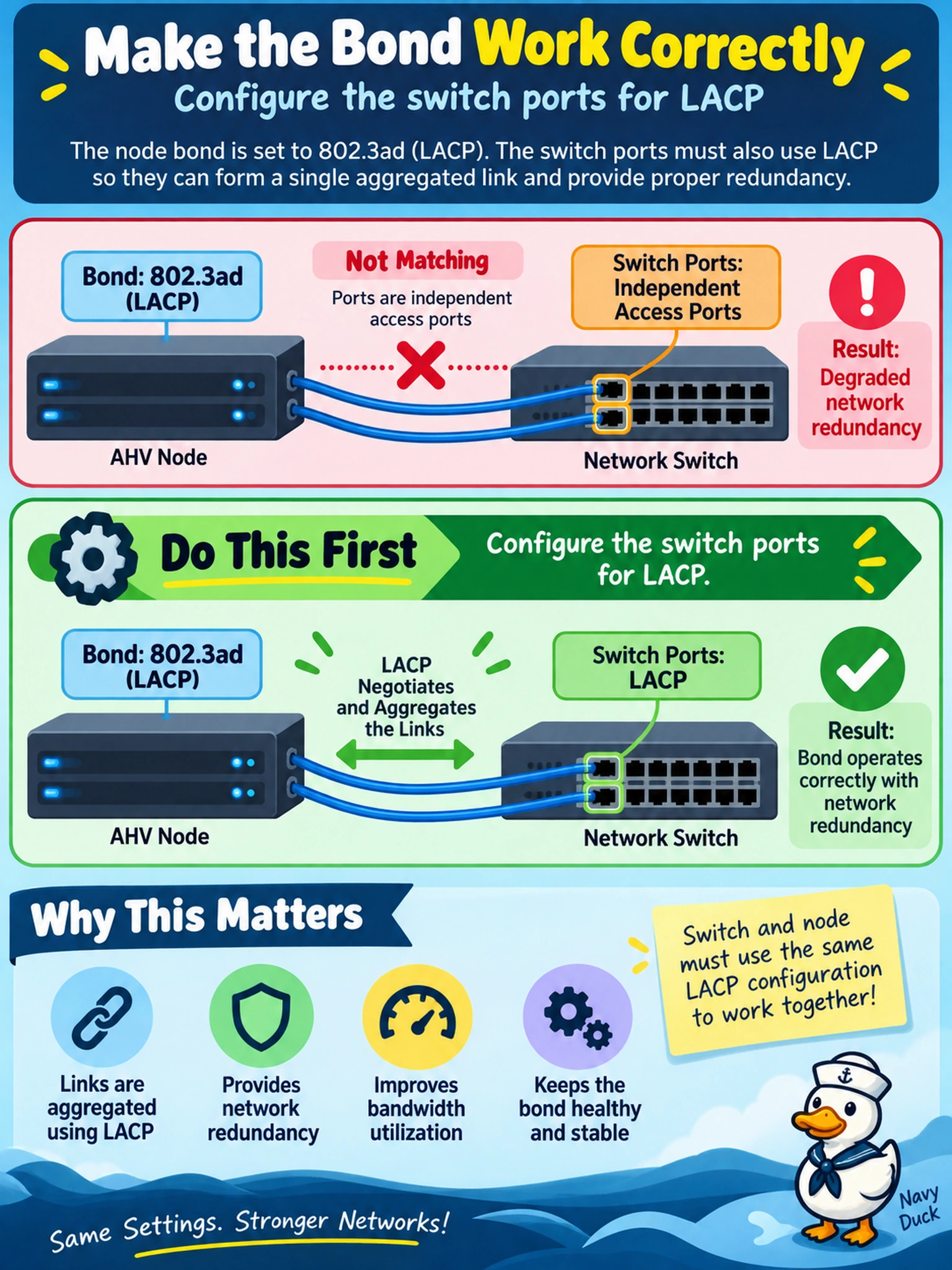
An AHV node bond is set to 802.3ad for LACP, but the node shows degraded network redundancy. The physical switch ports are configured as independent access ports. What must be done first to make the bond operate correctly?
Select an answer to reveal the explanation.
Short Explanation
Think of LACP like a handshake: both sides have to agree before they can bundle links. If your AHV bond says 802.3ad but the switch ports are still standalone, the aggregation won't form. Configure the switch side first, then verify the bond.
Full Explanation
In AHV, a bond configured for 802.3ad relies on the link aggregation control protocol being active on the connected switch ports. The host and switch exchange LACP information to form an aggregated channel; without switch-side configuration, the NICs may link but they will not operate as a single logical aggregated interface, leaving expected redundancy and load distribution unmet. Switch port-channel or LACP configuration is therefore the prerequisite before relying on the AHV bond mode. Choosing active-backup is a different bonding policy that can provide failover without switch negotiation, so it changes the design rather than satisfying the LACP requirement. Creating a native VLAN affects tagging and broadcast domain membership, not the formation of an aggregated link. Enabling Flow applies microsegmentation and security policy to network traffic, and restarting the controller does not resolve a missing switch-side link aggregation prerequisite. Exam caveat: distinguish bond mode from switch aggregation; 802.3ad is a negotiated standard, not a host-only setting. Operational check: verify the switch port-channel state and LACP status for both member ports, then confirm the AHV bond shows expected member status and redundancy.