
A maintenance crew working under a Radiation Work Permit (RWP) for a routine visual inspection of a contaminated pipe discovers they must grind and weld a cracked bracket on that pipe, an activity not covered by the permit. What should the crew do before starting the grinding?
Select an answer to reveal the explanation.
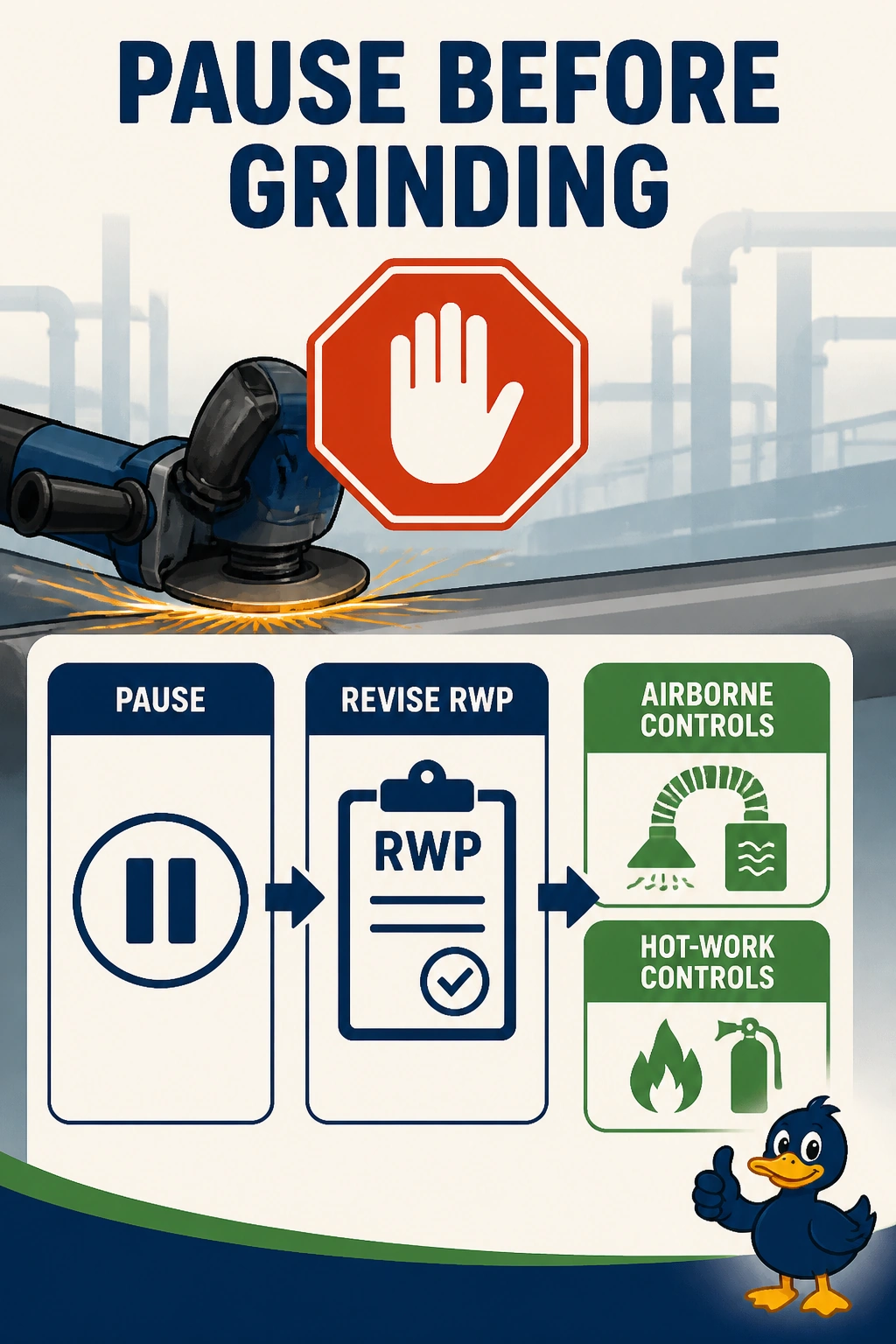
Short Explanation
Your RWP is a contract for the exact work scope evaluated before entry—if the job turns into grinding contaminated metal, the rules change immediately. The trap is pressing on to save schedule time when hot work can turn fixed contamination into an airborne hazard.
Full Explanation
A Radiation Work Permit (RWP) authorizes work only under the radiological conditions and job steps evaluated before entry. Grinding or welding on contaminated piping generates fine airborne particulates and removes fixed surface activity, so the crew must Pause the task and revise the RWP to add airborne and hot-work controls before proceeding. Choosing to Continue grinding while wearing a standard surgical dust mask for comfort is unsafe because surgical masks are not NIOSH-approved respirators and provide no assigned protection factor against radioactive aerosols. Deciding to Complete the weld first and notify health physics at the end of the shift allows unmonitored internal intakes and spreads contamination to surrounding equipment. Attempting to Switch to a lower-range survey meter and proceed without changing the permit neither controls airborne hazards nor satisfies work-control authorization requirements. As a caveat, even if external gamma dose rates remain low, mechanical disturbance of surface contamination can rapidly create an airborne radioactivity area. As an operational check, contact health physics from a low-dose area to evaluate whether local exhaust ventilation, air sampling, and respiratory protection must be added to the revised permit.
Prefer to study offline? Printable PDF study book + test engine ($7.50, unofficial). These questions stay free here.