
A technician stores a portable nuclear moisture-density gauge inside an unattended utility trailer overnight at a construction site. Under NRC 10 CFR 30.34(i), what physical security measure is required to prevent unauthorized removal of the gauge?
Select an answer to reveal the explanation.
Short Explanation
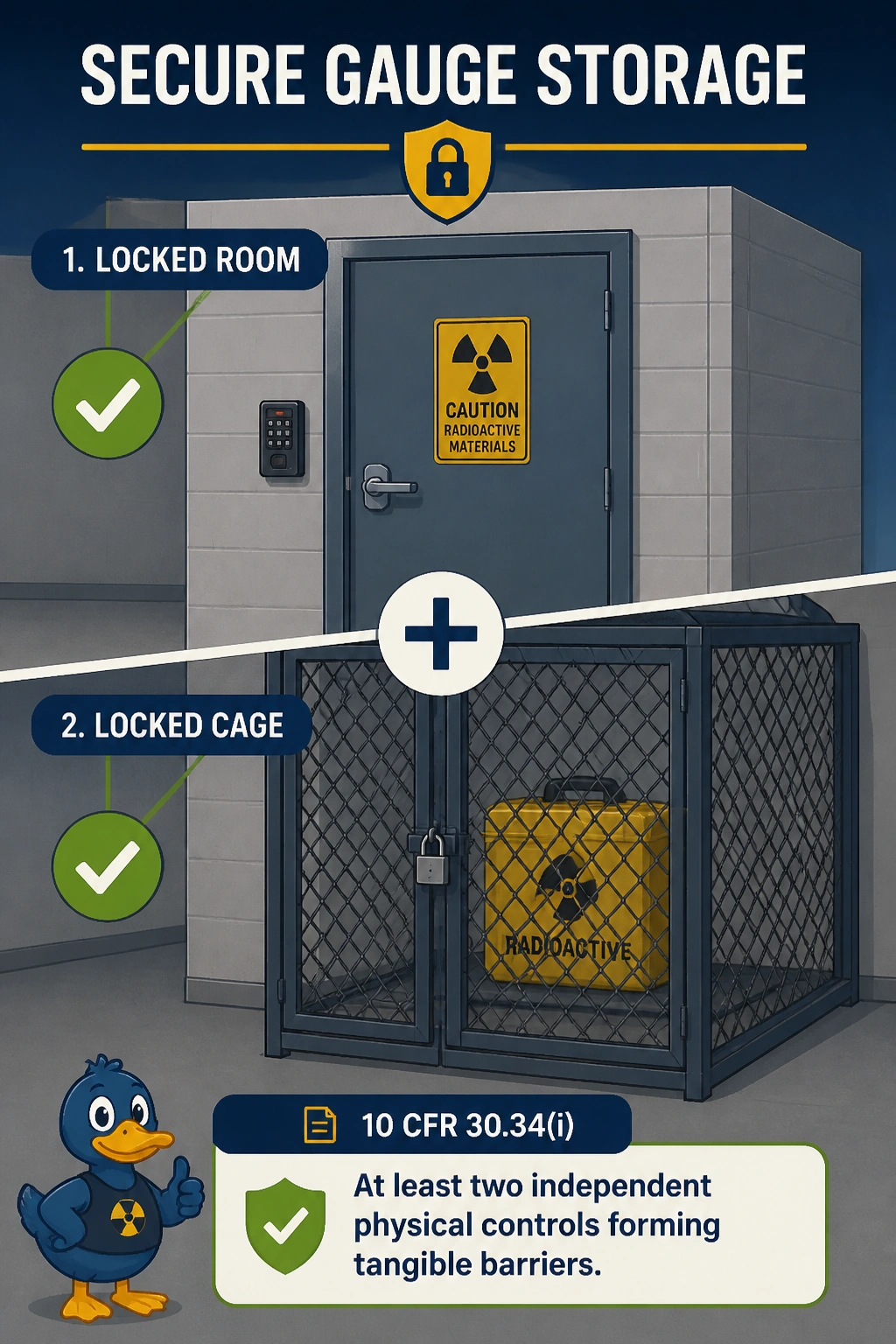
When you leave your portable gauge unattended and out of your direct line of sight, you need two independent physical controls forming tangible barriers so defeating one still leaves the source secured. A single heavy-duty padlock or an alarm without a physical lock does not meet that requirement, and a warning sign provides no physical barrier.
Full Explanation
Under NRC 10 CFR 30.34(i), you must use at least two independent physical controls forming tangible barriers to secure a portable gauge from unauthorized removal whenever it is not under constant surveillance. A single heavy-duty padlock on the trailer’s rear access door provides only one barrier, so the gauge could remain vulnerable if that door’s latch is defeated. A continuous battery-powered motion alarm without any physical lock can alert you to movement, but an electronic alert is not a tangible barrier that prevents removal. A warning sign listing the RSO’s phone number communicates hazard information but provides no physical security and can even advertise valuable equipment. The required controls must be independent: defeating one must not defeat both at once. As a practical check before you leave the site, physically tug both locks and verify that the gauge source rod is locked in the shielded position. Remember that the requirement concerns physical barriers, not merely detecting or discouraging unauthorized access.
Prefer to study offline? Printable PDF study book + test engine ($7.50, unofficial). These questions stay free here.