
Under NRC 10 CFR 20.1207, how do the annual occupational radiation dose limits for a minor (an individual under 18 years of age) compare with the limits for an adult radiation worker?
Select an answer to reveal the explanation.
Short Explanation
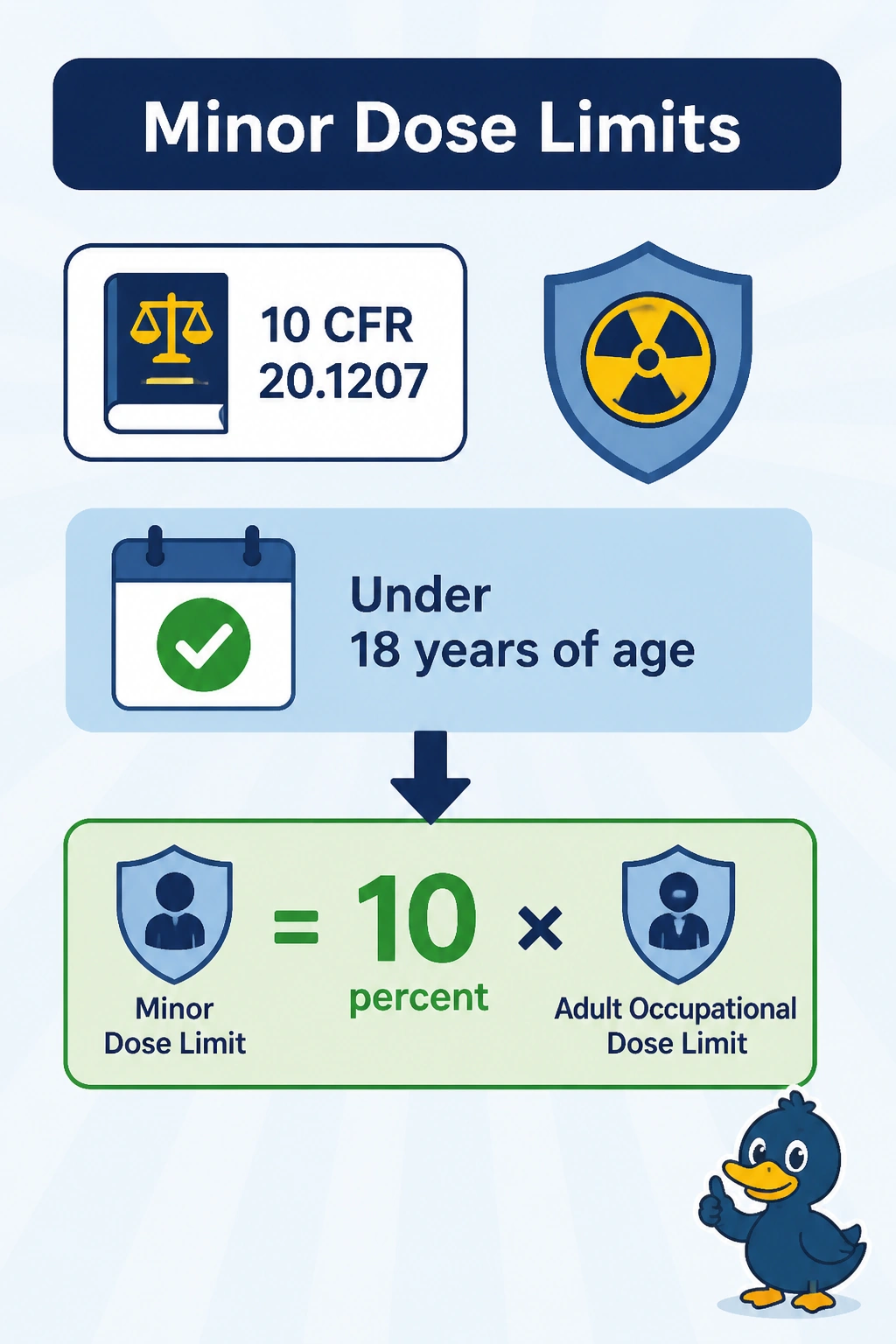
NRC rules give younger workers extra protection, capping their annual occupational dose at one-tenth of what an adult radiation worker can receive. That means under 10 CFR 20.1207, your facility's minors are limited to 10 percent of the adult occupational limits. The trap is thinking minors are barred from any dose at all or allowed half the adult limit.
Full Explanation
Under NRC 10 CFR 20.1207, the annual occupational dose limits for minors (individuals under 18 years of age) are strictly reduced compared with adult limits in 10 CFR 20.1201. Specifically, "Minors are limited to 10 percent of the adult occupational limits", which sets the annual Total Effective Dose Equivalent (TEDE) limit at 0.5 rem (5 mSv), the lens of the eye limit at 1.5 rem (15 mSv), and the skin or extremity shallow-dose equivalent limit at 5 rem (50 mSv). "Minors are limited to 50 percent of the adult occupational limits" overstates the allowable dose by a factor of five. "Minors are subject to the same limits as adult radiation workers" ignores the explicit age-based reduction in 10 CFR 20.1207. "Minors are prohibited from receiving any occupational dose above zero" is incorrect because NRC regulations permit controlled occupational exposure up to the 10 percent limit when properly monitored. As a caveat, licensees must still apply the public dose limit of 0.1 rem per year to any minor who is not classified as an occupationally exposed worker. For an operational check, verify age documentation during badging and set electronic dosimeter and RWP administrative alarms to the 10 percent limits before granting restricted-area access.
Prefer to study offline? Printable PDF study book + test engine ($7.50, unofficial). These questions stay free here.